
About James Havard
Lived 1937 – 2020 (aged 82–83). James Havard was an American painter and sculptor.
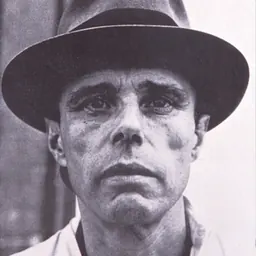
James Pinkney Havard (1937 – December 15, 2020) was an American painter and sculptor. He was a pioneer of abstract illusionism in the 1970s. In the 1980s he changed his style into a form of abstract expressionism influenced by Native American and tribal cultures as well as outsider art. Drawing inspiration from outsider and tribal art, Havard stands within a tradition that includes such notable artists as Paul Gauguin, Cy Twombly, Jean Dubuffet, Jean-Michel Basquiat, and Joseph Beuys.
Early life, family, and education James Pinkney Havard was born in 1937, in Galveston, Texas.
He received a bachelor of science degree in art from Sam Houston State College (now Sam Houston State University) in Huntsville, Texas, in 1959. From 1961 to 1965 he studied at Pennsylvania Academy of the Fine Arts in Philadelphia, Pennsylvania, and has a 1967 CFA degree.
Havard was married three times: Charlotte Liles (1958–1961), Elizabeth "Buffie" Corson Beardsley (1965–1974), and Catherine Bruni (1985–1989). He has two children, Inga Renee Esterak Posey (b. 1960) and Houston James Havard (b. 1985), from his first and third marriages respectively.
Career There he was influenced by realist painters Ben Kamihira and Hobson Pittman. His career can be divided into three broad periods: realism (1960s), abstract illusionism (1970s), and abstract expressionism with tribal and outsider influences (1980s and beyond). “His early work was . . . realistic and traditional, including landscapes, churches, and figuration much in the same styles as Camille Corot, Édouard Manet, and Edgar Degas.”
Beginning in 1967, he broke away from realism and went through a period of experimentation with various abstract and contemporary styles (e.g., monochromatic paintings).
By the late 1970s Havard was considered one of the founders of abstract illusionism along with Al Held, Jack Lembeck, John Clem Clarke, George D. Green, and Tony King. His work during this period is characterized by pastel colors, “optical illusions and combinations of gesso wipes, chalk scrawls, incised lines, and squirts of paint directly from the tube.” In 1976, one art critic wrote of his paintings, "Though conceived to fool the eye, Havard's paintings are at once daring and subtle, complex in scheme and simplistic in symbolic reference."
He moved to New York in 1977 and took frequent trips to Santa Fe, New Mexico, beginning in 1978. In New York, his color palette darkened and his works became richer in texture. He began including Native American images and Native American words (e.g., mimbres) inscribed in loose script as well as random numbers. During the 1980s Havard’s paintings began to include thicker layers of paint, more collage elements, and fewer squiggles of paint and optical illusions.
He moved to Santa Fe in 1989 where he continued to develop his style, ultimately freeing himself from all references to abstract illusionism. Havard began to use an encaustic medium that allowed him to incise the surface of the painting which gave them a carved, luminous appearance. His palette varies from dark, rich, and contrasting colors to bright blues and reds. Rich textures and visually arresting but crudely rendered figures define his work. Many of his paintings seem visually dense. One collector of Havard's paintings remembered his initial uniformed response to them: "What a mixed up mess these are."
In 2006 Havard suffered a stroke, and was no longer able to walk but he continued to paint. Due to Havard's limited mobility, his later works are small in scale, but "are nonetheless extremely powerful, perhaps even more so because the reduced format concentrates them."
Death and legacy Havard died at home in December, 2020.
Havard's work is in the permanent collection of museums, including at the Solomon R. Guggenheim Museum (New York City), Smithsonian Institution (Washington, D.C.), Metropolitan Museum of Art (New York City), Museum of Modern Art (Stockholm, Sweden), Tucson Museum of Art (Arizona), and the Los Angeles County Museum (California).
Don’t just read it —
keep it.
Full-length biographies made to live with: read them, listen on the way to work, watch them tonight.
- E-book
- Audio
- Video
Instant download · yours to keep · every purchase keeps this site free
Important facts
People in James Havard's life
Named in this biography and alive at the same time




Related people
Same field, nearest in time

Contemporaries
People whose lives overlapped James Havard's



Frequently asked questions
Who was James Havard?
American artist (1937–2020)
When was James Havard born?
James Havard was born in 1937 in Galveston.
When did James Havard die?
James Havard died in 2020.
What was James Havard's occupation?
James Havard was a painter and sculptor.
What nationality was James Havard?
James Havard was American.
Sources & further reading
Cite this page
APA: Biography.guide. (2026). James Havard. https://biography.guide/james-havard/
MLA: "James Havard." Biography.guide, https://biography.guide/james-havard/.
Chicago: "James Havard." Biography.guide. https://biography.guide/james-havard/.
Data last updated: 2026-09-20 · Spot an error? Report a correction.
Page generated 2026-09-27 05:08 UTC