
James Elliott Moore
American academic and professor (born 1958)
About James Elliott Moore
Born 1958. James Elliott Moore is an economist, university teacher, transportation engineer and engineer.
James Elliott Moore II (born September 15, 1958) is an American academic and professor emeritus of Industrial and Systems Engineering known for his work in economic impact analysis, He has held faculty appointments at the University of Southern California (USC) in the Viterbi School of Engineering and the Sol Price School of Public Policy.
He is a Senior Fellow at the Reason Foundation since 2024. He served as national board president of the Institute of Industrial and Systems Engineers from 2015-2016 and president of the Institute for Operations Research and Management Sciences' Transportation Science and Logistics Society during 2009.
Moore received the Kapitsa Gold Medal of Honor from the United States Section
Early life and education Moore was born in Newport, Rhode Island, and raised in New Bremen, Ohio along with two younger sisters. His youngest sister, Elizabeth Moore, is executive vice president of Breitbart News.
He earned a diploma from New Bremen High School in 1976. He completed a Bachelor of Science in Industrial Engineering and a Bachelor of Science in Urban and Regional Planning, both with distinction, from Northwestern University in 1981. He later earned a Master of Science in Industrial Engineering from Stanford University (1982), a Master of Urban and Regional Planning from Northwestern (1983), and a PhD in Civil Engineering with a specialization in Infrastructure Planning and Management from Stanford (1986).
Moore joined USC in 1988 and received tenure in 1993 at the School of Urban and Regional Planning, now the Sol Price School of Public Policy. Concerned by an ongoing loss of scientific rigor and economic thinking in the urban planning literature, he began to focus more on his secondary appointment in USC's School of Engineering. In 1998, he changed his primary appointment to the Viterbi School of Engineering's Astani Department of Civil and Environmental Engineering, where he received tenure while retaining a secondary appointment in the School of Urban Planning and Development. In 2003, Moore applied for and received tenure at the Epstein Department of Industrial and Systems Engineering, retaining secondary appointments in public policy and civil engineering.
He was appointed chair of the Epstein Department in 2004, serving until 2010.
Moore's tenure at USC was marked by his libertarian views, which often led him to critique progressive political agendas within academia. He believed that certain progressive policies conflicted with his libertarian principles. His opposition to specific administrative decisions, such as the suspension of employer contributions to faculty retirement accounts during the COVID-19 pandemic, contributed to a more contentious relationship with USC leadership.
Moore was removed from the Viterbi School dean's office in 2017 over his opposition to the university's changes to Title IX rules and the engineering school's growing embrace of diversity, equity, and inclusion initiatives, which Moore contended were being implemented in ways that violated Titles VI and VII of the Civil Rights Act of 1964 and the equal protection clause of the U.S. Constitution. The dean of the Viterbi School broke with standard procedure and forbade a departmental faculty vote on whether Moore should return to the role of Epstein Department chair. resulted in student protests calling for Moore's removal from the faculty.
Near the end of his faculty career, Moore concluded that public policy making was driven almost entirely by political motives, and mostly unaffected by analyses intended to inform decision makers.
He remains critical of the direction that USC and other educational institutions have taken regarding issues of social justice and systemic racism and encouraged by the reforms initiated by the second Trump administration. Moore has publicly discussed the circumstances surrounding this decision and its broader context. He continues to maintain professional ties with the academic community in his capacity as an emeritus professor.
In public posts, Moore has described the principal personal drawback of retirement as the loss of regular interaction with students, emphasizing the importance he placed on teaching and mentorship. He has stated that he continues to engage in research, writing, and public commentary outside formal faculty duties. The complaint challenges the Academic Senate's March 2025 adoption of Bylaw 11.1, which bars resigned or retired faculty from serving as officers or Executive Board members. His work in transportation systems involves the analysis of network performance, congestion pricing, and the economic impacts of transit and transportation projects policies.
A central theme of Moore's research is the development and application of integrated economic–transportation models.
Moore also explores risk and resilience of infrastructure systems particularly transportation networks under hazards such as earthquakes, seismic events, and other unexpected events. His work with collaborators examines how damage to highway bridges and transportation links affects network performance, post-disaster travel demand, and overall economic outcomes. This includes statistical risk assessment and engineering economic modeling to estimate transportation system vulnerability and the efficiency of mitigation strategies.
In addition to model development, Moore's research assesses policy interventions and their broader socioeconomic effects. He investigates how pricing strategies, control policies, and regional planning decisions influence transportation performance and access. His work on disruptions at major transportation hubs such as the shutdown of the Los Angeles-Long Beach ports bridges transport modeling with trade and economic analysis, highlighting the importance of contingency planning and adaptive responses in large metropolitan regions.
Moore's funded research projects also explore the environmental and economic impacts of transportation practices, the adoption of new technologies (e.g., Positive Train Control), and educational programs that integrate engineering and policy evaluation. His research is often collaborative, bringing together industrial engineering, civil engineering, and planning disciplines to address complex infrastructure systems.
Selected publications
Journals
Books
Don’t just read it —
keep it.
Full-length biographies made to live with: read them, listen on the way to work, watch them tonight.
- E-book
- Audio
- Video
Instant download · yours to keep · every purchase keeps this site free
Important facts
People in James Elliott Moore's life
Named in this biography and alive at the same time



Related people
Same field, nearest in time
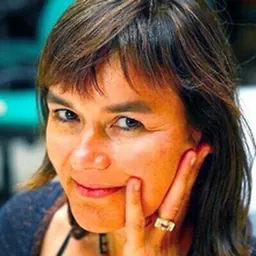



Contemporaries
People whose lives overlapped James Elliott Moore's
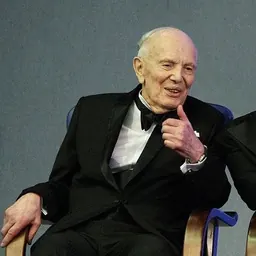
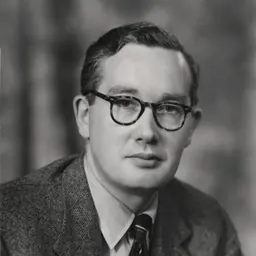



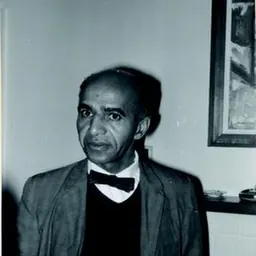
Frequently asked questions
Who is James Elliott Moore?
American academic and professor (born 1958)
When was James Elliott Moore born?
James Elliott Moore was born in 1958.
What is James Elliott Moore's occupation?
James Elliott Moore is an economist, university teacher, transportation engineer and engineer.
Sources & further reading
· Wikipedia: James Elliott Moore
· DBpedia: James Elliott Moore II
Cite this page
APA: Biography.guide. (2026). James Elliott Moore. https://biography.guide/james-elliott-moore/
MLA: "James Elliott Moore." Biography.guide, https://biography.guide/james-elliott-moore/.
Chicago: "James Elliott Moore." Biography.guide. https://biography.guide/james-elliott-moore/.
Data last updated: 2026-09-20 · Spot an error? Report a correction.
Page generated 2026-09-27 05:22 UTC