
About James Dillon
Born 1950. James Dillon is a British composer.
James Dillon (born 29 October 1950) is a Scottish composer who is often regarded as belonging to the New Complexity school. Dillon studied art and design, linguistics, piano, acoustics, Indian rhythm, mathematics and computer music, but is self-taught in composition.
Dillon was born in Glasgow, Scotland. Honours include first prize in the Huddersfield Contemporary Music Festival in 1978, the Kranichsteiner music prize at Darmstadt in 1982, and an unprecedented five Royal Philharmonic Society composition awards, most recently for his chamber piece Tanz/Haus: triptych 2017. The recording of his chamber opera, Philomela, won the Grand Prix de l’Académie du Disque Lyrique 2010. Dillon taught at Darmstadt from 1982 to 1992, and has been a guest lecturer and composer at various institutions around the world. He taught at the University of Minnesota School of Music in Minneapolis, Minnesota, from 2007 to 2014.
Selected works His major works include choral and vocal music, including the cycle L'évolution du vol (1993) and the opera Philomela (2004), the orchestral works helle Nacht (1987), ignis noster (1992), Via Sacra (2000), and La navette (2001), as well as a violin concerto for Thomas Zehetmair (2000) and the piano concerto Andromeda (2006) for his partner, Noriko Kawai, all showing an ease of writing for large forces. From 1982–2000, Dillon worked on the Nine Rivers cycle, a 3-hour work for voices, strings, percussion, live electronics and computer-generated tape. The epic work was first performed in full in Glasgow, November 2010. Andrew Clements of The Guardian awarded it a full five stars, describing the last movement ("Oceanos") as having a "Wagnerian grandeur" and stating, "The cumulative power of [Nine Rivers] is massive, the range of musical experience vast."
His considerable body of chamber music, often written expressly for a performer's individual abilities, includes solos for clarinet, drumkit, cello, flute, piccolo, guitar, violin, viola, and accordion, alongside nine string quartets (1983, 1991, 1998, 2004, 2008, 2010, 2013, 2017, 2018), the five-part Book of Elements for piano (1997–2002) and the soadie waste for piano and string quartet (2002/3). In 2013, Tom Service referred to the Book of Elements as "the most significant contribution to the pianist's repertoire since György Ligeti's Études". His fourth string quartet received the 2005 Royal Philharmonic Society Music Award for Chamber-Scale Composition. He won the same award in 1997 (for Traumwerk, Book 1), 2002 (for The Book of Elements 5), and 2017 (for Tanz/Haus: triptych 2017).
His music has been published by Edition Peters since 1982.
List of compositions Source: Orchestral Windows and Canopies, small orchestra (20 players), 1985 Überschreiten, small orchestra (16 players), 1986 Helle Nacht, large orchestra (90 players), 1986–87 Introitus – Nine Rivers 8, 11/12 strings, fixed media, live electronics, 1989–90 ignis noster, large orchestra (100 players), 1991–92 Blitzschlag, flute, large orchestra (66 players), 1988–96 Via Sacra, large orchestra (80 players), 1999 Concerto, violin, large orchestra (79 players), 2000 La Navette, large orchestra, 2000–01 Physis I & II, large orchestra, 2004–05 Andromeda, piano, large orchestra (80 players), 2005–06 torii, small orchestra (17 players), 2009–10 White Numbers, large orchestra (77 players), 2011 The Gates, string quartet, large orchestra, 2016 Circe (Pharmakeia : 3), small orchestra (16 players), 2017 Pharmakeia, small orchestra (16 players), 2020 Polyptych: Mnemosyne... Acts of Memory and Mourning, large ensemble (30 players), 2022-23
Chamber music Crossing Over, clarinet, 1978 Ti.re-Ti.ke-Dha, drum kit, 1979 ...Once upon a Time, alto flute (+ piccolo), oboe (+ English horn), clarinet, bassoon, French horn, trumpet, trombone, double bass, 1980 Parjanya-Vata, cello, 1981 East 11th St. NY 10003 – Nine Rivers 1, 6 percussion, 1982 String Quartet No. 1, 1983 Zone (...de azul), clarinet, French horn, trumpet, trombone, violin, viola, cello, piano, 1983 Le Rivage, flute (+ piccolo, alto flute), oboe, clarinet (+ bass clarinet), French horn, bassoon, 1984 Sgothan, flute, 1984 Diffraction, piccolo, 1984 Shrouded Mirrors, guitar, 1988 Del Cuarto Elemento, violin, 1988 L'Écran parfum – Nine Rivers 2, 6 violins, 3 percussion, 1988 La Femme invisible – Nine Rivers 4, flute (+ piccolo), alto flute (+ bass flute), oboe, English horn (+ oboe), clarinet, bass clarinet, 2 soprano saxophones (2nd + alto saxophone), piano, 3 percussion, 1989 L'Œuvre au noir – Nine Rivers 6, bass flute (+ alto flute, piccolo, triangle), bassoon (+ contrabassoon, crotales), tenor-bass trombone, bass trombone, harp (+ sleigh bells), 2 cellos (1st + rainstick, 2nd + crotales), double bass (+ sleigh bells), 2 percussion, live electronics, 1990 éileadh sguaibe – Nine Rivers 7, 2 French horns, 2 trumpets, tenor-bass trombone, bass trombone, tuba, 2 percussion, live electronics, 1990 String Trio, violin, viola, cello, 1990–91 nuée, bass clarinet, 2 percussion ad libitum, 1991 (section of L'Évolution du vol; may be performed separately) String Quartet No. 2, 1991 Siorram, viola, 1992 Lumen naturæ, violin, viola, cello, 1992 Vernal Showers, violin, ensemble (flute [+ piccolo, alto flute], oboe, harp, guitar, mandolin, viola, cello, double bass, harpsichord, percussion), 1992 L'Ascension, 2 percussion, 1993 (section of L'Évolution du vol; may be performed separately) Le Vent, l'arbre et le temps, double bass, 1993 (section of L'Évolution du vol; may be performed separately) Redemption, clarinet, violin, piano, 1995 Traumwerk, Book 1, 2 violins, 1995–96 Todesengel, clarinet, vibraphone, 1996 String Quartet No. 3, 1998 Eos, cello, 1999 La Coupure – Nine Rivers 5, percussion, live electronics, film, 1989–2000 Two Studies, accordion, 2001 Traumwerk, Book 2, violin, harpsichord, 2001 Traumwerk, Book 3, violin, piano, 2001–02 The Soadie Waste, piano, string quartet, 2002–03 The Magic Stick, piano, percussion, 2005 Diogenes, bass clarinet, 2005 String Quartet No. 4, 2005 The Hesperides, cello, piano, 2007 Theatrum: figuræ, oboe (+ English horn), clarinet (+ contrabass clarinet), bass clarinet, trumpet, trombone, 2 percussion, 2007 String Quartet No. 5, 2003–08 The Leuven Triptych, flute, oboe, clarinet, bassoon, trombone, harp, guitar, cello, double bass, piano (+ synthesizer), percussion, live electronics, 2008–09 String Quartet No. 6, 2010 Oslo/Triptych, flute (+ piccolo, bass flute, shortwave radio), clarinet (+ E-flat clarinet, bass clarinet, contrabass clarinet, shortwave radio), 2 violins, viola, cello, piano (+ harmonium/synthesizer), percussion (+ shortwave radio, voice transformer), 2011 New York Triptych, flute (+ piccolo, alto flute, bass flute), oboe (+ English horn), clarinet (+ E-flat clarinet, bass clarinet), violin, viola, cello, piano (+ electronic keyboard), percussion, shortwave radio, fixed media, 2011–12 String Quartet No. 7, 2013 Darkroom, piccolo, bass clarinet, bassoon and alto saxophone, 2015 Tanz/Haus: triptych 2017, flute, clarinet, electric guitar, violin, cello, double bass, piano, accordion, percussion, 2017 String Quartet No. 8, 2017 String Quartet No. 9, 2018 The Freiburg Diptych, solo violin, tape and live electronics, 2019 Prospettiva de’ perdimenti trombone and piano, 2020 Masque, 8 players, 2021 EMBLEMATA: Carnival, flute, clarinet, percussion, keyboard, violin and cello, 2021 The Acrobat, accordion, keyboard and percussion, 2022
Choral Viriditas – Nine Rivers 3, 16 mixed voices, 1993–94 Oceanos – Nine Rivers 9, 16 mixed voices, orchestra, live electronics, 1985–96 Hyades, 12 mixed voices, 1998 residue..., 24 mixed voices, 1998–99 Vapor (text by Titus Lucretius Carus), 4 mixed voices, string quartet, 1999 Stabat Mater Dolorosa, 12 mixed voices, 12 players, live electronics, 2014
Vocal Who do you love, female voice, flute (+ piccolo, bass flute), clarinet, violin (+ viola), cello, percussion, 1980–81 Evening Rain, any voice, 1981 Come live with me (text from the Song of Solomon), female voice, flute (+ piccolo, alto flute), oboe (+ oboe d'amore, English horn), piano, percussion, 1981–82 A Roaring Flame (texts by Alexander Carmichael, Clara d'Anduza), female voice, double bass, 1981–82 Time Lag Zero (text from the Song of Solomon), female voice, viola, 1982 L'Évolution du vol, female voice (+ hurdy-gurdy), E-flat clarinet (+ bass clarinet, contrabass clarinet), double bass, piano (+ harmonium), 2 percussion, 1991–93 (sections 2–7 of its eight sections may be performed separately: L'Homme et la vérité, female voice, piano; L'Ascension; L'Être-ange, female voice [+ hurdy-gurdy], E-flat clarinet; Nuée; Descente/désir, female voice, bass clarinet, double bass; Le Vent, l'arbre et le temps) Temp’est, female voice, flute, piccolo, oboe, bass clarinet, soprano saxophone, bass trombone, percussion (2 players), piano, electric guitar, 2 violins, viola, cello, double bass, 1994 Philomela (opera in five acts), solo soprano, solo mezzo soprano, solo bass-baritone, chamber ensemble, 2004 Upon the cloudy night, countertenor, piano, 2009 Narcissus, voice and piano, 2013 The Louth Work: Orphic Fragments, soprano, clarinet, viola, cello, piano, percussion, 2016
Piano Dillug-Kefitsah, 1976 Spleen, 1980 black/nebulae, 2 pianos, 1995 The Book of Elements vol. 1, 1997 The Book of Elements vol. 3, 2000 The Book of Elements vol. 2, 2001 The Book of Elements vol. 4, 2002 The Book of Elements vol. 5, 2002 Charm, 2009 Dragonfly, 2009 Fujin, 2011 faint light..., 2016 amethyst, 2018 Purple Blooms and Scarlet Stains, 2018 echo the angelus, 2018 Lament, 2022 Ae, fareweel, and then forever!, 2022
Harpsichord Birl, 1986
Don’t just read it —
keep it.
Full-length biographies made to live with: read them, listen on the way to work, watch them tonight.
- E-book
- Audio
- Video
Instant download · yours to keep · every purchase keeps this site free
Important facts
People in James Dillon's life
Named in this biography and alive at the same time


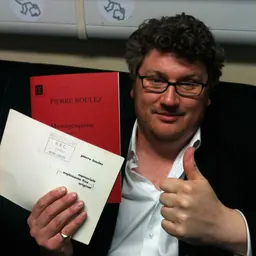


Related people
Same field, nearest in time

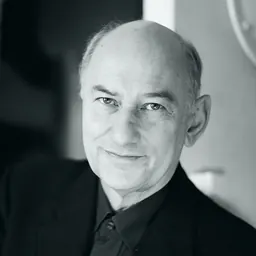
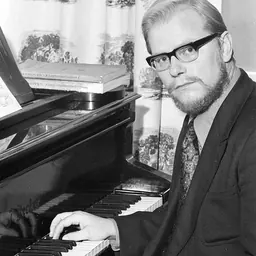
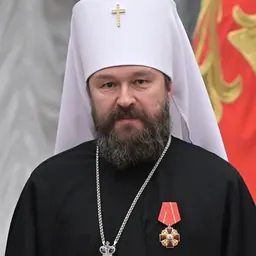

Contemporaries
People whose lives overlapped James Dillon's



Frequently asked questions
Who is James Dillon?
British composer (born 1950)
When was James Dillon born?
James Dillon was born on 29 October 1950 in Glasgow.
What is James Dillon's occupation?
James Dillon is a composer.
What nationality is James Dillon?
James Dillon is British.
Sources & further reading
· DBpedia: James Dillon (composer)
Cite this page
APA: Biography.guide. (2026). James Dillon. https://biography.guide/james-dillon/
MLA: "James Dillon." Biography.guide, https://biography.guide/james-dillon/.
Chicago: "James Dillon." Biography.guide. https://biography.guide/james-dillon/.
Data last updated: 2026-09-20 · Spot an error? Report a correction.
Page generated 2026-09-27 05:02 UTC