
About James D. Black
Lived 1849 – 1938 (aged 88). James D. Black was an American lawyer and politician.
James Dixon Black (September 24, 1849 – August 5, 1938) was an American attorney who was the 39th governor of Kentucky, serving for seven months in 1919. He ascended to the office when Governor Augustus O. Stanley was elected to the U.S. Senate.
Black graduated from Tusculum College in 1872 and taught school while studying law. He was admitted to the bar in 1874 and opened his legal practice in Barbourville, Kentucky. Eventually, his son, Pitzer Dixon, and his son-in-law, Hiram H. Owens, became partners in his practice, called Black, Black and Owens. Deeply interested in education, he served as superintendent of the Knox County public schools for two years, and was instrumental in the founding of Union College in Barbourville. He served as president of the college from 1910 to 1912.
Black was chosen as the Democratic nominee for lieutenant governor in 1915, despite having only meager previous political experience. He was elected on a ticket with Augustus O. Stanley and was elevated to governor when Stanley resigned to take a seat in the U.S. Senate. Much of his seven months as governor were spent on his re-election campaign. He was unable to satisfactorily answer charges of corruption made against the Stanley administration by his opponent, Edwin P. Morrow, who won the election by more than 40,000 votes. Black returned to his legal practice in Barbourville and served as president of a bank founded by his older brother. He was campaign manager for Alben Barkley's senatorial campaign when he died of pneumonia on August 5, 1938.
Early life and family
Black was born on September 24, 1849, nine miles from Barbourville on Richland Creek in Knox County, Kentucky. He was the youngest of twelve children born to John Craig and Clarissa "Cassie" (Jones) Black. Black's older brother, Isaac Jones Black, was captain of the 49th Kentucky Mounted Infantry in the Union Army during the Civil War.
Black was educated in the rural and subscription schools in and around Barbourville. Concurrently, he studied law, and was admitted to the bar in August 1874.
Black married Mary Jeanette "Nettie" Pitzer on December 2, 1875, in Barbourville. The couple had three children: Pitzer Dixon, Gertrude Dawn, and Georgia Clarice. All were members of the Methodist Episcopal Church. After being admitted to the bar, he became a partner in his father's law firm.
On September 10, 1910, Black was named the eighth president of Union College. The following year, his alma mater awarded him an honorary Doctor of Laws degree.
Augustus O. Stanley, Black's running mate in the 1915 gubernatorial election Though Stanley and Black won the election, they never became political allies. At the time of their election and service, the Kentucky Constitution prescribed that the lieutenant governor would act as governor any time the governor left the state. Consequently, Stanley refused to travel out of state on vacation because he feared he would not approve of anyone Black would appoint to any unfilled governmental offices while he was gone. There was no legislative session of the General Assembly during Black's term, so potential conflicts with the legislature were avoided. Since Black had very little record as governor in his own right, Morrow campaigned against him by attacking Stanley's administration as corrupt.
In his final days in office, Black considered many requests for executive clemency. On December 1, 1919, he issued a pardon for Henry Youtsey, a recent parolee who had served eighteen years for conspiracy in the assassination of Governor William Goebel.
In 1918, while still serving as lieutenant governor, Black had assumed the presidency of the John A. Black National Bank of Barbourville, named for and founded by his older brother. He became chief prohibition inspector for Kentucky in 1920. Later, he served as director of the Barbourville Cemetery Company. While working as Ninth Congressional District campaign manager for Senator Alben Barkley in 1938, Black developed pneumonia and died on August 5, 1938. He is entombed in a mausoleum at Barbourville Cemetery.
Don’t just read it —
keep it.
Full-length biographies made to live with: read them, listen on the way to work, watch them tonight.
- E-book
- Audio
- Video
Instant download · yours to keep · every purchase keeps this site free
Important facts
People in James D. Black's life
Named in this biography and alive at the same time



Related people
Same field, nearest in time


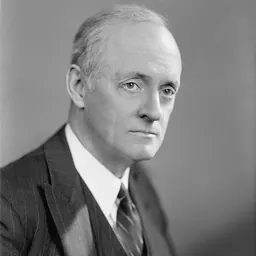
Contemporaries
People whose lives overlapped James D. Black's




Frequently asked questions
Who was James D. Black?
Governor of Kentucky in 1919
When was James D. Black born?
James D. Black was born on 24 September 1849 in Knox County.
When did James D. Black die?
James D. Black died on 5 August 1938 in Barbourville.
What was James D. Black's occupation?
James D. Black was a lawyer and politician.
What nationality was James D. Black?
James D. Black was American.
Sources & further reading
Cite this page
APA: Biography.guide. (2026). James D. Black. https://biography.guide/james-d-black/
MLA: "James D. Black." Biography.guide, https://biography.guide/james-d-black/.
Chicago: "James D. Black." Biography.guide. https://biography.guide/james-d-black/.
Data last updated: 2026-09-25 · Spot an error? Report a correction.
Page generated 2026-09-27 05:06 UTC