
James Childress
American pioneer settler
About James Childress
Lived 1773 – 1836 (aged 62).
James Childress (January 28, 1773–January 18, 1836), often referred to in print as Major Childress, was a land speculator, real estate developer, slave owner, plantation owner, and pioneer settler of Alabama, United States, involved in the establishment of both Demopolis, and Tuscaloosa. He was posthumously described as a close personal friend of Andrew Jackson. In partnership with his brother-in-law, he sought to buy a number of slaves in Washington, D.C. in 1815. He also owned two prosperous cotton plantations. Late in life he was involved in a raid against what was described as a den of counterfeiters.
Biography According to the editors of The Correspondence of James K. Polk, Major James Childress was a brother of Joel Childress and therefore an uncle of First Lady Sarah Childress Polk. Childress was born in Virginia but "removed in early manhood to North Carolina." He married his first wife, Ludica Carson, in North Carolina. One source says Martin Phifer was "a distinguished citizen of Carrabrus County, North Carolina," The Crawfords lived at China Grove in Rowan County, North Carolina, and after she married Childress they lived there together for a time.
In October 1813, Toney, a slave belonging to James Childress of Rowan County, North Carolina, was wanted on charges of rape against Margaret Dodson of the same county. It was said that Toney had been "relieved from custody" by James Childress and perhaps been relocated to Rutherford County, Tennessee. Childress and Phifer could be found at George Miller's tavern on F street and they would pay cash for the slaves. Childress was said to be a good shot with a rifle and storytellers claimed he would "shoot down wild deer as they ran through his grounds." In December 1819 he shot an female alligator on the river bank below the village; the head was preserved for display.
Childress later moved across town "about a quarter of a mile west of the University; and there built a commodious cottage, in which he resided up to the time of his death, 1836." His homesite was "where Read Street is now located extending from Caplewood Drive to University Avenue on both sides of Read Street." The house was constructed around 1822, and Andrew Jackson was reportedly "spent several days" at this house while visiting in the vicinity of Alabama that same year.
Clear Creek in what is now William B. Bankhead National Forest At some point, perhaps in the 1820s, Childress was also involved in hunt for a gang of counterfeiters led by John Davis; they were tracked to a cave behind a waterfall on Clear Creek north of Tuscaloosa and there was found "quantities of paper counterfeits on the North and South Carolina and Georgia banks, tools and implements for engraving bills, and dies for casting counterfeit coin of all denominations, and a quantity of poorly executed counterfeit metal dollars, half-dollars, quarters, and dimes." In 1831 Major Childress donated a "pair of large hawks" to the University of Alabama Libraries natural history collection.
The Childresses socialized with Sarah Haynsworth Gayle and her husband, Governor of Alabama John Gayle and thus are mentioned in passing throughout Sarah Gayle's acclaimed diary. The longest passage about James Childress appears in May 1833, following one of the several missing pages and passages that "have been carefully sliced out, as if cut with a knife." The passage thus begins narration mid-scandal without crucial preceding context, but the text seems to be describing Erasmus Walker, husband of Ann Childress, who was the oldest daughter of James and Mary (Phifer) Childress:
In regard to the gaming table mentioned by Gayle, "During the sessions of the Alabama Legislature many of the gamblers of Shakespere Row closed their resorts in Mobile and went to Tuscaloosa, capital of the state from 1826 to 1847. There they opened Faro snaps and set up Roulette wheels for the convenience of the lawmakers, who were noted for the reckless manner in which they gambled and the ease with which they could be victimized by crooked dealing boxes, strippers and magnetized Roulette wheels."
In 1833, Thomas McCargo, an interstate slave trader of note, placed an advertisement addressed to James Childress that stated "Take notice, that on Monday the 22d day of April next, at the Tavern house of Jackson & Medley, at Halifax Court-house, Virginia, I shall take the depositions of William Bailey, Nathan Penick and others, to be read as evidence in a suit in Chancery, depending in the United States' Court, Fifth Circuit and Eastern District of Virginia, in which you are plaintiff, and myself and William Frame, Samuel McKinney, William Webb, Henry Terry, and Thomas B. Childress are defendants: and, if from any cause the depositions of all the witnesses. cannot be taken on that day, I shall continue from day to day, until they be all taken." Thomas B. Childress was one of Childress' sons from his first marriage. According to his obituary in the Tuscaloosa Flag of the Union newspaper, "The deceased was one of the earliest settlers of this place, and possessing naturally great energy and perseverance of character, was always among the first in advocating and executing plans of public improvement and utility...During the last four years of his life, Maj. Childress was a professor of the christian religion, and the change in his character and habits, was such as to excite the notice and remark of those who knew him."
His widow Mary Phifer Crawford Childress died in 1860. The couple had several children together. Three girls died in infancy. At least three others survived to adulthood and became prominent citizens of Alabama.
Don’t just read it —
keep it.
Full-length biographies made to live with: read them, listen on the way to work, watch them tonight.
- E-book
- Audio
- Video
Instant download · yours to keep · every purchase keeps this site free
Important facts
People in James Childress's life
Named in this biography and alive at the same time
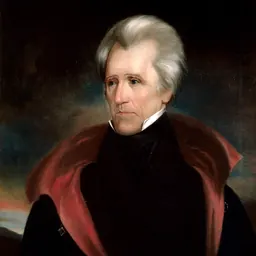
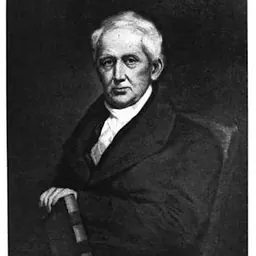

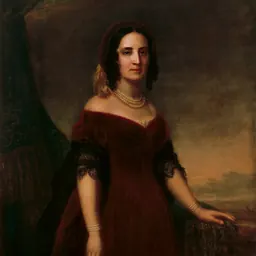
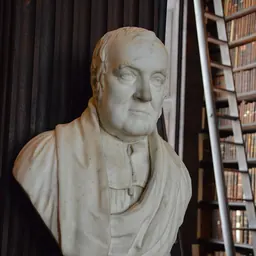


Contemporaries
People whose lives overlapped James Childress's




Frequently asked questions
Who was James Childress?
American pioneer settler (1773–1836)
When was James Childress born?
James Childress was born on 28 January 1773.
When did James Childress die?
James Childress died on 18 January 1836.
Sources & further reading
· DBpedia: James Childress (Alabama)
Cite this page
APA: Biography.guide. (2026). James Childress. https://biography.guide/james-childress-1773/
MLA: "James Childress." Biography.guide, https://biography.guide/james-childress-1773/.
Chicago: "James Childress." Biography.guide. https://biography.guide/james-childress-1773/.
Data last updated: 2026-09-20 · Spot an error? Report a correction.
Page generated 2026-09-27 05:28 UTC