
About James Bintliff
Lived 1824 – 1901 (aged 76). James Bintliff was an American military officer, journalist, editor and wisconsin.
James Bintliff (November 1, 1824 – March 16, 1901) was an American newspaper publisher, businessman, Republican politician, and Wisconsin pioneer. He served as a Union Army officer through most of the American Civil War, and received an honorary brevet to the rank of brigadier general in recognition of his conspicuous gallantry during the Third Battle of Petersburg on the final day of the Siege of Petersburg, April 2, 1865.
In civilian life, Bintliff was one of the founders of The Northwestern Mutual Life Insurance Company. He was editor, publisher and proprietor of three newspapers, the Monroe Sentinel, Janesville Gazette, and Darlington Republican. Later in life, he served nearly 20 years on the board of the state Soldiers' Orphans Home, and served several years on the state Board of Supervision of Penal and Reformatory Institutions.
Early life Bintliff was born on November 1, 1824, in Salterhebble, West Yorkshire to Gershom and Maria Hanson Bintliff. James was the third of nine children and the oldest son. In 1839 at the age of 15, he was employed as a lawyer's clerk in Halifax, West Yorkshire and later as a book-keeper for the Halifax and Wakefield Canal Company.
In 1847, he married Harriet Snook, the daughter of James Snook of Somerset, England, at Skaneateles, New York. James and Harriet Bintliff had four children, Edward Hawkins Bintliff, born November 15, 1849, Ida M. Bintliff, born 1855, James Wilkins Bintliff, born about 1858, and Helen Bintliff, born 1861. The birth years indicate that Edward was born in New York State and the other three children were born in Green County, Wisconsin.
Bintliff was in business with his father until 1851. In 1859, Bintliff was admitted to the bar of Green County. Detachments of the 22nd Wisconsin Infantry, which included Bintliff, were serving on garrison duty at Brentwood, Tennessee when they were attacked by a superior force led by Confederate Major General Nathan Bedford Forrest. In the Battle of Brentwood, on May 25, 1863, Forrest captured most of the garrison. Bintliff was captured and taken to Libby Prison in Richmond, Virginia, as a prisoner of war. He commanded Brigade 3, Division 1, IX Corps, Army of the Potomac, between April 2, 1865, and April 24, 1865. The IX Corps took a prominent part in the storming of Petersburg on April 2, 1865, which resulted in the evacuation of the Confederate capital of Richmond, Virginia, the surrender of the Army of Northern Virginia at Appomattox Court House on April 9, 1865, and the swift end of the war and dissolution of the Confederacy. During the Third Battle of Petersburg, on April 2, 1865, Colonel Bintliff, in command of his regiment and two others, was ordered to take a fort of five guns, known as "Reeves' Salient," which he and his men accomplished. when the city fell to the Union Army. On January 13, 1866, President Andrew Johnson nominated Bintliff for appointment to the grade of brevet brigadier general of volunteers, to rank from April 2, 1865, and the U.S. Senate confirmed the appointment on March 12, 1866.
Bintliff's brother Gersham, served as a private in the 38th Wisconsin Infantry Regiment, of which James was colonel. His brother Thomas was a lieutenant in the 20th Wisconsin Volunteer Infantry Regiment and his youngest brother, Alfred, was a musician in the 5th Independent Battery Wisconsin Light Artillery.
In 1870, Bintliff purchased a one-half interest in the Janesville Gazette at Janesville, Wisconsin, and became its editor until December 1877.
Between 1870 and 1877, he also was a member of the board of trustees, and for two years president of the board, of the Wisconsin Soldiers' Orphans' home. The other one-half interest was bought by his son, Edward H. Bintliff. Bintliff prepared the list of the first twelve studies ranging from Chaucer to Addison and Steele.
In 1876, Wisconsin established the State Board of Health of the State of Wisconsin. Bintliff was chosen as a member of the Board for four years, ending January 31, 1880.
A brief sketch of his life by the Wisconsin Historical Society states that Bintliff retired to private life to spend time with his family and his studies after his term on the Board of Supervision expired. His home was in Darlington, Wisconsin until 1895 when he moved "to Chicago." Bintliff died of a stroke on March 16, 1901, in South Chicago, Cook County, Illinois. James Bintliff was buried in Oak Hill Cemetery, Janesville, Wisconsin.
Bintliff's former home in Monroe, Wisconsin, now known as the Gen. James Bintliff House, is on the National Register of Historic Places.
Don’t just read it —
keep it.
Full-length biographies made to live with: read them, listen on the way to work, watch them tonight.
- E-book
- Audio
- Video
Instant download · yours to keep · every purchase keeps this site free
Important facts
People in James Bintliff's life
Named in this biography and alive at the same time


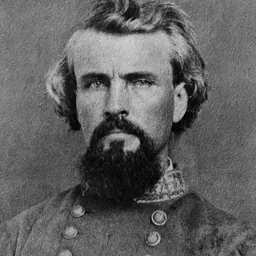
Related people
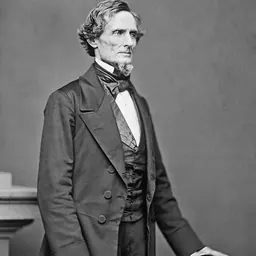
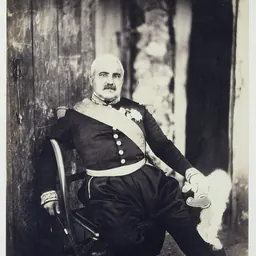
Same field, nearest in time

Contemporaries
People whose lives overlapped James Bintliff's




Frequently asked questions
Who was James Bintliff?
American general (1824-1901)
When was James Bintliff born?
James Bintliff was born on 1 November 1824 in Salterhebble.
When did James Bintliff die?
James Bintliff died on 16 March 1901 in South Chicago.
What was James Bintliff's occupation?
James Bintliff was a military officer, journalist, editor and wisconsin.
What nationality was James Bintliff?
James Bintliff was American.
Sources & further reading
Cite this page
APA: Biography.guide. (2026). James Bintliff. https://biography.guide/james-bintliff/
MLA: "James Bintliff." Biography.guide, https://biography.guide/james-bintliff/.
Chicago: "James Bintliff." Biography.guide. https://biography.guide/james-bintliff/.
Data last updated: 2026-09-20 · Spot an error? Report a correction.
Page generated 2026-09-27 05:30 UTC