
James A. Porter
Seminal African American art historian known for systematic critical analysis of African American artists and their work
About James A. Porter
Lived 1905 – 1970 (aged 64). James A. Porter was an American art historian, historian and painter.
James Amos Porter (December 22, 1905 – February 28, 1970) was an African-American art historian, artist and teacher. He is best known for establishing the field of African-American art history and was influential in the African American Art movement.
Early life and education Porter was born in Baltimore, Maryland on December 22, 1905. His father was an African Methodist Episcopal minister and his mother was a teacher. His brother John taught him to paint. He attended schools in Washington D.C. between 1918 and 1923, and later attended Howard University. Under the direction of James V. Herring, head of the Art Department at Howard University, Porter studied painting, drawing, and art history, and graduated with honors in Art in 1927.
In 1929, Porter studied at The Art Institute of New York City, where he won the Arthur Schomburg Portrait Prize,
Career James A. Porter, African Nude, 1934. Harmon Foundation Collection Porter began his career as an instructor of painting and drawing at Howard University. During his four decade Howard tenure, he would work with artists, such as James Lesesne Wells and Lois Mailou Jones, chair the Art Department, and serve as Director of the Art Gallery (1953 through 1970). David Driskell, one of Porter's students at Howard, recalled in an interview with Xavier Nicholas that he was the only student in his "Negro Art" class one semester but "He taught that course as though he had a hundred students there, and I was the only one."
He published Modern Negro Art in 1943, the first comprehensive study in the United States of African-American art. Porter decisively placed African-American artists within the framework of American art. He was the first to recognize and document the significant contributions these artists made to the history of American art. With Porter's systematic approach, Modern Negro Art became and still is the foundation of African-American art history and for later texts.
Porter was the recipient of a grant from the Rockefeller Foundation in 1945. He took a leave of absence from teaching and spent a year in Cuba from 1945 to 1946, studying art and culture in Cuba and Haiti. In Haiti, Porter's subjects included the peasant class and landscapes of the country. While his work in Haiti focused on similar subjects as other Black artists who turned to Haiti for inspiration, such as William E. Scott and Aaron Douglas, his approach to the subject matter differed.
Porter's work was shown in many group exhibitions during his forty-year career. In 1940, his work was displayed at the American Negro Exposition in Chicago, and in 1948, he mounted a one-man exhibition of his work with the Barnett-Aden Gallery in Washington, D.C. The Porter Colloquium annually attracts art historians, artists, curators, collectors, and art dealers in the field of African American Art. Presenters have included former Porter students, such as David Driskell and Tritobia Hayes Benjamin, and other important scholars and artists, such as Michael D. Harris, Samella Lewis, Richard A. Long, Lowery Stokes Sims, Richard J. Powell, Deborah Willis, and Judith Wilson-Pates.
On February 25, 2010, Swann Galleries auctioned an immense archive of research material amassed by Porter; it consisted of photographs, letters, exhibit catalogues, art books, flyers, and bibliographical data on important African-American artists. Acquired by Emory University, the papers include correspondence from virtually every major African-American artist from the 1920s forward: Romare Bearden, Lois Mailou Jones, Meta Fuller, Elizabeth Catlett, Hughie Lee-Smith, and many others.
Don’t just read it —
keep it.
Full-length biographies made to live with: read them, listen on the way to work, watch them tonight.
- E-book
- Audio
- Video
Instant download · yours to keep · every purchase keeps this site free
Important facts
Family & relationships
People in James A. Porter's life
Named in this biography and alive at the same time

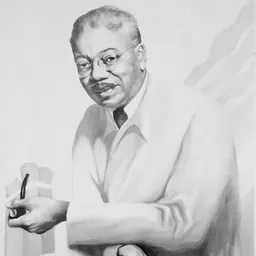





Related people
Same field, nearest in time


Contemporaries
People whose lives overlapped James A. Porter's




Frequently asked questions
Who was James A. Porter?
seminal African American art historian known for systematic critical analysis of African American artists and their work (1905–1970)
When was James A. Porter born?
James A. Porter was born on 22 December 1905 in Baltimore.
When did James A. Porter die?
James A. Porter died on 28 February 1970 in Washington, D.C..
What was James A. Porter's occupation?
James A. Porter was an art historian, historian and painter.
What nationality was James A. Porter?
James A. Porter was American.
Sources & further reading
Cite this page
APA: Biography.guide. (2026). James A. Porter. https://biography.guide/james-a-porter-art-historian/
MLA: "James A. Porter." Biography.guide, https://biography.guide/james-a-porter-art-historian/.
Chicago: "James A. Porter." Biography.guide. https://biography.guide/james-a-porter-art-historian/.
Data last updated: 2026-09-20 · Spot an error? Report a correction.
Page generated 2026-09-27 05:14 UTC