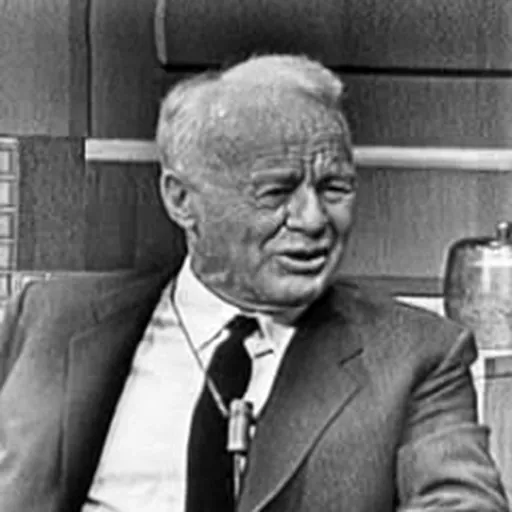
Jam Handy
American swimmer and water polo player, Olympic bronze medalist, educational film producer
About Jam Handy
Lived 1886 – 1983 (aged 97). Jam Handy was an American swimmer, journalist, film producer and water polo player.
Henry Jamison "Jam" Handy (March 6, 1886 – November 13, 1983) was an American Olympic breaststroke swimmer, water polo player, and founder of the Jam Handy Organization (JHO), a producer of commercially sponsored motion pictures, slidefilms (later known as filmstrips), trade shows, industrial theater and multimedia training aids. Handy made his first film in 1910 and presided over a company that produced an estimated 7,000 motion pictures and perhaps as many as 100,000 slidefilms before it was dissolved in 1983.
Athletic achievements Handy was the American Athletic Union long distance swim champion for three years beginning in 1907, and won national championships in all three strokes, prior to the introduction of the butterfly. As a noted innovator in improving stroke methodology, he was one of the first swimmers to use an alternate arm entry style in the backstroke, was instrumental in introducing the Australian crawl to American competition and helped introduce the 2 or 4 beat kick to ease the strain on middle-distance swimmers. While working for the Chicago Tribune, he was a member of both the Chicago Athletic Association and the Illinois Athletic Club, though while working at the Tribune, he often swam in the early morning hours at Chicago's Central YMCA.
Olympics
Handy swam in the 1904 Olympics in St. Louis, where he placed 3rd in the 440-yard breaststroke, winning the bronze medal. The distance had rarely been swum in Olympic competition and there were originally few entrants. Handy decided to participate shortly before the event, and in the final heat touched just an instant before Georg Hoffmann of Germany, who placed fourth on the heels of Handy. Handy placed sixth in the 880-yard freestyle, and in non-medal events, placed 2nd in the 880 yard handicap, and third in the one mile handicap.
He was selected as an alternate as part of the U.S. Water polo team coached by William Bachrach selected primarily from the Illinois Athletic Club at the 1924 Olympics in Paris, France. The U.S. team won a bronze medal, though Handy was unable to compete in the final. In the final match, the American team took third place in an unexpected 3–2 victory over the Swedish team. With his participation, he established a new record for the longest period of time between first and last Olympic competitions. In 1977, he was inducted into the USA Water Polo Hall of Fame. He was admitted to the prestigious Helms Foundation Swimming Hall of Fame in 1960.
Education and early career Handy attended North Division High School in Chicago, and then the University of Michigan during the 1902–03 academic year. During that time he was working as a campus correspondent for the Chicago Tribune when on May 8 he wrote an article about a lecture in the Elocution 2 class given by Prof. Thomas C. Trueblood as a "course in lovemaking." Handy went on to describe how Trueblood had dropped to a bended knee in order to demonstrate how to make an effective marriage proposal. John T. McCutcheon, a Chicago Record Herald cartoonist, followed the next day with a cartoon about a "Professor Foxy Truesport" showing his class how to best have sex. Handy was told he could re-apply one year later. Instead, Handy decided to apply to a different school, but he was unable to gain acceptance to other schools because of what had happened at the University of Michigan. Handy was accepted to the University of Pennsylvania but was told to leave after two weeks of classes. One of his daughter Chaille's children is the printmaker Garner Tullis. Another of his daughter Chaille's children is the inventor Barclay J. Tullis.
Filmmaking
After World War I, Handy was the Chicago-Detroit industrial representative for Bray Productions, creating films for the auto industry, Bray's largest private client.
Between 1936 and 1938, the Jam Handy Organization made a series of six animated fantasy sales films for Chevrolet featuring a gnome named Nicky Nome, which showed new Chevrolet automobiles saving the day from villains, often in retellings of classic tales such as Cinderella, the subject of two of those films, A Coach for Cinderella and A Ride for Cinderella. The other films were Nicky Rides Again, Peg-Leg Pedro, The Princess and the Pauper, and One Bad Knight. (1948), sponsored by retailer Montgomery Ward and directed by Max Fleischer. He swam on a regular basis until just a few days before his death. Prior to his death, he was the last living medalist of the 1904 Olympic Games. at the Detroit Public Library. His family and ancestry are featured in a historical collection held at the William L. Clements Library at the University of Michigan. The Clements Library also published a book titled Annals and Memorials of the Handys and Their Kindred by Isaac W.K. Handy, edited by Mildred Handy Ritchie and Sarah Rozelle Handy Mallon (Ann Arbor, 1992). An hour-long interview with Jamison Handy (published December 26, 1961) is available at Internet Archive.
Don’t just read it —
keep it.
Full-length biographies made to live with: read them, listen on the way to work, watch them tonight.
- E-book
- Audio
- Video
Instant download · yours to keep · every purchase keeps this site free
Important facts
People in Jam Handy's life
Named in this biography and alive at the same time



Related people
Same field, nearest in time


Contemporaries
People whose lives overlapped Jam Handy's





Frequently asked questions
Who was Jam Handy?
American swimmer and water polo player, Olympic bronze medalist, educational film producer (1886–1983)
When was Jam Handy born?
Jam Handy was born on 6 March 1886 in Philadelphia.
When did Jam Handy die?
Jam Handy died on 13 November 1983 in Detroit.
What was Jam Handy's occupation?
Jam Handy was a swimmer, journalist, film producer and water polo player.
What nationality was Jam Handy?
Jam Handy was American.
Sources & further reading
Cite this page
APA: Biography.guide. (2026). Jam Handy. https://biography.guide/jam-handy/
MLA: "Jam Handy." Biography.guide, https://biography.guide/jam-handy/.
Chicago: "Jam Handy." Biography.guide. https://biography.guide/jam-handy/.
Data last updated: 2026-09-21 · Spot an error? Report a correction.
Portrait: Wikimedia Commons · author & licence
Page generated 2026-09-27 04:59 UTC