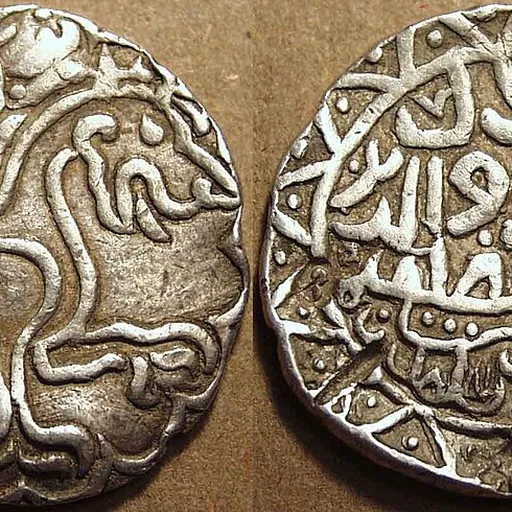
Jalaluddin Muhammad Shah
Medieval Bengali sultan
About Jalaluddin Muhammad Shah
Jalaluddin Muhammad Shah born as Jadu Nur Qutb Alam died in 1416 AD and Raja Ganesha was emboldened to depose his son and accede to the throne himself as Danujamarddana Deva. Jalaluddin was reconverted to Hinduism by the Golden Cow ritual. After the death of his father he once again converted to Islam and started ruling his second phase.
Second phase (1418–1433)
After Raja Ganesha died Jalaluddin assembled the nobles and ministers and said, “I believe in the truth of the religion of Muhammad, and I shall not deviate from this (belief). If you accept me and do not turn against my royal authority, then only I shall sit on this august throne; if not you shall raise my younger brother to the throne and excuse me.”
Jalaluddin maintained a peaceful kingdom during his second phase. His authority stretched to eastern Bengal Moazzamabad (present-day Sunamganj) and south-eastern Bengal (present-day Chittagong). He also conquered Fathabad (present-day Faridpur) and the southern Bengal. During his reign Firuzabad Pandua became a populous and flourishing town. It is recorded in the Ming shi that a Chinese explorer, Cheng Ho, visited the city twice in 1421–22 and 1431–33. He later transferred the capital from Pandua to Gauda. began to be re-populated during his reign. Jalaluddin himself constructed a number of buildings and sarais there.
Relation with Hindus Jalaluddin played a distinguished role in converting the Hindus of Bengal to Islam. Dr. James Wise wrote in the Journal of the Asiatic Society of Bengal (1894) that "the only condition he offered was either the Koran or death. Many Hindus fled to Kamrup and the jungles of Assam, but it is nevertheless possible that more Muslims were added to Islam during these seventeen years (1414–31) than in the next three hundred years." He maintained a good rapport with non-Muslims in his kingdom. According to an interpretation of a Sanskrit sloka by D. C. Bhattacharya, Jalaluddin appointed Rajyadhar, a Hindu, as the commander of his army.
According to a 19th-century chronicle written by Francis Buchanan-Hamilton, Jalaluddin compelled many Hindus to convert to Islam, resulting in many Hindus fleeing to Kamrup.
Relation with foreign rulers He also maintained good diplomatic relations. He was in correspondence with the Timurid ruler Shah Rukh of Herat, Yung Le of China and al-Ashraf Barsbay, the Mamluk ruler of Egypt. Jalaluddin helped Meng Soamun Narmeikhla, King of Arakan, to recover his kingdom from Burma; in return he became the overlord of Arakan. He, at some point, also ruled over parts of Tripura and southern Bihar.
Jalaluddin tried to legitimise his rule by publicly displaying his credentials as a devout and correct Muslim. Contemporary Arab sources hold that upon his conversion to Islam, Jalaluddin adopted the Hanafi legal tradition. He also rebuilt mosques destroyed by Raja Ganesha.
Between 1428 and 1431, he also supported the construction of two Islamic institutions in Makkah and Madinah, known as Bangaliyah Madaris. The Sultan gained permission by establishing close ties with and presenting Barakat ibn Hasan, the Sharif of Makkah, with gifts and robes of honour. Jalaluddin also kept good relations with Barsbay, the Mamluk sultan. According to Al-Sakhawi's Al-Daw al-lami` li ahli al-Qarni al-Tasi, Barsbay once gifted the Bengali sultan with investiture, a robe of honour and a letter of recognition. Jalaluddin had died before his own gifts could be dispatched to Barsbay and this job was left for his son, Shamsuddin Ahmad Shah, to be completed.
In 1427, Jalaluddin described himself in an inscription as Al-sultan al-azam al-muazzamin khalifat Allah 'ali al-makunin Jalal al-Dunya w'al-Din (the most exalted of the great sultans, the caliph of Allah in the universe). Vassalization of Arakan
Min Saw Mon, the king of Arakan had fled his kingdom because of an invasion from Pegu and had entered the service of Sultan Jalaluddin, and proved to be a good commander. According to the Arakanese Chronicles, there was a invasion from Delhi Sultanate and the sultan asked Saw Mon to take command of the army. His first strategy was to confiscate the enemy's dogs while setting up bait which are the spikes filled with meats, as the dogs ate the meats filled with spikes became lesser aggressive and halted further advance of the Delhi Sultanate's canine army. Saw Mon's sultanate army then launched a counterattack against the enemy positions, by setting up traps for the invaders as by luring then with silver coins scattered around the bamboo forests. The enemy soldiers shortly began picking up those coins, and sensing weakness, Mon attacked and routed the invaders. Bengal Sultanate thus successfully ward off the invasion thanks to military strategy of Saw Mon.
After this victory, Saw Mon convinced the sultan to help him regain the Arakanese throne. The sultan agreed. In February/March 1429 (Tabaung 790 ME), Saw Mon aided by troops "largely made up of Afghan adventurers and Bengali muslims" invaded Arakan. The first attempt at the invasion failed because Saw Mon got into an argument with commander Wali Khan of Bengal, and was imprisoned by the general. Saw Mon escaped, and the sultan agreed to another attempt. The second invasion went well, the Bengali and Afghan troops conquered the whole of Arakan. Saw Mon was proclaimed king at Launggyet on 18 April 1429 (Thursday, 1st waning of Kason 791 ME) and in gratitude Saw Mon rewarded many Bengali soldiers, many of which returned to Bengal with war prizes. (According to some Arakanese chronicles, such as Inzauk Razawin, the second invasion took place in 1430, a year later). Asides from him, the lion-motif coins were also issued by Nasiruddin Mahmud Shah I and Jalaluddin Fateh Shah. Such type of coins were also issued by the kingdom of Tripura in 1464, thus precluding the possibility that Jalaluddin was following the kingdom's custom. Since the lion is seen as the vehicle of the Goddess as Chandi in whose name the Sena dynasty rebelled from 1416 to 1418, it is possible he attempted to appeal to the deeply-rooted sentiments of Goddess-worship. In 1427, he had described himself in a description on a mosque as the most exalted of the great sultans, the caliph of Allah in the universe. Having tested this, in 1430 he took a bolder step by including "Caliph of Allah" (Khalifat al-Allah) as one of his titles on his coins. In 1431 AD he issued a new coin inscribing Kalema-tut-shahadat. Thus he reintroduced on his coins the Kalimah, which had disappeared from Bengal Sultanate coins for several centuries.
Death He died in Rabi 2, 837 AH (1433 AD) and was said to have been buried in the Eklakhi Mausoleum at Pandua, although this is disputed.
Don’t just read it —
keep it.
Full-length biographies made to live with: read them, listen on the way to work, watch them tonight.
- E-book
- Audio
- Video
Instant download · yours to keep · every purchase keeps this site free
Important facts
Family & relationships
Frequently asked questions
Who was Jalaluddin Muhammad Shah?
Medieval Bengali sultan
When did Jalaluddin Muhammad Shah die?
Jalaluddin Muhammad Shah died in 1433.
Sources & further reading
· Wikipedia: Jalaluddin Muhammad Shah
· DBpedia: Jalaluddin Muhammad Shah
Cite this page
APA: Biography.guide. (2026). Jalaluddin Muhammad Shah. https://biography.guide/jalaluddin-muhammad-shah/
MLA: "Jalaluddin Muhammad Shah." Biography.guide, https://biography.guide/jalaluddin-muhammad-shah/.
Chicago: "Jalaluddin Muhammad Shah." Biography.guide. https://biography.guide/jalaluddin-muhammad-shah/.
Data last updated: 2026-09-20 · Spot an error? Report a correction.
Page generated 2026-09-27 05:10 UTC