
About Jalal Merhi
Born 1967. Jalal Merhi is a Canadian, Brazilian and Lebanese film producer and film director.
Early life Merhi was born in Brazil to a family of Druze Lebanese expatriates working in the jewelry industry. He moved to Lebanon at age six, before moving again to Canada at age nineteen to study and to escape the Civil War. He initially spent time between Montreal and Toronto before permanently settling in the latter. In Canada, Merhi studied film and business. He is an alumn of Ryerson University He originally followed in his forebears' footsteps, operating JM Co., a Toronto branch of the family business which consisted of several shops and a manufacture.
Martial arts career Merhi started martial arts at the age of eleven. His true interest lay in Chinese martial arts due to their emphasis on artistry and traditional weapons, but tuition in those disciplines was not widely available at the time. Within two months of moving to Canada, Merhi found Mo Chow's kung fu school in Toronto and started training there, primarily in the Choy Li Fut and Hung Gar styles.
Merhi also helped promote martial arts tournaments like the Canadian Karate Internationals, and later the Diamond Challenge, with his Shotokan teacher Bill Pickells. His jewelry company presented winners in major classes with a diamond-studded championship ring worth close to CDN$3000
Kung fu films and Donlands years Although he had pondered entering the world of film as early as 1979, Merhi's involvement with the industry began in earnest in 1986. Following a win in an Ontario tournament in 1986, he received an offer to play an ensemble role in a martial arts film, which led to another offer to double for a younger actor. The aspiring actor considered both offers, although neither was to his liking. Thanks to SGE's distribution deal with MCA/Universal Home Video, the film found a wider audience, which Merhi saw as vindication after his inauspicious beginnings. although a condescending rebuttal by a Telefilm Canada member, the country's main film support organization and an arbiter of taste within the industry, soured him so much that he resolved to succeed without them. for budgets around CDN1 million—substantially less than the Canadian industry average—and grosses generally equaling three times that.
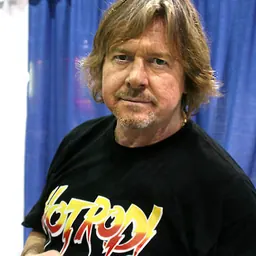
Thanks to Tiger Claws success, its successors Talons of the Eagle and TC 2000 quickly gained financing, and Merhi brought in friend Billy Blanks as his co-star. When they proved successful, SGE decided to retain Blanks' services and go in a different direction, discarding all of Merhi's influences over the anticipated Talons of the Eagle sequel, which became an unrelated buddy movie starring Blanks and "Rowdy" Roddy Piper called Back in Action. It afforded Merhi his highest budget yet for Expect No Mercy, which mixed fisticuffs with early CGI-based science fiction, although Le Monde president John Freme voiced limited belief in the long term prospects of martial arts vehicles. Echoing what had happened with Talons of the Eagle, Alliance offered a bigger budget to retool the intended Expect No Mercy 2 into a more mainstream, standalone picture, which Merhi would direct but not appear in.
While branching out into other genres , Merhi kept trying to deliver his brand of fantasy-infused martial arts amidst changing market trends until the late 1990s. A true sequel to Talons of the Eagle was considered, but Blanks soon became unavailable as his agents cultivated a more wholesome image following his rise to fame as a fitness guru. Merhi found a home for a belated third installment of the Tiger Claws series at ambitious Canadian upstart Annex Entertainment in 2000, but that company was short-lived. In 2021 and 2022, the producer collaborated with genre film preservationists Vinegar Syndrome on premium Blu-ray reissues of his most popular films from this era.
Donlands Theatre studios Displeased by the lack of professionalism of some of the producers he had encountered in his early work, Merhi decided to dedicate himself to full-time filmmaking. Against the advice of his entourage, he sold the majority of his business interests, as well as his share of a downtown Toronto building, to fund the next steps of his career and give his company its own studio.
Themes Much of Film One's 90s catalogue was created in collaboration with writer and occasional director J. Stephen Maunders, one of Merhi's kung fu students and later a teacher of the sport himself. As such, their early films aspired to represent Chinese martial arts on a more cultural level, This was exemplified by Bill Pickells, Mo Chow and John Atkinson's appearances as fictionalized versions of themselves in Tiger Claws, while the background of Cynthia Rothrock's fictional character echoed her real-life childhood in Scranton, Pennsylvania. French-Canadian publication Panorama Cinéma summed up Merhi's works as "self reflexive" martial arts films "made by fans, for fans".
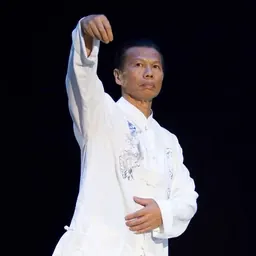
Although Merhi's industriousness once earned him the label of "one-man Canadian movie-making industry" from a Toronto tabloid, with Canuxploitation.com, a website created by genre historian Paul Corupe, describing Film One as an "ignominious company". For his part, Merhi has cited his willingness to share the spotlight, having cast Bolo Yeung and Billy Blanks, until then best known for their supporting or villainous parts, in meaty protagonist roles.
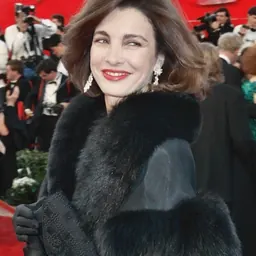
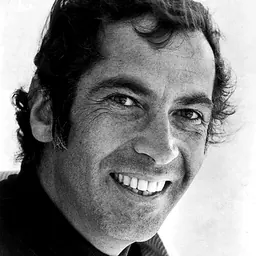
Diversification Mainstream projects In the mid 90s, Merhi attempted to grow his company beyond the kung fu subgenre, and offer products attuned to broader entertainment trends. Amidst the erotic thriller boom of the period, he was in talks to produce one starring Anne Archer of Fatal Attraction fame. a thriller with Yasmine Bleeth that Roger Vadim was at one point attached to direct, and a new version of Hercules whose filming would use his Middle Eastern connections. However that film, which was promoted as the first in a trilogy and considered by Merhi to be his proudest achievement, was beset by distribution problems
Further genre films With his mainstream break not forthcoming, Merhi soldiered on with more modest movies. By the second half of the 90s however, many independent stores had been weeded out of the video rental market in favor of large chains that stocked fewer niche products such as Film One's. Merhi further rationalized his operations, paring down his trademark spiritual touches to focus on more grounded affairs shot on brisk schedules. They were often joint ventures with regional producers, and sometimes filmed back-to-back. One such film was 1997's Crisis, which has been billed as the first feature to use the city of Saskatoon as its principal shooting location. The first two installments were picked up by Blockbuster Video under their City Heat label, guaranteeing a wide viewership. However, the home video market was changing further, and soon even larger chains scaled back their operations, greatly limiting the commercial prospects of low budget independent action fare. Despite selling several films to distributor ThinkFilm, a new company co-founded by early supporter Jeff Sackman, Merhi's output went on to receive increasingly spotty releases, and the producer switched to reality television altogether. Thanks to the advent of streaming platforms and the lower production costs afforded by digital media, Merhi has expressed interest in reviving The Circuit in episodic form. as well as an early video based on Billy Blanks' self-defense-based fitness program, then known as Karobics. The video was shelved due to trademark issues, and Blanks later rebranded his routine as Tae Bo under another production company. Toronto scenes filmed in 2006Not officially released 2013 Risk Factor Alex Granger Filmed in 2003 as Into the Heat 2023 Born to Be Great: Alexander of Macedonia A sports car enthusiast himself, he is also the uncle of race driver Roberto Merhi.
Honors Canadian Black Belt Hall of Fame Class of 2019
Don’t just read it —
keep it.
Full-length biographies made to live with: read them, listen on the way to work, watch them tonight.
- E-book
- Audio
- Video
Instant download · yours to keep · every purchase keeps this site free
Important facts
People in Jalal Merhi's life
Named in this biography and alive at the same time



Related people
Same field, nearest in time


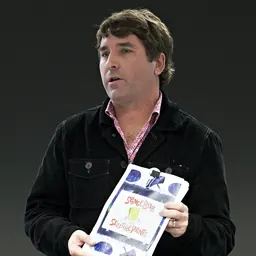

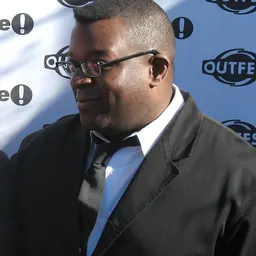
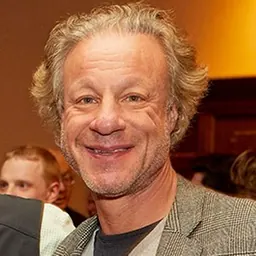
Contemporaries
People whose lives overlapped Jalal Merhi's

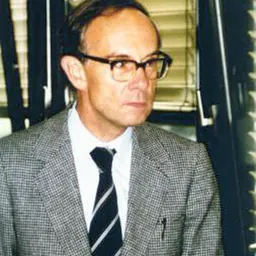


Frequently asked questions
Who is Jalal Merhi?
Canadian film producer
When was Jalal Merhi born?
Jalal Merhi was born in 1967 in Brazil.
What is Jalal Merhi's occupation?
Jalal Merhi is a film producer and film director.
What nationality is Jalal Merhi?
Jalal Merhi is Canadian, Brazilian and Lebanese.
Sources & further reading
Cite this page
APA: Biography.guide. (2026). Jalal Merhi. https://biography.guide/jalal-merhi/
MLA: "Jalal Merhi." Biography.guide, https://biography.guide/jalal-merhi/.
Chicago: "Jalal Merhi." Biography.guide. https://biography.guide/jalal-merhi/.
Data last updated: 2026-09-22 · Spot an error? Report a correction.
Page generated 2026-09-27 05:04 UTC