
About Jahangir Alam Chowdhury
Born 1953. Jahangir Alam Chowdhury is a Bangladeshi and Pakistani military leader.
Jahangir Alam Chowdhury (born 2 February 1953) is a retired three star general of the Bangladesh Army and former director general of the Bangladesh Rifles. He was also an adviser in the interim government of Bangladesh.
A former principal staff officer of the Army of Bangladesh, he was elevated to the position of quartermaster general at the same time his military academy course-mate Moeen U Ahmed, the chief of the army staff, was made the first serving general in national military history. He is widely credited with having gone to the Bangabhaban to ask the president of Bangladesh to declare the state of emergency which led to the events of 2008 that brought the military into power.
Early life Jahangir was born on 2 February 1953 in Munshiganj, East Bengal, and was commissioned in the Corps of Artillery of the Bangladesh Army in 1975. Beginning his career as a gunner, he served in different artillery outfits in various capacities, including commanding two artillery brigades and a field artillery regiment.
Career
Jahangir had also been an instructor at the Bangladesh Military Academy. Later he served as a group testing officer (GTO) in the Inter Services Selection Board. He got the unique opportunity to serve as a United Nations military observer and staff in three different UN missions between 1994 and 1996 in Bosnia-Herzegovina, Rwanda, and Georgia. He is a graduate of the Defence Services Command and Staff College and Bangladesh National Defence College, Mirpur, Dhaka.
Trained both at home and abroad, Jahangir served in a number of command, staff, and instructional assignments in the Bangladesh Army. Apart from artillery outfits, he commanded Bangladesh Rifles for a significant period – in the rank of major general as director general and in the rank of colonel as sector commander. He was assigned staff responsibilities in Bangladesh Army Headquarters as master general of ordnance, military secretary, director of the Inspectorate of Technical Development, and general staff officer – 1st grade in the Military Intelligence Directorate. He was also the assistant adjutant and quartermaster in HQ 66 Infantry Division and general staff officer – II (coordination) in the Bangladesh Military Academy. He served as the chairman of the Bangladesh Diesel Plant, an army-operated manufacturing company. He was the principal staff officer of the Armed Forces Division. He also served as quartermaster general and the colonel commandant of the corps of EME (electrical and mechanical engineers) of the Bangladesh Army.
Relations with India
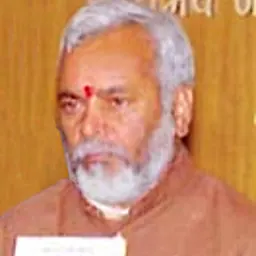
Chowdhury exclaimed at a press briefing after talks with Indian Home Minister Swami Chinmayanand that India was harboring 90 terrorist camps of anti-Bangladesh separatists. He played a controversial role in blaming India for the grenade attacks that took place on 17 August 2005. The Foreign Ministry of Bangladesh said that the Indian newspapers presented a distorted version of his earlier statement and that he actually said that some Indian criminals might have been involved in the countrywide bomb blasts in Bangladesh. Relations suffered between the two countries as the Indian Ministry of External Affairs issued a statement saying "Government of India is deeply shocked and dismayed at the remarks. This is a baseless and scurrilous allegation and is all the more shocking because it has been made against a friendly country and particularly after the two countries have had useful and constructive talks between the Bangladesh Rifles and Border Security Force". He further claimed that Indian militants might have crossed into Bangladeshi territory to perform the acts. In a separate incident reported by the BBC, India accused the BDR of intruding into their airspace with a few helicopters, which General Chowdhury denied and said that the BDR has one helicopter, which was then kept with the Bangladesh Army. He accused the Indian Army of supporting Banga Sena, a banned militant group in Bangladesh.
2009 mutiny
In 2009, his immediate successor, the then Chief of BDR Major General Shakil Ahmed, was shot and killed along with his wife during the 2009 Bangladesh Rifles revolt. As QMG, General Chowdhury headed the Army Enquiry Committee. On 3 December 2009, he was transferred to the Foreign Ministry. He retired from the army on 2 February 2010.
Personal life Jahangir is married to Laila Arzu, and they have a son, Rishad Choudhury Robin, and a daughter, Rasna Choudhury Liz.
Don’t just read it —
keep it.
Full-length biographies made to live with: read them, listen on the way to work, watch them tonight.
- E-book
- Audio
- Video
Instant download · yours to keep · every purchase keeps this site free
Important facts
People in Jahangir Alam Chowdhury's life
Named in this biography and alive at the same time


Related people
Same field, nearest in time




Contemporaries
People whose lives overlapped Jahangir Alam Chowdhury's


Frequently asked questions
Who is Jahangir Alam Chowdhury?
Bangladesh Army general
When was Jahangir Alam Chowdhury born?
Jahangir Alam Chowdhury was born on 2 February 1953 in East Pakistan, Munshiganj.
What is Jahangir Alam Chowdhury's occupation?
Jahangir Alam Chowdhury is a military leader.
What nationality is Jahangir Alam Chowdhury?
Jahangir Alam Chowdhury is Bangladeshi and Pakistani.
Sources & further reading
· Wikipedia: Jahangir Alam Chowdhury
· DBpedia: Jahangir Alam Chowdhury
Cite this page
APA: Biography.guide. (2026). Jahangir Alam Chowdhury. https://biography.guide/jahangir-alam-chowdhury/
MLA: "Jahangir Alam Chowdhury." Biography.guide, https://biography.guide/jahangir-alam-chowdhury/.
Chicago: "Jahangir Alam Chowdhury." Biography.guide. https://biography.guide/jahangir-alam-chowdhury/.
Data last updated: 2026-09-24 · Spot an error? Report a correction.
Page generated 2026-09-27 05:06 UTC