
About Jago Cooper
Born 1977. Jago Cooper is a British anthropologist, archaeologist, television presenter, screenwriter and university teacher.
Jago Cooper (born 1 June 1977) is an English museum director, Professor of art and archaeology and broadcaster.
He is the Executive Director of the Sainsbury Centre and Professor of Art and Archaeology at the University of East Anglia. Formerly, he was Head of the Americas and Curator at the British Museum where he focused on the art and archaeology of North and South America and was Director of the Santo Domingo Centre of Excellence for Latin American Research.
His career working around the world broadly focuses on cross-cultural research to address contemporary challenges facing society such as climate change and global conflict. Since 2009 he has written and presented a series of programmes for BBC Four, Channel 4, and National Geographic including Lost Kingdoms of South America, Lost Kingdoms of Central America, Easter Island: Mysteries of a Lost World, Masters Of The Pacific Coast: The Tribes Of The American Northwest, and The Inca: Masters of the Clouds. He has also produced a number of museum exhibitions and published books on world culture.
Biography Cooper attended Bryanston School in Dorset, and University College London (UCL) where he was awarded BA (First Class), MA (with distinction) and PhD qualifications in archaeology. After periods working at the Museum of London, and in heritage consultancy he then worked on the teaching staff at the University of Leicester, UCL and City University of New York, Cooper joined the British Museum's Department of Africa, Oceania and the Americas in 2012 before joining the Sainsbury Centre in 2021.
Career Following early professional experience in heritage consultancy, including work with the Museum of London (2000-2001), Conybeare Morrison and Partners (2001–2002) and cultural heritage and museum development programmes for the Government of Sri Lanka (1999–2000), Cooper moved into academic and museum-related research roles.
After completing his doctoral research at UCL Institute of Archaeology from 2003 to 2007, working in Cuba and focusing on Indigenous cultural heritage and island interaction in the prehistoric Caribbean, he was appointed Lecturer in Landscape and Historical Archaeology at the University of Leicester from 2007 to 2008. He subsequently held a Leverhulme Fellowship at the University of Leicester from 2008 to 2011, during which his research developed themes relating to environmental change, human adaptation, and cultural resilience. Beyond El Dorado: Power and Gold in Ancient Colombia, and Where the Thunderbird Lives: Cultural Resilience on the Northwest Coast of North America.
From 2017 to 2021, Cooper founded and directed the Santo Domingo Centre of Excellence for Latin American Research (SDCELAR), an interdisciplinary initiative based at the British Museum aimed at strengthening research collaboration between Latin American and UK institutions. The centre brought together artists, scholars, community organisations, and governmental bodies to support research and public engagement projects focused on Latin American cultural heritage.
Since 2021, Cooper has served as executive director of the Sainsbury Centre for Visual Arts at the University of East Anglia, where he is also Professor of Art and Archaeology. In this role, in 2023 he has overseen a major institutional change to the museums governance and operational approach in which the collection are understood as living beings. This living art approach is different to traditional museum approaches.
He has introduced new approaches for visitors to experience Living Art including Soundescapes in which musicians compose a new piece of music that materializes the lifeforce of the artwork for visitors to listen to,
The Living Art approach led to a revised curatorial concept emphasizing exhibition programming focused on fundamental societal questions with six month seasons exploring questions such as Can We Stop Killing Each Other? What is Truth? Why do I Take Drugs? Can the Seas Survive Us? What is the Meaning of Life? with associated public engagement and dialogue spaces enabling art and material culture to activate societal dialogue around these questions.
In addition to his directorial and academic roles, Cooper has held governance and advisory positions within the cultural sector, including Trustee and Chair of the Future Strategy Board at Art UK from 2023.
He has served as an invited reviewer and advisor for major research funding bodies, including the Swedish Research Council FORMAS, the US National Science Foundation, the Natural Environment Research Council, and the Social Sciences and Humanities Research Council of Canada. He has participated in international research programmes including the Integrated History and Future of People on Earth (IHOPE) scientific steering committee and National Geographic Explorer projects.
In 2012 he released the book Surviving Sudden Environmental Change: Answers from Archaeology with Payson D. Sheets which was described as being one of the "outstanding examples of 'thinking big'. . . carefully researched, interdisciplinary, focused and informative" by Erika Guttmann-Bond in the Antiquity Journal.
Cooper has authored and co-authored books, edited volumes, and exhibition catalogues on art, archaeology and museum practice, including Peru: A Journey in Time, The Arctic: Culture and Climate, and Mapping a New Museum: Politics and Practice of Latin American Research with the British Museum.
Cooper has also contributed to research on cultures through his curatorial and academic work with Indigenous peoples in the Americas. In collaboration with colleagues, he co-authored Arctic: Culture and Climate, which combines art, archaeological, and museum collections research to examine long-term Indigenous adaptation strategies in extreme environments.
A further dimension of his research involves museum practice and the politics of representation. His edited volume Mapping a New Museum examines how museums construct knowledge about Latin America and how curatorial practices shape public understanding of history and material culture.
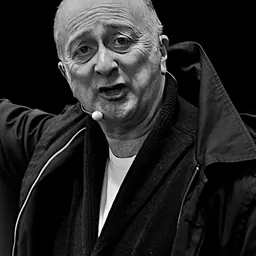
Broadcasting and media work In 2009 Cooper co-presented the Channel 4 series Man on Earth with Tony Robinson and Joy Singarayer, and in 2011 wrote and presented the series Lost Kingdoms of South America for BBC Four, including four episodes exploring the Chachapoya people, the city of Tiwanaku, the legend of El Dorado and the Kingdom of Chimor.
A second series aired in September 2014 entitled Lost Kingdoms of Central America focusing on the Olmec, Chiriquí (Ngäbe) and Taíno people and the ancient Mexican city of Teotihuacan.
In 2013 he filmed a one off-special for BBC 4 entitled Easter Island: Mysteries of a Lost World which re-examined the historic collapse in Rapa Nui society.
In January 2015 saw the broadcast of the two part series The Inca: Masters of the Clouds, also on BBC 4. In 2017 he wrote and presented a two part series working with Indigenous colleagues and communities on the northwest coast of North America, Masters of the Pacific Coast aired on the BBC and Knowledge Canada.
He has also contributed to radio programming and podcasts on cultural heritage, art and archaeology, appearing on platforms such as BBC Radio 4 programmes including Front Row, Start the Week, and Free Thinking. Arctic: Culture and Climate. 22 October 2020 - 21 February 2021, British Museum - "Developed in collaboration with Arctic communities, the exhibition celebrated the ingenuity and resilience of Arctic Peoples throughout history. It told the powerful story of respectful relationships with icy worlds and how Arctic Peoples have harnessed the weather and climate to thrive." Where the Thunderbird Lives: Cultural Resilience on the Northwest Coast of North America. 23 February - 27 August 2017, British Museum - "Where the Thunderbird lives celebrated the cultural resilience of First Nation communities on the Northwest Coast of North America. The exhibition aimed to bring the story of communities with more than 10,000 years of cultural continuity to an international audience at the British Museum." The season What Is Truth? explored how truth is constructed, mediated, and contested in the modern world. Through exhibitions such as The Camera Never Lies, Jeffrey Gibson: no simple word for time, Liquid Gender, The Heart of Truth, Tank Man, and In Event of Moon Disaster, Cooper examined questions of authenticity, memory, media manipulation, and cultural perception. The season challenged viewers to consider how truth is shaped by technology, politics, identity, and collective imagination. The season What Is the Planet for Our Future? reflected Cooper’s concern with ecological futures and humanity’s relationship to material existence. Projects such as Sediment Spirit, The Stuff of Life | The Life of Stuff, Coral Love, Coastal Collections, Coastal Connections, and Empowering Art: Indigenous Creativity and Activism from North America’s Northwest Coast investigated environmental fragility, Indigenous ecological knowledge, and sustainable coexistence. Cooper’s framing emphasized that environmental futures are inseparable from cultural memory and collective responsibility. With Can the Seas Survive Us?, Cooper focused specifically on oceans as both ecological systems and cultural imaginaries. Exhibitions like Sea Inside, Dialogic Space, Darwin in Paradise Camp: Yuki Kihara, and World of Water explored marine vulnerability, climate crisis, colonial histories, and oceanic interconnectedness. Through this season, Cooper positioned the sea as a site where environmental, political, and spiritual questions converge. The season Can We Stop Killing Each Other? confronted conflict, resilience, and the possibility of peace. Through exhibitions such as Seeds of Hate and Hope, Reflections on Peace: National Gallery Masterpieces Tour, Roots of Resilience: Tesfaye Urgessa, Eyewitness, and Tiaki Ora ∞ Protecting Life: Anton Forde, Cooper brought together artistic responses to violence, remembrance, reconciliation, and healing. The exhibitions highlighted humanity’s capacity for destruction while also foregrounding resistance and renewal. What Is the Meaning of Life? addressed existence itself through exhibitions including Play Power, Living by The Rule: Contemporary Meets Medieval, Life in the Multiverse: Libby Heaney, Joy Like Time, and Tree of Healing. Here, Cooper explored spirituality, play, mortality, and metaphysical possibility, encouraging audiences to reflect on how meaning is constructed across cultures and historical periods.
Selected publications
Books Cooper, J. & Sheets, P. (eds). 2012 Surviving Sudden Environmental Change: Answers from Archaeology. University of Colorado Press, Boulder. Lincoln, A, Cooper, J. & Loovers, J. P. L. 2020 Arctic: Culture and Climate. Thames & Hudson [ISBN 978-05004-80663] Sunnucks, L. O. & Cooper, J. 2021 Mapping a New Museum. Routledge [ISBN 978-10004-12512] Pardo, C. & Cooper, J. (eds). 2021 Peru: a journey in time. British Museum Press, London, UK [ISBN 978-07141-24919] Cooper, J. (2023). Living art: Sharing stories. Norwich, UK: Sainsbury Centre.
Journal articles and book chapters
Don’t just read it —
keep it.
Full-length biographies made to live with: read them, listen on the way to work, watch them tonight.
- E-book
- Audio
- Video
Instant download · yours to keep · every purchase keeps this site free
Important facts
People in Jago Cooper's life
Named in this biography and alive at the same time




Related people
Same field, nearest in time



Contemporaries
People whose lives overlapped Jago Cooper's



Frequently asked questions
Who is Jago Cooper?
English archaeologist
When was Jago Cooper born?
Jago Cooper was born on 1 June 1977 in St Pancras, London.
What is Jago Cooper's occupation?
Jago Cooper is an anthropologist, archaeologist, television presenter, screenwriter and university teacher.
What nationality is Jago Cooper?
Jago Cooper is British.
Sources & further reading
Cite this page
APA: Biography.guide. (2026). Jago Cooper. https://biography.guide/jago-cooper/
MLA: "Jago Cooper." Biography.guide, https://biography.guide/jago-cooper/.
Chicago: "Jago Cooper." Biography.guide. https://biography.guide/jago-cooper/.
Data last updated: 2026-09-22 · Spot an error? Report a correction.
Page generated 2026-09-27 05:20 UTC