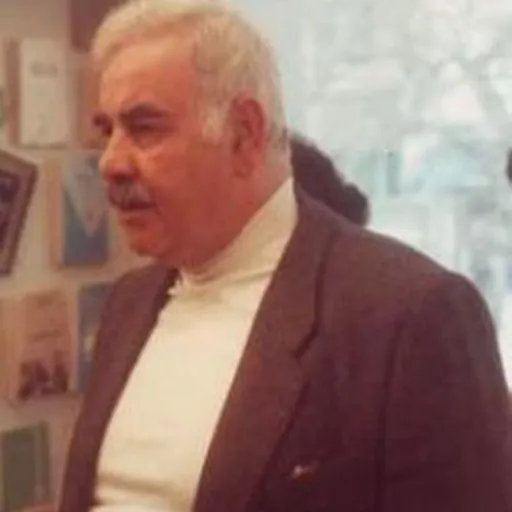
Jafar Sharafeddin
Lebanese Baathist politician
About Jafar Sharafeddin
Lived 1930 – 2001 (aged 70–71).
Sayed Jafar Sharafeddin (born in 1920 in Tyre, died on 25 July 2001 in Tyre) was a Lebanese Baathist politician, who served as a deputy (member) of the Lebanese parliament.
He started his political career during the 1958 Lebanon crisis and subsequently played a key role in the politics of Southern Lebanon towards the empowerment of the marginalised Shia communities on the national level, not least by inviting his relative Musa Sadr – who went on to found the Amal Movement – to succeed his father as Imam of Tyre.
Life
Family background Sharafeddin was one of the sons of Sayed Abdul Hussein Sharafeddin al-Musawi, an outstanding Shi'a Twelver Islamic scholar from the prestigious Al-Musawi family which has a transnational identity and amongst its prominent members included Ruhollah Khomeini. The Sharafeddins trace their lineage traces its lineage to Muhammad through Musa al-Kazim, the seventh Shi'a Imam, because of his relation to the first Imam, Ali ibn Abi Talib and Fatima Zahra, the daughter of the Muhammad.
The elder Sharafeddin has been widely considered a social reformer and "activist" who founded modern Tyre.
While Jafar's nephew Hussein Sharafeddin became the director of the Jafariya School, which their father had founded in 1938 as the first of its kind in Tyre, The latter became the only Shi'ite minister in the cabinet of Sami as-Sulh, to whose family his clan was traditionally allied. Al-Asaad became a "major instigator" against President Camille Chamoun and his ally al-Khalil "Kazim's followers had a free hand in Tyre; they could carry Guns on the streets". The Jafariya school became the base of the opposition. Sayed Jafar's nephew Hussein, who was the director of Jafariya and a leader in the protests, was imprisoned, too. or five protestors were killed and about a dozen injured. gained the upper hand in Tyre. According to a general delegate of the International Committee of the Red Cross (ICRC) who visited in late July, "heavy fighting went on for 16 days". Eventually, Kazem al-Khalil was expelled from the city and the Sharafeddin family "took over control". The national crisis dissolved in September, when Chamoun stepped down. Al-Khalil returned to Tyre still in 1958, but was attacked several times by gunmen. According to some source, Sharafeddin at first asked Musa's older brother Sayed Reza al-Sadr to take up the position, but he declined. In 1959, Sadr moved to Tyre and at first encountered not only suspicion, but also opposition.
Political offices
In the 1960 Lebanese general election, Sharafeddin was elected in the Tyre constituency with the highest number of votes to serve as a deputy in the Parliament of Lebanon, to which he was re-elected in the 1964 general election. There he made the following plea, which arguably summarises the precarious socio-economic situation of his constituency in the mid-20th century most precisely:"The district of Tyre has sixty villages, to which God Almighty has given all kinds of beauty. But the rulers of Tyre have deprived Tyre and the surroundings of their rights. Of these sixty villages only a dozen or so have anything that could be called a school or a paved road. Forty villages are without a school. These sixty villages go thirsty in this age of science and the machine, while a river [the Litani] passes them by on the way to the sea. All sixty villages lack electricity. Electricity is the fortune of more privileged districts. .. These sixty villages are deserted, inhabited by old men and women; the young ones have departed to toil in the heat of Africa. Thousands more have come to Beirut, to toil among others of their kind. Tyre itself, the heart of the district, has suffered what no city can suffer. It has become a deformed, ruined place. Everything in it falls short of what a civilised place should be. The government should restore to Tyre its splendor."
In 1976, local commanders of the Palestinian Liberation Organisation (PLO) took over the municipal government of Tyre with support from their allies of the Lebanese Arab Army (LAA) and declared the founding of the "People's Republic of Tyre". However, the new rulers quickly lost support from the Lebanese-Tyrian population because of their "arbitrary and often brutal behavior". Even Sharafeddin, who had promoted freedom for the Palestinians like his father before him, was quoted as criticising the PLO for "its violations and sabotage of the Palestinian cause".
Later years
In 1992, he provided an extensive amount of his memories and unpublished documents through oral history interviews for a PhD thesis on the history of "Political awareness of the Shi'ites in Lebanon" which was accepted by the University of Durham.
Don’t just read it —
keep it.
Full-length biographies made to live with: read them, listen on the way to work, watch them tonight.
- E-book
- Audio
- Video
Instant download · yours to keep · every purchase keeps this site free
Important facts
People in Jafar Sharafeddin's life
Named in this biography and alive at the same time
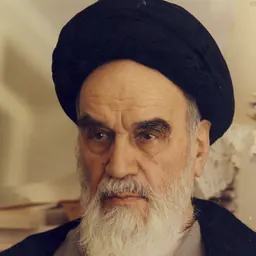


Contemporaries
People whose lives overlapped Jafar Sharafeddin's
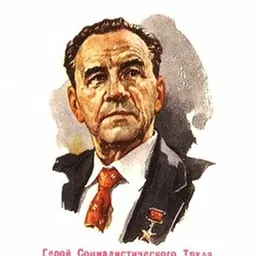
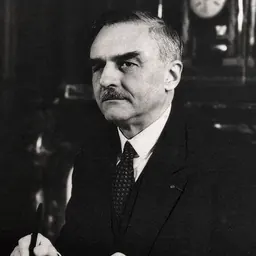

Frequently asked questions
Who was Jafar Sharafeddin?
Lebanese Baathist politician (1920–2001)
When was Jafar Sharafeddin born?
Jafar Sharafeddin was born in 1930.
When did Jafar Sharafeddin die?
Jafar Sharafeddin died in 2001.
Sources & further reading
· Wikipedia: Jafar Sharafeddin
Cite this page
APA: Biography.guide. (2026). Jafar Sharafeddin. https://biography.guide/jafar-sharafeddin/
MLA: "Jafar Sharafeddin." Biography.guide, https://biography.guide/jafar-sharafeddin/.
Chicago: "Jafar Sharafeddin." Biography.guide. https://biography.guide/jafar-sharafeddin/.
Data last updated: 2026-09-23 · Spot an error? Report a correction.
Portrait: Wikimedia Commons · author & licence
Page generated 2026-09-27 05:07 UTC