
About Jacques Miller
Born 1931. Jacques Miller is an Australian and French physician and immunologist, known for B cells, T cells and Thymus.
Jacques Francis Albert Pierre Miller AC FRS FAA (born 2 April 1931) is a French-Australian research scientist. He is known for having discovered the function of the thymus and for the identification of mammalian species of the two major subsets of lymphocytes (T cells and B cells) and their function.
Early life and education Miller was born on 2 April 1931 in Nice, France, as J.F.A.P. Meunier, and grew up in France, Switzerland and China, mostly in Shanghai. After the outbreak of World War II, in anticipation of Japan's entry into the war, his family moved in 1941 to Sydney, Australia, and changed their last name to "Miller". He was educated at St Aloysius' College in Sydney, where he met his future colleague, Sir Gustav Nossal.
Miller studied medicine at the University of Sydney, and had his first experience of laboratory research in the laboratory of Professor Patrick de Burgh where he studied virus infection. Miller chose to study the pathogenesis of lymphocytic leukemia in mice, expanding on the research of Ludwik Gross into murine leukemia virus. Miller showed that experimental animals without a thymus at birth were incapable of rejecting foreign tissues and resisting many infections, thus demonstrating that the thymus is vital for the development and function of the adaptive immune system. Prior to this, the thymus was believed to be a vestigial organ with no function. His discovery has led many to describe Miller as the "world's only living person who can claim to have been the first to have described the functions of a human organ". In 1963, Miller continued his work into the function of the thymus at the National Institutes of Health.
In 1966, Miller returned to Australia to become a research group leader at the Walter and Eliza Hall Institute of Medical Research in Melbourne, at the invitation of its new director Sir Gustav Nossal, the successor of Sir Macfarlane Burnet. There, with student Graham Mitchell, he discovered that mammalian lymphocytes can be separated into what were later called T cells and B cells, and that these interact to allow normal antibody production (T cell help). Miller went on to show that the thymus produces the T cells, that it removes autoreactive T cells (central T cell tolerance) and several other landmark findings in immunology. These are considered crucial to understanding diseases such as cancer, autoimmunity and AIDS, as well as processes such as transplant rejection, allergy and antiviral immunity. which forms the basis for modern cancer immunotherapy.
Semi-retired since 1996, Miller is still involved in immunological research.
Awards and honours 1966 Gairdner Foundation International Award 1967 Scientific Medal of the Zoological Society of London 1974 Paul Ehrlich and Ludwig Darmstaedter Prize 1978 Rabbi Shai Shacknai Memorial Prize 1982 Elected Foreign Associate for the United States National Academy of Science 1983 International St Vincent Prize; World Health Organization 1992 Croonian Prize, Royal Society 1995 J. Allyn Taylor International Prize in Medicine 2003 Prime Minister's Prize for Science 2003 Appointed a Companion of the Order of Australia (AC) 2015 ANZAAS Medal 2018 Japan Prize for Medicine and Medicinal Science 2019 Albert Lasker Award for Basic Medical Research
Don’t just read it —
keep it.
Full-length biographies made to live with: read them, listen on the way to work, watch them tonight.
- E-book
- Audio
- Video
Instant download · yours to keep · every purchase keeps this site free
Important facts
People in Jacques Miller's life
Named in this biography and alive at the same time

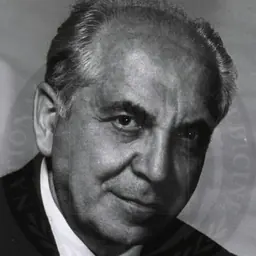


Related people
Same field, nearest in time
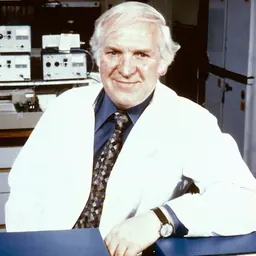
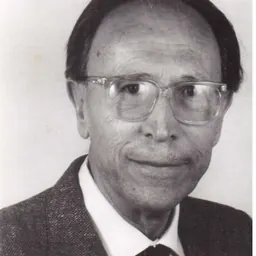

Contemporaries
People whose lives overlapped Jacques Miller's
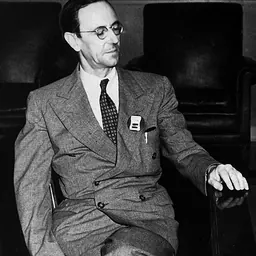

Frequently asked questions
Who is Jacques Miller?
French-Australian research scientist
When was Jacques Miller born?
Jacques Miller was born on 2 April 1931 in Nice.
What is Jacques Miller's occupation?
Jacques Miller is a physician and immunologist.
What is Jacques Miller known for?
Jacques Miller is known for B cells, T cells and Thymus.
What nationality is Jacques Miller?
Jacques Miller is Australian and French.
Sources & further reading
Cite this page
APA: Biography.guide. (2026). Jacques Miller. https://biography.guide/jacques-miller/
MLA: "Jacques Miller." Biography.guide, https://biography.guide/jacques-miller/.
Chicago: "Jacques Miller." Biography.guide. https://biography.guide/jacques-miller/.
Data last updated: 2026-09-20 · Spot an error? Report a correction.
Page generated 2026-09-27 05:00 UTC