
About Jacques Gross
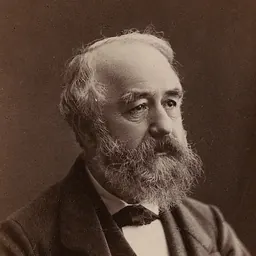
Lived 1855 – 1928 (aged 73). Jacques Gross was a Swiss journalist, anarchist, traveling salesperson and historian, known for Anarchism, Freemasonry and Freethought.
Jacques Gross, or Gross-Fulpius (2 March 1855, in Mulhouse – 4 October 1928, in Geneva) was a member of the Jura Federation, historian of the Paris Commune and a contributor to libertarian and free-thinker newspapers. He contributed to the creation of the newspaper Le Réveil anarchiste in Geneva under the pseudonym of Jean-qui-marche.
Biography Gross was born in Alsace in 1855 and his family emigrated to Geneva in 1871. He was a traveling salesman for the Burrus tobacco factory in Boncourt, a profession which enabled him to smuggle illegal newspapers: L'Avant-Garde by Paul Brousse and Freiheit by Johann Most and Paul Schultze.
A very young member of the Jura Federation, he used the pseudonym of André as the delegate of the Porrentruy and Boncourt sections at the Eighth Congress of the International held in Bern from 26 to 29 October 1876.
In the same city, in 1877, he participated in the commemoration event of the Paris Commune.
Propagandist and internationalist In 1890, he was among the founders, along with Luigi Bertoni, of the bilingual newspaper Le Réveil anarchiste. It financially supported other publications such as Les Temps nouvelles founded in 1895 by Jean Grave or Le Père Peinard by Émile Pouget.
Fluent in French, Italian and German, he was a friend of Élisée Reclus. and Peter Kropotkin (then residing in La Chaux-de-Fonds), he organized aid to the many activists who had taken refuge in, been imprisoned or expelled from Switzerland. In this context, he notably met James Guillaume, Adhémar Schwitzguébel, Andrea Costa, Henri Roorda, Ernest Cœurderoy, Luigi Galleani, Nicolas Stoinoff, etc. For more than thirty years, he helped Max Nettlau in his documentary research.
In 1891, he campaigned against the expulsion of Errico Malatesta and helped him flee to London in 1914 after the Red Week.
In 1894, the French police reported him as a member of the L'Avenir group of Geneva and suspected him of being a spy for Germany.
Freemason In 1905, he was initiated into Freemasonry in Geneva in the La Fraternité lodge, belonging to the Grand Orient of France, he also belonged to the Sovereign Chapter and to the Philosophical Council La Fraternité in Geneva and he was venerable master of his lodge and his chapter, grand master of his Philosophical Council, 33rd degree of the Old and Accepted Scottish Rite and honorary member of the Grand College of Rites.
His personal archives constitute one of the first collections of the International Center for Research on Anarchism (CIRA) founded in Geneva in 1957. A large part of his correspondence was archived at the International Institute of Social History in Amsterdam.
His companion, Elisabeth Fulpius, daughter of the free-thinker Charles Fulpius and sculptor, participated in Sébastien Faure's Anarchist Encyclopedia by writing the article "Sculpture".
Works La Franc-Maçonnerie sous la Commune (1871), conférence, Genève 1908. La franc-maçonnerie exposée aux profanes, Genève s.d.
Preface Ernest Cœurderoy, Jours d'exil, Paris, 1910. Jours d'exil, première partie, 1849-1851, Jacques Gross, Ernest Cœurderoy, Raoul Vaneigem, Max Nettlau, Saint-Imier, Canevas, 1991.
Don’t just read it —
keep it.
Full-length biographies made to live with: read them, listen on the way to work, watch them tonight.
- E-book
- Audio
- Video
Instant download · yours to keep · every purchase keeps this site free
Important facts
People in Jacques Gross's life
Named in this biography and alive at the same time




Related people
Same field, nearest in time
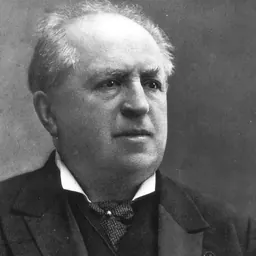
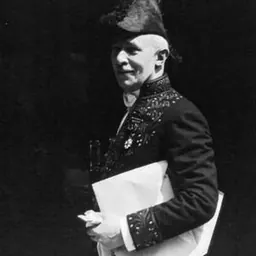
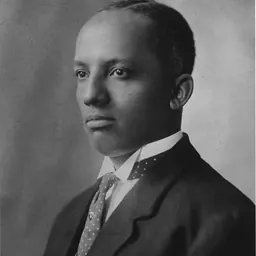
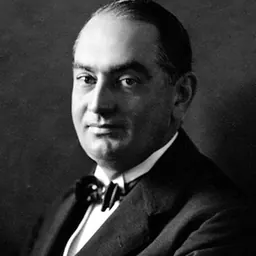
Contemporaries
People whose lives overlapped Jacques Gross's





Frequently asked questions
Who was Jacques Gross?
French historian (1855–1928)
When was Jacques Gross born?
Jacques Gross was born on 2 March 1855 in Mulhouse.
When did Jacques Gross die?
Jacques Gross died on 4 October 1928 in Geneva.
What was Jacques Gross's occupation?
Jacques Gross was a journalist, anarchist, traveling salesperson and historian.
What was Jacques Gross known for?
Jacques Gross was known for Anarchism, Freemasonry and Freethought.
What nationality was Jacques Gross?
Jacques Gross was Swiss.
Sources & further reading
Cite this page
APA: Biography.guide. (2026). Jacques Gross. https://biography.guide/jacques-gross/
MLA: "Jacques Gross." Biography.guide, https://biography.guide/jacques-gross/.
Chicago: "Jacques Gross." Biography.guide. https://biography.guide/jacques-gross/.
Data last updated: 2026-09-22 · Spot an error? Report a correction.
Page generated 2026-09-27 04:59 UTC