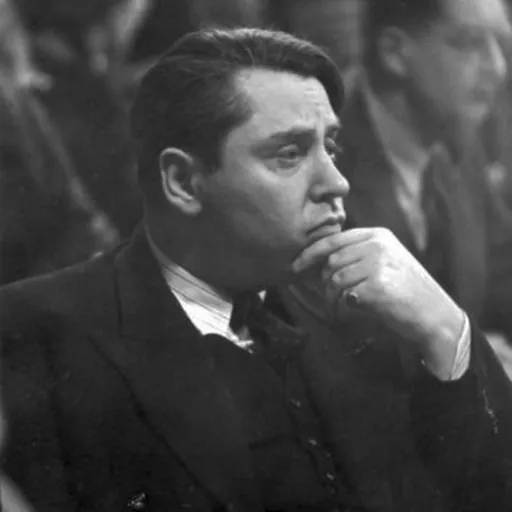
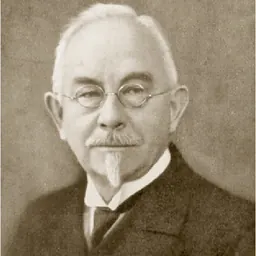
Jacques Goudstikker
Dutch Jewish art dealer refugee whose collection was seized by Nazis
About Jacques Goudstikker
Lived 1897 – 1940 (aged 42). Jacques Goudstikker was a Dutch art collector and art dealer.
Jacques Goudstikker (30 August 1897 – 16 May 1940) Despite efforts of Goudstikker's widow after the war to regain possession of the collection, it was not until after her death that the Dutch government finally restituted 202 paintings to the Goudstikker family in 2006. To finance efforts to reclaim more of the stolen art, a large portion of them were sold at auction in 2007 for almost $10 million.
Biography Goudstikker was born in Amsterdam as the son of the art dealer Eduard Goudstikker. He studied at the commercial school in Amsterdam, and pursued further studies with Wilhelm Martin and William Vogelsang at the universities of Leiden and Utrecht.
In 1919, he joined his father's Amsterdam gallery, restructured it as a public besloten vennootschap with himself as the director and major shareholder, and introduced a notably more international style; publishing catalogues in French rather than Dutch, and showing for the first time Italian Renaissance paintings, including The Madonna and Child by Francesco Squarcione. This was revolutionary in the Netherlands of the time, where in 1906, Adriaan Pit, the director of the Rijksmuseum, had stated "We have become chauvinistic with regard to the field of art. This worship of our old school of painting, which started thirty years ago is still alive and appears not to let us appreciate any foreign art." Portrait of Marie Louise Gonzaga, Queen of Poland by Ferdinand Bol, was part of the large restitution agreement in 2006 and was subsequently loaned to the Jewish Museum in Manhattan. Following World War I, Amsterdam once again became a centre of international commerce, and Goudstikker flourished, along with fellow art dealers, P. de Boer and Henri Douwes; in 1927 he moved to a larger gallery. Goudstikker rose above his contemporaries, presenting works from the Dutch Golden Age alongside panels by 14th-century, 15th-century and 16th-century Dutch, Flemish, German and Italian painters, mixing paintings, sculptures, carpets, and other works of art together, in the sophisticated style of Wilhelm von Bode of Berlin, much emulated in London, Paris, and New York City. Goudstikker's taste extended to the design of his catalogs, which were minor works of art in themselves.
Goudstikker's artistic taste Goudstikker's main stock in trade were paintings by the Old Masters; he did not express much interest in Italian Baroque art or art of the 18th century. While his specialty was Dutch 17th-century painting, his specific interest was the more stylized painters such as Cranach, Marco Zoppo, Squarcione and Pesellino, and he was particularly attracted to the unusual. Artists in his collection included Jan Steen, Adriaen van Ostade, Isaac van Ostade, and tonal landscape painters, such as Jan van Goyen and Salomon van Ruysdael. He kept several notable paintings by Jan van der Heyden at Nijenrode Castle, one of his two country homes where he also entertained clients and exhibited great art. Although he did carry some still lifes, such as the Jan van Huysum in the National Gallery, his major interest was in figure painters, whether portraitists such as Jan Antonisz van Ravesteyn or Johannes Cornelisz Verspronck, or subject painters like Hans Bol, Aert de Gelder, or Jan Steen. was left behind to be looted and became the largest claim for restitution of Nazi-looted art.
Following World War II, the Allied forces recovered this art from Germany and gave them to the Dutch government as part of 'amicable restitution of rights', with the intention of returning them to their rightful owners; however, instead of returning them to Goudstikker's wife Desi, who sought their recovery from 1946 to 1952, they were retained as part of the Netherlands' National Collection at the Rijksmuseum. Dutch investigative journalist Pieter den Hollander wrote a 1998 book, De zaak Goudstikker (The Goudstikker Case), on the subject. Subsequently, Goudstikker's heirs sued for possession of these works, but their claim was rejected by the State Secretary of Education, Culture and Science. Official investigations, however, later confirmed the mishandling of postwar restitutions, and as a result, the Dutch government created the Restitutions Committee to review claims to art treasures in the government's possession. On the recommendations of the Herkomst Gezocht Committee chaired by , after eight years of legal battles, in 2006 the Dutch government returned 202 paintings to Goudstikker's sole surviving heir, his daughter-in-law, Marei von Saher (Goudstikker's wife, Dési, and their only son, Edo, both having died in 1996). In 2007, von Saher sold many, netting almost $10 million at auction.
Some pieces were not returned to von Saher because the Dutch government no longer had them in 2006. In particular, one of the Adam and Eve (Cranach) paintings had been transferred by the government to another person (under a claim later found to be invalid) and in 2006 were in the United States, out of the control of the Dutch government. Von Saher sued unsuccessfully in U.S. court for their return.
In 2025, a painting attributed to Giuseppe Ghislandi, Portrait of a Lady, Contessa Colleoni, was recovered from the descendants of Nazi Germany financier Friedrich Kadgien (1907–1978) in Argentina.
In 2026, it was announced that another painting from the collection - Portrait of a Young Girl by a Dutch artist Toon Kelder had been found in the home of descendants of the Dutch collaborator and Waffen-SS general Hendrik Seyffardt.
In July 2026, a 17th-century painting of the inside of Nieuwe Kerk, Amsterdam, by Hendrick van der Burgh that was looted from the collection during the Second World War, was identified after it was found in a street bin in Amsterdam decades earlier. Dutch art crime investigator Arthur Brand traced the painting's origin and arranged for its return to Goudstikker's heirs.
Don’t just read it —
keep it.
Full-length biographies made to live with: read them, listen on the way to work, watch them tonight.
- E-book
- Audio
- Video
Instant download · yours to keep · every purchase keeps this site free
Important facts
Family & relationships
People in Jacques Goudstikker's life
Named in this biography and alive at the same time



Related people
Same field, nearest in time



Contemporaries
People whose lives overlapped Jacques Goudstikker's


Frequently asked questions
Who was Jacques Goudstikker?
Dutch Jewish art dealer refugee whose collection was seized by Nazis (1897–1940)
When was Jacques Goudstikker born?
Jacques Goudstikker was born on 30 August 1897 in Venlo.
When did Jacques Goudstikker die?
Jacques Goudstikker died on 16 May 1940 in SS Bodegraven.
What was Jacques Goudstikker's occupation?
Jacques Goudstikker was an art collector and art dealer.
What nationality was Jacques Goudstikker?
Jacques Goudstikker was Dutch.
Sources & further reading
· Wikipedia: Jacques Goudstikker
· DBpedia: Jacques Goudstikker
Cite this page
APA: Biography.guide. (2026). Jacques Goudstikker. https://biography.guide/jacques-goudstikker/
MLA: "Jacques Goudstikker." Biography.guide, https://biography.guide/jacques-goudstikker/.
Chicago: "Jacques Goudstikker." Biography.guide. https://biography.guide/jacques-goudstikker/.
Data last updated: 2026-09-22 · Spot an error? Report a correction.
Portrait: Wikimedia Commons · author & licence
Page generated 2026-09-27 05:03 UTC