
About Jacques Diouf
Lived 1938 – 2019 (aged 81). Jacques Diouf was a Senegalese politician, diplomat and engineer.
Jacques Diouf (1 August 1938 – 17 August 2019) was a Senegalese diplomat and the Director-General of the United Nations' Food and Agriculture Organization (FAO) from January 1994 to 31 December 2011. He died on 17 August 2019.
Education Born into a Serer family from the noble Diouf family, Diouf attended primary and secondary school in his native Saint-Louis, Senegal. He then traveled to France, where he earned a Bachelor of Science in agriculture from the Ecole nationale d'agriculture, Grignon-Paris Institut National Agronomique Paris-Grignon, a Master of Science in tropical agronomy from the Ecole nationale d'application d'agronomie tropicale, Nogent-Paris (France), Doctor of Philosophy in social sciences of the rural sector from the Faculté de droit et de sciences économiques, Panthéon – Sorbonne, Paris.
Career Beginning in 1963 at the age of 25, Diouf was the Director of the European Office and the Agricultural Program of the Marketing Board (Paris/Dakar). Leaving that position in 1964, Diouf became the Director of the African Groundnut Council based in Nigeria from 1965 to 1971. From 1971 to 1977 Diouf was the executive secretary of the newly created West Africa Rice Development Association (WARDA) (now Africa Rice Center). Leaving WARDA in 1978, Diouf became the Secretary of State for Science and Technology of the government of Senegal under both Léopold Sédar Senghor and his successor Abdou Diouf until 1983. In that year he became a member of the National Assembly of Senegal and the Senegambian Confederation. In Senegal, he was Chairman of the National Assembly's Foreign Relations Committee. From 1985 to 1990, Diouf was the Secretary-General of the Central Bank for West African States, which is based in Dakar. Subsequently, he was Senegal's Permanent Representative to the United Nations from 1991 to 1993.
On 8 November 1993, Diouf was elected Director-General of FAO and in January 1994 began his first six-year term. Diouf was re-elected twice. His last term began in January 2006 and ended in December 2011. His successor, José Graziano da Silva, was elected in June 2011 and took office on 1 January 2012.
Other functions During his career, Diouf also held other positions of responsibility, including:
Representative of Africa to the Consultative Group on International Agricultural Research, Washington, D.C. (USA) Member of the Board of International Agricultural Centres: ICRAF, Nairobi (Kenya), ISNAR, The Hague (Netherlands), IITA, Lagos (Nigeria), as well as the International Institute of Scientific Research for African Development, Adiopodoumé (Côte d'Ivoire) and the International Foundation for Science, Stockholm (Sweden) Member of the , Jeddah (Saudi Arabia) Member of the Advisory Committee on Medical Research and the Committee on Transfer of Technology. Member of the Expert Advisory Panel on Public Health Administration and Medical Research, World Health Organization, Geneva Switzerland) Member of the , Washington, D.C. (USA) Adviser to the International Conservation Financing Project of the World Resources Institute, Washington, D.C. (USA) Member of the Board of the United Nations University's World Institute for Development Economics Research, Helsinki (Finland) Member of the executive board of the African Capacity Building Foundation, Harare Zimbabwe) Chairman of the Board of the African Regional Centre for Technology (ARCT), Dakar Senegal), the Industrial Company for the Uses of Solar Energy, Dakar (Senegal) and the Board of the Foundation for Development of Science and Technology, Dakar (Senegal)
Honors and criticism Diouf received multiple honors from governments around the world, including the Légion d'honneur in France as well as numerous governments across Africa and Latin America.
In May 2006, a British newspaper published the resignation letter of Louise Fresco, an Assistant Director General of FAO. In her letter, the widely respected Dr Fresco criticised Diouf's management style: "I am sad that you have isolated yourself so much from most senior managers. Combined with a lack of transparency in decision making, you have stimulated a culture of silence, rumors and even fear." Furthermore, she stated that "the Organisation has been unable to adapt to a new era", that "our contribution and reputation have declined steadily" and "its leadership has not proposed bold options to overcome this crisis".
In 2010, a so-called whistleblowing book was published on Amazon under a fictional name by a former staff member of FAO. It purported to describe the management methods and the state of the organization at the time of his departure. At the request of FAO officials attacked in the book, a legal action was initiated to protect the reputation of those concerned; the action was later dismissed on procedural grounds.
These are the links to these most relevant documents: When FAO scores only 27 points in Transparency... Independent Evaluation of the Food and Agriculture Organisation Andrew Mitchel DFID's Head about FAO's performance
Interfaith activities In 2009, Diouf took part in a special synod for Africa organized by the Catholic Church in Rome, even though he was a Muslim. The synod discussed several pastoral issues that are not directly related to religion, and which involve cooperation between the Catholic Church and the United Nations, such as food security, the status of African health care, and attempts to solve conflicts and achieve peace on the continent.
Decorations
Foreign honours
Don’t just read it —
keep it.
Full-length biographies made to live with: read them, listen on the way to work, watch them tonight.
- E-book
- Audio
- Video
Instant download · yours to keep · every purchase keeps this site free
Important facts
People in Jacques Diouf's life
Named in this biography and alive at the same time
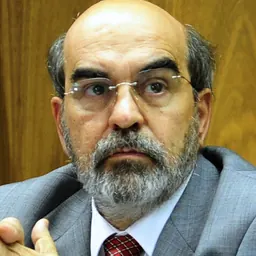

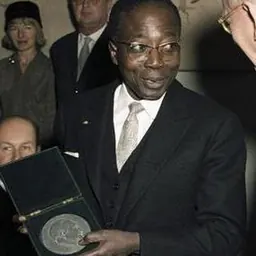
Related people
Same field, nearest in time




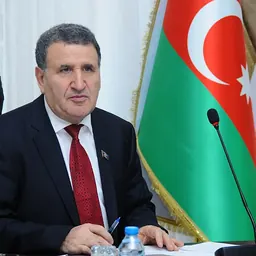

Contemporaries
People whose lives overlapped Jacques Diouf's
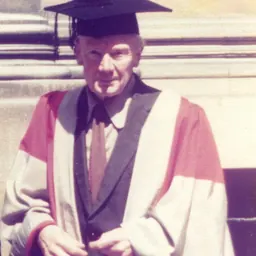



Frequently asked questions
Who was Jacques Diouf?
Senegalese politician (1938–2019)
When was Jacques Diouf born?
Jacques Diouf was born on 1 August 1938 in Saint-Louis.
When did Jacques Diouf die?
Jacques Diouf died on 17 August 2019 in Paris, Neuilly-sur-Seine.
What was Jacques Diouf's occupation?
Jacques Diouf was a politician, diplomat and engineer.
What nationality was Jacques Diouf?
Jacques Diouf was Senegalese.
Sources & further reading
Cite this page
APA: Biography.guide. (2026). Jacques Diouf. https://biography.guide/jacques-diouf/
MLA: "Jacques Diouf." Biography.guide, https://biography.guide/jacques-diouf/.
Chicago: "Jacques Diouf." Biography.guide. https://biography.guide/jacques-diouf/.
Data last updated: 2026-09-20 · Spot an error? Report a correction.
Page generated 2026-09-27 05:27 UTC