
About Jacqueline Audry
Lived 1908 – 1977 (aged 68). Jacqueline Audry was a French film director and director.
Jacqueline Audry (25 September 1908 – 22 June 1977) was a French film director who began making films in post-World War II France and specialised in literary adaptations that centered women.
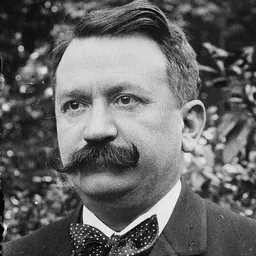
Early life and family Audry was born in Orange, Vaucluse, France. She was born into an upper class family. Her sister, Colette Audry, was a novelist and screenwriter and her great uncle Gaston Doumergue served as both President of the Republic and Prime Minister of France. After initially setting her hopes on becoming an actress, she decided that she wanted to be behind the camera. Audry directed her first short film, Le Feu de paille (1943), a documentary about the transhumance of wild horses in the Vercors Mountains, with the help of the Centre Artistique et Technique des Jeunes du Cinéma (now La Femis). The end of World War II and the liberation of France provided increased opportunities for women, but they still faced prejudice in the film industry. At the time, the film was very controversial and was censored in the United States and the United Kingdom. The film has been called a "landmark of lesbian representation". She often collaborated with Colette Audry, including directing Fruits amers (Bitter Fruit, 1967): an adaptation of her play Soledad (1956).
Audry was married to the screenwriter Pierre Laroche with whom she collaborated on film scripts on a number of occasions. Audry retired from feature films after Bitter Fruit (1967), but she co-directed with Wojciech Solarz a Polish-French miniseries of the life of Honoré de Balzac in 1973.
Death Audry died in a road accident in Poissy, Yvelines, France in 1977. Many of her films have central female characters and they often give a radical view of gender roles and female sexuality. Audry's "classic" directorial approach, "distanc(ed) her subject matter from an overtly sensitive 1950s film viewing public," which may have enabled her to examine "controversial" themes and, "make reasonably popular films about sexually liberated and autonomous women" that stood out from the cinematic landscape of the time.
Filmography
Among the 16 films Audry directed were: The Misfortunes of Sophie (1946) Dark Sunday (1948) Gigi (1949) Minne (1950) Olivia (US title: The Pit of Loneliness) (1951) The Blonde Gypsy (1953) Huis clos (No Exit) (1954) Mitsou (1956) It's All Adam's Fault (1958) School for Coquettes (1958) Le Secret du chevalier d'Éon (1959) Girl on the Road (1962) Bitter Fruit (1967)
Don’t just read it —
keep it.
Full-length biographies made to live with: read them, listen on the way to work, watch them tonight.
- E-book
- Audio
- Video
Instant download · yours to keep · every purchase keeps this site free
Important facts
Family & relationships
People in Jacqueline Audry's life
Named in this biography and alive at the same time

Related people
Same field, nearest in time



Contemporaries
People whose lives overlapped Jacqueline Audry's


Frequently asked questions
Who was Jacqueline Audry?
French film director (1908–1977)
When was Jacqueline Audry born?
Jacqueline Audry was born on 25 September 1908 in Orange.
When did Jacqueline Audry die?
Jacqueline Audry died on 19 June 1977 in Poissy.
What was Jacqueline Audry's occupation?
Jacqueline Audry was a film director and director.
What nationality was Jacqueline Audry?
Jacqueline Audry was French.
Sources & further reading
Cite this page
APA: Biography.guide. (2026). Jacqueline Audry. https://biography.guide/jacqueline-audry/
MLA: "Jacqueline Audry." Biography.guide, https://biography.guide/jacqueline-audry/.
Chicago: "Jacqueline Audry." Biography.guide. https://biography.guide/jacqueline-audry/.
Data last updated: 2026-09-27 · Spot an error? Report a correction.
Page generated 2026-09-27 05:17 UTC