
About Jacobus Gallus
Lived 1550 – 1591 (aged 41). Jacobus Gallus was a German composer and singer.
Jacobus Gallus (a.k.a. Jacob(us) Handl, Jacob(us) Händl; between 15 April and 31 July 155018 July 1591) was a late-Renaissance composer of presumed Slovene ethnicity. Born in Carniola, which at the time was one of the Habsburg lands in the Holy Roman Empire, he lived and worked in Moravia and Bohemia during the last decade of his life.
Life Gallus's name has been Slovenianized as Jakob Petelin (petelin means 'rooster'; Handl and gallus mean the same in German and Latin, respectively). However, Gallus never used the name Petelin. He was probably born in Reifnitz (now Ribnica, southern Slovenia), although Slovene folk tradition also claims his birthplace to be at Šentviška Gora in the Slovenian Littoral. He used the Latin form of his name, to which he often added the adjective Carniolus, thus giving credit to his homeland Carniola.
Gallus most likely was educated at the Cistercian Stična Abbey in Carniola. He left Carniola sometime between 1564 and 1566, traveling first to Austria, and later to Bohemia, Moravia and Silesia. For some time he lived at the Benedictine Melk Abbey in Lower Austria. He was a member of the Viennese court chapel in 1574, and was choirmaster (Kapellmeister) to the bishop of Olomouc between 1579 (or 1580) and 1585. From 1585 to his death he worked in Prague as organist to the Church of St. John on the Balustrade . Gallus died on 18 July 1591 in Prague. Tenor voice part of Gallus' Ecce quomodo moritur iustus, published in his Opus Musicum II (1587). His most notable work is the four-part Opus musicum (1586–1590), a collection of 374 motets that cover the liturgical needs of the entire ecclesiastical year. The motets were printed in the Prague printing house of Georgius Nigrinus, which also published 16 of his 20 extant masses. The motet O magnum mysterium comes from the first volume (printed in 1586), which covers the period from the first Sunday of Advent to the Septuagesima. His motets show evidence of influence by the Venetian polychoral style, with their use of the coro spezzato technique.
His wide-ranging, eclectic style blended archaism and modernity. He rarely used the cantus firmus technique, preferring the then-new Venetian polychoral manner, yet he was equally conversant with earlier imitative techniques. Some of his chromatic transitions foreshadowed the breakup of modality; his five-voice motet Mirabile mysterium contains chromaticism worthy of Carlo Gesualdo. He enjoyed word painting in the style of the madrigal, yet he could write the simple Ecce quomodo moritur justus later used by George Frideric Handel in his funeral anthem The Ways of Zion Do Mourn.
His secular output, about 100 short pieces, was published in the collections Harmoniae morales (Prague 1589 and 1590) and Moralia (Nuremberg 1596). Some of these works were madrigals in Latin, an unusual language for the form (most madrigals were in Italian); others were songs in German, and others were compositions in Latin. A monument with a bronze head of the composer, work by the architect Jože Plečnik and the sculptor Lojze Dolinar from 1932, as well as a stone plaque from 1973 also commemorate him there. The plaque was originally installed already in 1933 but destroyed during World War II. The Slovenian Public Fund of Cultural Activities annually awards the deserving musicians the Bronze, Silver, and Gold Gallus Badges and the Bronze, Silver, and Gold Gallus Citations . Gallus was depicted on the front side of the now-obsolete 200-tolar banknote of the Republic of Slovenia. in De musica disserenda III/2, 2007, pp. 37–48. Gustave Reese, Music in the Renaissance. New York, W.W. Norton & Co., 1954. Allen B. Skei/Danilo Pokorn: "Jacobus Handl", Grove Music Online ed. L. Macy (Accessed 23 March 2008), (subscription access) Edo Škulj, Clare vir – Ob 450-letnici rojstva Iacobusa Gallusa, Ljubljana (Družina) 2000, , Edo Škulj (ed.), Gallusovi predgovori in drugi dokumenti, Ljubljana (Družina-Cerkveni glasbenik) 1991
Don’t just read it —
keep it.
Full-length biographies made to live with: read them, listen on the way to work, watch them tonight.
- E-book
- Audio
- Video
Instant download · yours to keep · every purchase keeps this site free
Important facts
People in Jacobus Gallus's life
Named in this biography and alive at the same time

Related people
Same field, nearest in time


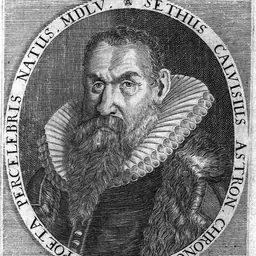
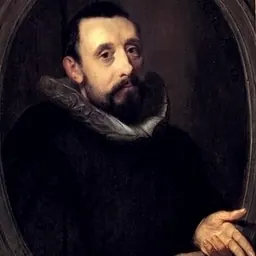
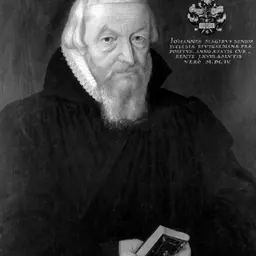
Contemporaries
People whose lives overlapped Jacobus Gallus's




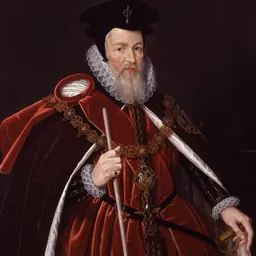
Frequently asked questions
Who was Jacobus Gallus?
Slovenian Renaissance composer (1550–1591)
When was Jacobus Gallus born?
Jacobus Gallus was born on 3 July 1550 in Municipality of Ribnica, Ribnica.
When did Jacobus Gallus die?
Jacobus Gallus died on 18 July 1591 in Prague.
What was Jacobus Gallus's occupation?
Jacobus Gallus was a composer and singer.
What nationality was Jacobus Gallus?
Jacobus Gallus was German.
Sources & further reading
Cite this page
APA: Biography.guide. (2026). Jacobus Gallus. https://biography.guide/jacobus-gallus/
MLA: "Jacobus Gallus." Biography.guide, https://biography.guide/jacobus-gallus/.
Chicago: "Jacobus Gallus." Biography.guide. https://biography.guide/jacobus-gallus/.
Data last updated: 2026-09-20 · Spot an error? Report a correction.
Page generated 2026-09-27 05:23 UTC