
Jacobus Cruquius
Flemish humanist and philologist
About Jacobus Cruquius
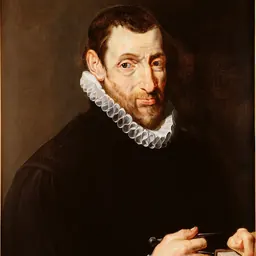
Lived 1520 – 1621 (aged 100–101). Jacobus Cruquius was a renaissance humanist, philologist, theologian, university teacher, humanist and classical philologist.
Title page of 'Q. Horatii Flacci Carminum, liber quartus', 1565 edition Jacob Cruucke or Jacob van Cruyck, also known by his Latinized name Jacobus Cruquius and in French-language literature as Jacques de Crucque (Mesen, before 1520 - 22 June 1584) was a Flemish humanist, philologist, and scholar of the 16th century. He is mainly known for his publications on the works of the Roman lyric poet Horace based on ancient manuscripts kept in the library of a local monastery, since lost to fire.
Life Little is known about his early life and training. He enrolled in the Old University of Leuven on 29 August 1532 and graduated with the degree of magister artium on 18 February 1535. He afterwards studied law at the same university and obtained a licentiatus degree in canon law. While studying law, he also took courses with renowned humanists Conrad Goclenius and Petrus Nannius at the Collegium Trilingue, a college where Latin, Greek and Hebrew were taught.
Cruucke died in Bruges.
Work Cruucke is primarily known from his editions of the lyric poet Horace assembled from four ancient manuscripts in the library of the Benedictine monastery of St. Peter's Abbey, Ghent, which was located on top of a hill in the center of Ghent called the Blandijnberg. The monastery was colloquially called the " Blandijnklooster" and the manuscripts were thus referred to as the "Blandinian manuscripts". All four manuscripts were destroyed in 1566 in a fire at the monastery, leaving his edition as the sole surviving record of a number of commentaries not otherwise known, such as those made by the so-called "Commentator Cruquianus".
Cruucke published several separate volumes of this work from 1565 to 1578—the first with Hubert Goltzius then all the remainder with Christophe Plantin—and then one complete edition in 1578, and ultimately a standalone edition of Commentator Cruquianus's scholia. Q. Horatii Flacci Epodôn liber, with comments and notes, Christ. Plantin, Antwerp, 1567. Q. Horatii Flacci Satyrarum libri duo, with comments and corrections, Christ. Plantin, Antwerp, 1573. M. Tullii Ciceronis oratio pro Milone, with translation, Christ. Plantin, Antwerp, 1583.
Don’t just read it —
keep it.
Full-length biographies made to live with: read them, listen on the way to work, watch them tonight.
- E-book
- Audio
- Video
Instant download · yours to keep · every purchase keeps this site free
Important facts
People in Jacobus Cruquius's life
Named in this biography and alive at the same time


Related people
Same field, nearest in time





Contemporaries
People whose lives overlapped Jacobus Cruquius's





Frequently asked questions
Who was Jacobus Cruquius?
Flemish humanist and philologist (1519-1584)
When was Jacobus Cruquius born?
Jacobus Cruquius was born in 1520 in Mechelen.
When did Jacobus Cruquius die?
Jacobus Cruquius died in 1621 in Bruges.
What was Jacobus Cruquius's occupation?
Jacobus Cruquius was a renaissance humanist, philologist, theologian, university teacher, humanist and classical philologist.
Sources & further reading
Cite this page
APA: Biography.guide. (2026). Jacobus Cruquius. https://biography.guide/jacobus-cruquius/
MLA: "Jacobus Cruquius." Biography.guide, https://biography.guide/jacobus-cruquius/.
Chicago: "Jacobus Cruquius." Biography.guide. https://biography.guide/jacobus-cruquius/.
Data last updated: 2026-09-20 · Spot an error? Report a correction.
Page generated 2026-09-27 05:27 UTC