
Jacob Schaefer
Russian-born American composer and choir leader
About Jacob Schaefer
Lived 1888 – 1936 (aged 48). Jacob Schaefer was an American and Russian composer, choir director, carpentry and choral director.
Jacob Schaefer (, 1888–1936) was a Russian-born Jewish American composer, political activist and choir director whose career ran from the 1910s to the 1930s. A committed Communist for the last two decades of his life, he founded and operated a number of workers' orchestras and choirs in Chicago and New York, including most famously the Freiheit Gezang Farein. He composed a number of cantatas, oratorios and song arrangements which were performed by the ensembles he directed, as well as by their affiliated performing groups around the United States.
Biography Early life Schaefer was born in Kremenets, Volhynian Governorate, Russian Empire (now located in Ternopil Oblast, Ukraine) on October 13, 1888. Jacob was born into a Jewish family of carpenters; his father, Moishe-Dovid, was a follower of Hasidic Judaism who knew many traditional songs and nigunim, and his mother was named Hania-Chava. (His father spelled the family name Soifer , which Jacob occasionally did as well even after emigrating. It was through his new higher-paying music jobs that in 1911 he was able to purchase his own piano for the first time in his life. During the summer of 1914 there were extensive discussions among Jewish socialists in Chicago about the idea of founding a politically active singing society . That was how he ended up helping to found one of the first Jewish folk choirs in the United States.
The financial backers of the singing society were initially nervous when he brought his own compositions for the group to sing; however, as his arrangements proved skillful and popular they soon began to support it. During that time he and Lena began a relationship and she left Simon, causing several years of very public disputes and legal cases between the two men. That public dispute contributed to Schaefer leaving Chicago for New York in around 1924, although he continued to go back and forth to debut new works.
In New York, he was very impressed by the first concert in 1924 of a new choir which was supported by Olgin and was also named the Freiheit Gezang Farein. The composer Lazar Weiner founded it and was its director in its early years, although some sources state that Schaefer co-founded it. Schaefer soon founded a companion mandolin orchestra, the Freiheit Mandolin Orchestra, as he had in Chicago. He also took leadership once again in the Paterson, N.J. and Brunswick choirs which had by now become Freiheit-affiliated singing societies as well. During his first two years in New York Schaefer also studied music theory under Frank Patterson. The Alliance also published Schaefer's arrangements, partly to allow far-flung affiliate choirs to perform them, and also consulted with them about musical or organizational issues. This "revolutionary oratorio" incorporated poems selected by Nathaniel Buchwald from the works of Itzik Feffer, Leib Kvitko, Peretz Markish, Morris Rosenfeld, and others. There was even the suggestion of a Soviet tour by his New York choir, although it never happened in the end. After 1933 Schaefer was also a member of a left-wing composer's organization called the Composers Collective which included Charles Seeger, Henry Cowell, Elie Siegmeister, Aaron Copland, and Marc Blitzstein. The main function of the group, which was a spinoff of the Communist-affiliated Degeyter Club, was to compose new radical music for workers' choirs like the Freiheit singing society; Schaefer, as an experienced conductor, urged the other Collective members to simplify their music to make it more accessible and singable for working class singers.
His final major work was (Strike and revolt). This work, which included dance choreography and folk song arrangements, sought to portray scenes in the lives of workers via music collected by Soviet musicologist Moisei Beregovsky. It was only performed by the choir after his death in 1937, after Max Helfman had taken over for Schaefer, and again in 1938.
Schaefer died of a heart attack at his home in The Bronx on December 1, 1936. He was buried at the New Montefiore Cemetery in Suffolk County, New York. And the following year a biography of Schaefer was published by the Jewish Workers Music Alliance. It was written by Israel Ber Bailin, a longtime friend of Schaefer's who had been involved in politics with him in Chicago and had long promised to write his biography.
Selected works Oratorios (Martyr's blood, 1915) (1915) (1920, an opera-oratorio based on a poem by Avrom Reyzen (, 1934, by Jacob Schaefer) (YMAF, 1935, by Jacob Schaefer) (YMAF, 1936, by Jacob Schaefer) (, 1937, by Jacob Schaefer and Max Helfman) 22 Selected songs of Jacob Schaefer (YMF, 1952)
Don’t just read it —
keep it.
Full-length biographies made to live with: read them, listen on the way to work, watch them tonight.
- E-book
- Audio
- Video
Instant download · yours to keep · every purchase keeps this site free
Important facts
People in Jacob Schaefer's life
Named in this biography and alive at the same time



Related people
Same field, nearest in time
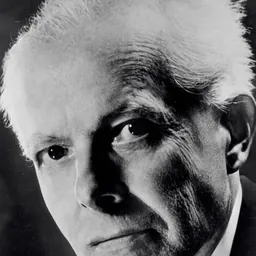

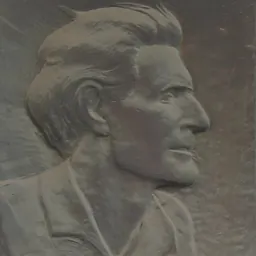


Contemporaries
People whose lives overlapped Jacob Schaefer's
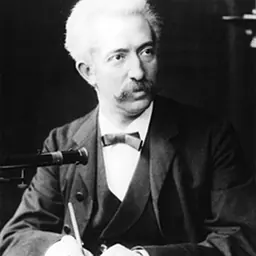
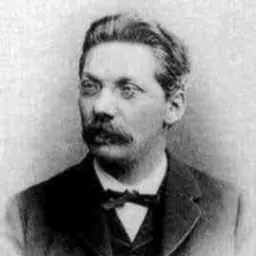



Frequently asked questions
Who was Jacob Schaefer?
Russian-born American composer and choir leader
When was Jacob Schaefer born?
Jacob Schaefer was born on 13 October 1888 in Kremenets.
When did Jacob Schaefer die?
Jacob Schaefer died on 1 December 1936 in New York (state), The Bronx, United States.
What was Jacob Schaefer's occupation?
Jacob Schaefer was a composer, choir director, carpentry and choral director.
What nationality was Jacob Schaefer?
Jacob Schaefer was American and Russian.
Sources & further reading
· DBpedia: Jacob Schaefer (composer)
Cite this page
APA: Biography.guide. (2026). Jacob Schaefer. https://biography.guide/jacob-schaefer/
MLA: "Jacob Schaefer." Biography.guide, https://biography.guide/jacob-schaefer/.
Chicago: "Jacob Schaefer." Biography.guide. https://biography.guide/jacob-schaefer/.
Data last updated: 2026-09-22 · Spot an error? Report a correction.
Page generated 2026-09-27 05:19 UTC