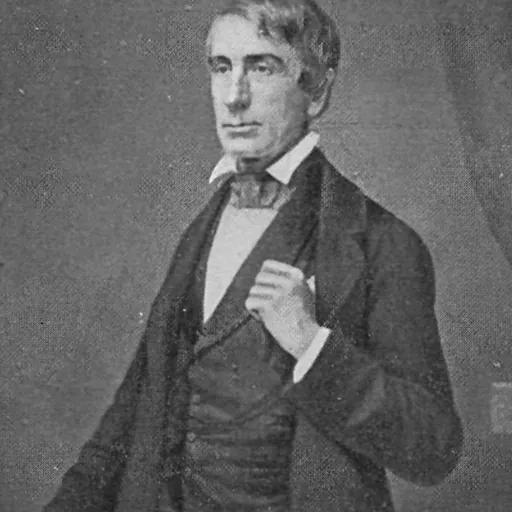
About Jacob Little
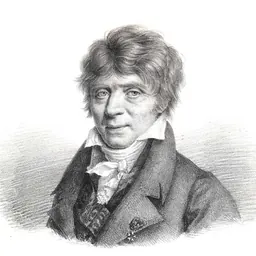
Lived 1794 – 1865 (aged 71). Jacob Little was an American financier, investor and speculator.
Jacob Little (March 17, 1794 – March 28, 1865) was an early 19th-century Wall Street investor and the first and one of the greatest speculators in the history of the stock market, known at the time as the "Great Bear of Wall Street". and of Quaker origin, Little exhibited a strong understanding of money and financial markets from an early age. In 1817 he emigrated to New York City and became a clerk in the store of Jacob Barker, a highly successful financier, merchant, and politically well-connected founding member of the Democratic Party political machine Tammany Hall. Little spent five years in apprenticeship under Barker before moving out in 1822 to start his own business with $700 he had accrued over the length of his employment. As with his other activities, these paid off handily, eventually earning him a new title, that of the "Railroad King". Other investors followed his actions closely, terming him "too shrewd to be caught, too rich to be ruined", and his sway and influence in the market was indeed enormous.
Wall Street, Half Past Two O'clock, October 13, 1857, depicting Wall Street investors reeling from news of the Panic of 1857. Standing in a gray coat in the center of the painting, Little is particularly stunned by the news. It would lead to his downfall. However, this aura of untouchability nearly came to an end when the cornermaster was himself cornered. Little particularly favored shorting the stocks of the Erie Railroad Company, and it was here that he was trapped by the cornering of the company's stock by a hostile syndicate of rival stockbrokers calling itself the "Happy Family" (in much the same way as he had done to countless other traders before). This led to a rather dramatic showdown between Little and the financiers involved. At the time, making good on a purchase promise required a transaction at the associated clerk's office, and on the day it was due the brokers gathered at the Erie Railroad Company clerk's office, smug at the likelihood that they had beaten Little at his own game. What the traders did not know was that Little had purchased convertible bonds at a company sale in London a few years before; Little entered the premises, apparently unrushed, carrying an oversize bag of what was revealed to be those very bonds, which Little had converted to stocks. To the astonishment of all, Little not only outplayed the syndicate but came out hundreds of thousands of dollars ahead; After some troubles, Little was again worth $2 million by 1846 (equivalent to about $ million today). However, his fortunes were again reversed that year when he attempted but failed to corner the Norwich and Worcester Railroad and was obligated to pay out for thousands of inflated shares that he had himself bid up in price, losing about a million dollars in the process—a staggering sum at the time. After one such fall, walking with a friend along Union Square, site of some of the most prestigious and expensive housing in the city and in the world, he remarked that "I have lost money enough today to buy this whole square. Yes, and half the people in it." It was in these instances that Little most surely showed his strength of character; after each of his falls from fortune Little was able to rebuild his commercial empire, and even pay back his old contracts in full, leading some to remark that "Jacob Little's suspended papers were better than the checks of most men." and another stock market historian, Leonard Louis Levinson, said that he was "a nervous perfectionist who personally attended to every detail...kind, magnanimous, honorable, and a genius in market maneuvers."
However, the opinion of him held by most investors of the day was not quite so rosy. A reflection on the Erie Railroad Company coup published by The New York Times in 1882 all but accused him of being a robber baron: "He drove Wall-street before him just as in his earlier days he would have lashed a recalcitrant ox into obedience. No method was too severe for Jacob Little. If a man stood in the way, that man got hurt. Naturally, the whole Street was dead set against him. Innumerable schemes were laid for his discomfiture, simply to end in miscarriage. Combinations were formed, to be speedily dissolved under the crack of the Little whip."
Little was not the first to gain and lose his fortune in the stock market, but he was a pioneering speculator, the first to rely on his ability to predict market fluctuations to inform his speculations instead of bidding with what would today be considered insider information. He was the first Great Bear; before his rapid rise speculation and market manipulation was virtually unknown in the stock market, as no one before him had had the still nerve and financial foresight necessary to profit from such risky endeavors, and many market historians consider him the first modern stock market tycoon. His ability to gain and lose fortunes on a day-by-day basis was a microcosm of the meteoric possibilities and insecurities of speculation, and after his death and even during his life many other investors tried to imitate his success, with little success. His victory over the Erie Railroad scheme (and market cornering activities in general) inspired similar plots in the years thereafter; in 1863 the industrialist Cornelius Vanderbilt successfully cornered the Harlem Railroad in much the same way that Little had done almost thirty years earlier, and fell into a corner trap formed by Daniel Drew and others himself in the later Erie War. This did much to give credence to convertible bonds, then still a novelty.
Nonetheless for all of his wealth and innovation Little's ignominious end ensured he was quickly forgotten, and by the time Edwin Lefèvre published his now-classic Reminiscences of a Stock Operator in 1923 he was virtually unknown. To demonstrate this Lefèvre details asking nine seasoned members of the NYSE whether or not they had ever heard of Jacob Little before; only three of them did, and none could name who he was or what he had done, only knowing of his existence from having heard his name before. Lefèvre provided for this fact by saying "what happened to Jacob was no more than what happens to thousands every year. The difference in degree does not make it more memorable." Though it had once been that "on [the stock ex]change his tread was that of a king", today Little has been relegated to obscurity, and survives only as a footnote in histories of the stock market.
Don’t just read it —
keep it.
Full-length biographies made to live with: read them, listen on the way to work, watch them tonight.
- E-book
- Audio
- Video
Instant download · yours to keep · every purchase keeps this site free
Important facts
People in Jacob Little's life
Named in this biography and alive at the same time

Related people
Same field, nearest in time



Contemporaries
People whose lives overlapped Jacob Little's





Frequently asked questions
Who was Jacob Little?
American investor
When was Jacob Little born?
Jacob Little was born on 17 March 1794 in Newburyport.
When did Jacob Little die?
Jacob Little died on 28 March 1865 in New York City.
What was Jacob Little's occupation?
Jacob Little was a financier, investor and speculator.
What nationality was Jacob Little?
Jacob Little was American.
Sources & further reading
Cite this page
APA: Biography.guide. (2026). Jacob Little. https://biography.guide/jacob-little-financier/
MLA: "Jacob Little." Biography.guide, https://biography.guide/jacob-little-financier/.
Chicago: "Jacob Little." Biography.guide. https://biography.guide/jacob-little-financier/.
Data last updated: 2026-09-24 · Spot an error? Report a correction.
Portrait: Wikimedia Commons · author & licence
Page generated 2026-09-27 05:09 UTC