
About Jacob from Sienno
Lived 1413 – 1480 (aged 66–67). Jacob from Sienno was a Polish catholic priest and catholic bishop.
Jakub of Sienno (; 1413–1480) was a medieval Bishop of Kraków in the years 1461–1463, Bishop of Włocławek from 1464, and then Archbishop of Gniezno from 1474. He was also a 15th-century diplomat for the Polish Crown.
Early life Jakob was born in 1413 in Sienno, the son of Dobisław of Oleśnicy a local aristocrat of the Debno family and his wife Catherine Oleśnicka, daughter of Dymitr of Goraj. His father, Dobiesława Olesnica mala Dębno, was Count of Sandomierz.
His brothers were: John of Sienna Castellan of Lwów Dymitr of Sienna (d. 1465) Canon of Kraków Nicholas of Sienna (d. 1484) Archdeacon of Sandomierz Paul of Sienna (c. 1410–1444) the Royal Secretary Andrzej Sienieński (d. 1494) Chamberlain of Sandomierz He was also a nephew of Cardinal Oleśnicki.
He studied law and Theology in Rome and from 1435 was a Canon of Kraków Cathedral.
Diplomatic career
As a diplomat he served as Secretary of King Władysław III of Poland and King Casimir IV Jagiellon. He was sent on missions to Hungary in 1442 and 1448 and in 1459 he represented the King at the Congress of Mantua.
Episcopal career After the death of his uncle, Cardinal Zbigniew Oleśnicki, in 1455 he was administrator of the diocese of Kraków.
Pope Pius II appointed him Bishop of Kraków. Unfortunately, the King had other plans and request the appointment of John Gruszczynski, consecrated on May 31, 1461. The conflict escalated with the Pope (Pius II) on 2 June 1461, threatening to excommunicate the King. The King then banished Jakub.
1842 engraving by e. Raczyński depicting the tombstone of Jakob in the Basilica of Prymasowskiej in Gniezno.Eventually on 16 January 1462 the conflict was resolved through intersession of the papal legate Jerome Lando, Archbishop of Crete. In January 1463 at the Sejm in Piotrków the Kings appointee abdicated the bishopric of Kraków.
Pope Pius II compensated Jakob and he received the bishopric of Włocławek. In Włocławek and in Gniezno he installed oak pew stalls and rich liturgical equipment, and donated to the library of Kraków Academy.
In 1465 he represented the King at the meeting with the Teutonic Knights in Toruń, that ended the Thirteen Years' War.
In 1466 he represented the King during the discussions with the Teutonic Knights in Toruń, ending the 13-year-old war. He was a signatory to the Act of peace of 1466.
He died 4 October 1480 in Łowicz and was buried in the Cathedral of Gniezno, where he erected a cross above the chancel. The cross is still present to this day.
Don’t just read it —
keep it.
Full-length biographies made to live with: read them, listen on the way to work, watch them tonight.
- E-book
- Audio
- Video
Instant download · yours to keep · every purchase keeps this site free
Important facts
People in Jacob from Sienno's life
Named in this biography and alive at the same time
Related people
Same field, nearest in time

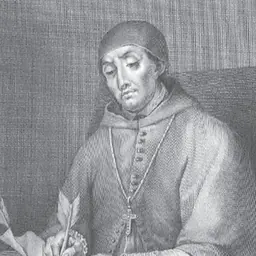

Contemporaries
People whose lives overlapped Jacob from Sienno's
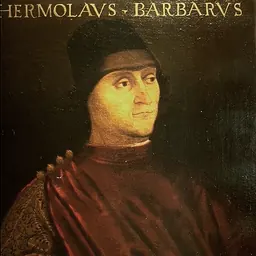


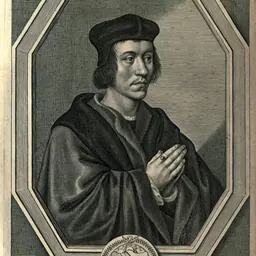
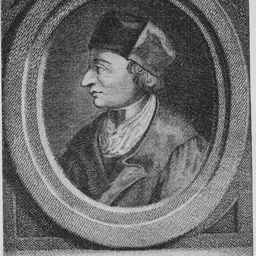
Frequently asked questions
Who was Jacob from Sienno?
archbishop
When was Jacob from Sienno born?
Jacob from Sienno was born in 1413 in Sienno.
When did Jacob from Sienno die?
Jacob from Sienno died on 4 October 1480 in Łowicz.
What was Jacob from Sienno's occupation?
Jacob from Sienno was a catholic priest and catholic bishop.
What nationality was Jacob from Sienno?
Jacob from Sienno was Polish.
Sources & further reading
· Wikipedia: Jacob from Sienno
Cite this page
APA: Biography.guide. (2026). Jacob from Sienno. https://biography.guide/jacob-from-sienno/
MLA: "Jacob from Sienno." Biography.guide, https://biography.guide/jacob-from-sienno/.
Chicago: "Jacob from Sienno." Biography.guide. https://biography.guide/jacob-from-sienno/.
Data last updated: 2026-09-20 · Spot an error? Report a correction.
Page generated 2026-09-27 05:32 UTC