
About Jacob Clemens non Papa
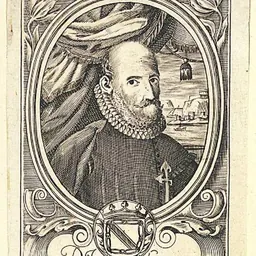
Lived 1510 – 1555 (aged 44–45). Jacob Clemens non Papa was a composer and catholic priest.
Jacobus Clemens non Papa (also Jacques Clément or Jacob Clemens non Papa) ( – 1555 or 1556) was a Netherlandish composer of the Renaissance based for most of his life in Flanders. He was a prolific composer in many of the current styles, and was especially famous for his polyphonic settings of the psalms in Dutch known as the Souterliedekens.
Life Nothing is known of Clemens's early life, and even the details of the years of his artistic maturity are sketchy. He may have been born in Middelburg, Zeeland, though the evidence is contradictory; certainly he was from somewhere in modern Belgium or the Netherlands. The first unambiguous reference to him is from the late 1530s, when Pierre Attaingnant published a collection of his chansons in Paris. Between March 1544 and June 1545 he worked as succentor at the cathedral of Bruges, and shortly thereafter he began a business relationship with Tielman Susato, the publisher in Antwerp, which was to last for the rest of his life. From 1545 until 1549 he was probably choirmaster to Philippe de Croÿ, Duke of Aerschot, one of Charles V's greatest generals, where he preceded Nicolas Gombert. In 1550 he was employed as sanger ende componist ("singer and composer") by the Illustrious Brotherhood of Our Blessed Lady in 's-Hertogenbosch. There is also evidence that he lived and worked in Ypres and Leiden. It is speculated on slender evidence that he also worked in Dordrecht.
Clemens was one of the chief representatives of the generation after Josquin and before that of Palestrina and Orlandus Lassus. He was primarily a composer of sacred music; roughly 80 percent of his compositions were sacred music, either for liturgical or private use. Only three of his approximately 233 motets use secular texts; all three are hymns of praise of music. However, he composed over 100 secular works that encompass the whole gamut of poetic genres used by composers of his generation. Considering that his career as a composer lasted for barely two decades, Clemens was an extremely prolific composer. His output includes :
15 masses, including 14 parody masses and a requiem mass 15 Magnificats c. 233 motets 8 Dutch songs, 8 textless pieces, 2 intabulated chansons, and 1 instrumental canon (doubtful) and comprised the only Protestant part-music in Dutch during the Renaissance. Based on a preceding volume of Souterliedekens printed by Symon Cock that contained monophonic settings of the psalms in Dutch, Clemens's Souterliedekens became the first complete polyphonic setting of all 150 psalms in Dutch. Clemens's part-settings are generally simple, and designed to be sung by people at home. They use the well-known secular tunes that were printed in the Cock edition, including drinking songs, love songs, ballads, and other popular songs of the time, as a cantus firmus. Most of them were set for 3 parts, and there are 26 different combinations of these voices. Some of the Souterliedekens are based on dance-songs and are frankly homophonic and homorhythmic, while others use imitation. It is notable that these pieces of music survived the ban in 1569 when the government under the Duke of Alba censured all books that were deemed heretical.
After Clemens's death, his works were distributed to Germany, France, Spain, and even among various circles in England. The influence of Clemens was especially prominent in Germany. Franco-Flemish composer Lassus in particular knew his music well and incorporated elements of his style.
Memorial year In 2012, Clemens's supposed 500th anniversary is celebrated in several of the towns where he is thought to have worked as a singer and composer.
Recording
Clemens non Papa, Priest And Bon-vivant, Capilla Flamenca together with La Caccia, Joris Verdin and Jan Van Outryve, 2005 (KTC 1287)
References and further reading
Don’t just read it —
keep it.
Full-length biographies made to live with: read them, listen on the way to work, watch them tonight.
- E-book
- Audio
- Video
Instant download · yours to keep · every purchase keeps this site free
Important facts
People in Jacob Clemens non Papa's life
Named in this biography and alive at the same time
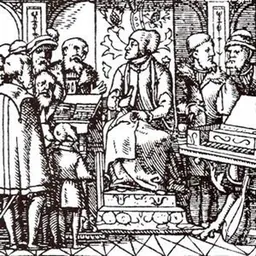


Related people
Same field, nearest in time
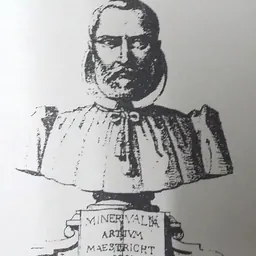
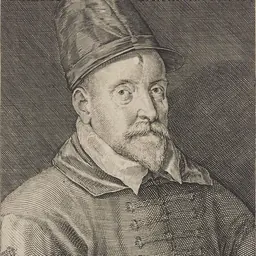
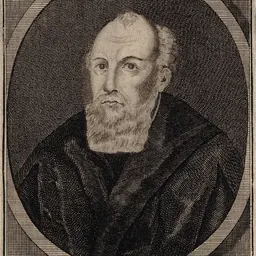
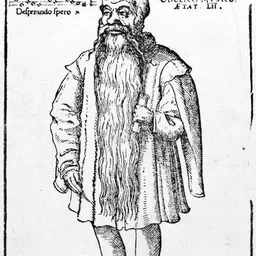


Contemporaries
People whose lives overlapped Jacob Clemens non Papa's
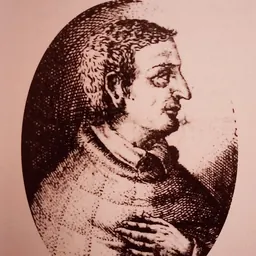
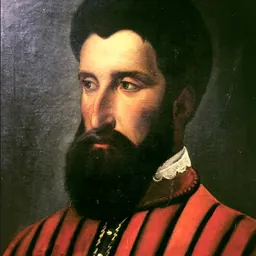
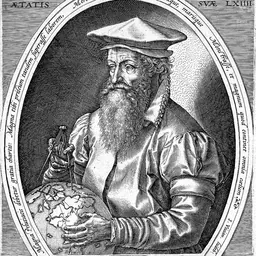


Frequently asked questions
Who was Jacob Clemens non Papa?
16th-century Flemish composer (1510–1555)
When was Jacob Clemens non Papa born?
Jacob Clemens non Papa was born in 1510 in Middelburg, Ypres.
When did Jacob Clemens non Papa die?
Jacob Clemens non Papa died in 1555 in Diksmuide.
What was Jacob Clemens non Papa's occupation?
Jacob Clemens non Papa was a composer and catholic priest.
What nationality was Jacob Clemens non Papa?
Jacob Clemens non Papa's recorded nationality: Habsburg Netherlands.
Sources & further reading
· Wikipedia: Jacob Clemens non Papa
· DBpedia: Jacobus Clemens non Papa
Cite this page
APA: Biography.guide. (2026). Jacob Clemens non Papa. https://biography.guide/jacob-clemens-non-papa/
MLA: "Jacob Clemens non Papa." Biography.guide, https://biography.guide/jacob-clemens-non-papa/.
Chicago: "Jacob Clemens non Papa." Biography.guide. https://biography.guide/jacob-clemens-non-papa/.
Data last updated: 2026-09-20 · Spot an error? Report a correction.
Page generated 2026-09-27 05:32 UTC