
Jack Chanda
Zambian association football player
About Jack Chanda
Lived 1958 – 1993 (aged 34). Jack Chanda was a Zambian association football coach and association football player.
Jack Chanda Mwinuna (born Pearson Mwinuna; 16 June 1958 – 20 April 1993) was a Zambian footballer and coach. He played for three of Zambia's biggest clubs Roan United, Nkana Red Devils and Kabwe Warriors in a successful career that saw him being crowned as Zambian Footballer of the Year in 1985.
Playing career Chanda was born as Pearson Mwinuna in Luanshya to Satyele Machanda Mwinuna, a miner, and Bertha Mwinuna. He was the second born in a family of ten of which three were boys and his grandfather was Chief Mwinuna of the Lamba-speaking people of Mpongwe District.
He attended Makoma Primary School and later Roan Antelope Secondary School together with his immediate younger brother Lackson. By this time, Chanda had decided on a career in football and Lackson followed in his footsteps and took up the name as well. The duo ended up playing together at primary, secondary, club and national team level.
When the two teams met in the final game of the season, at Nkana Stadium on 12 December 1982, Dynamos were bent on inflicting a first defeat of the campaign on the champions who had been unbeaten throughout the season and when Peter Kaumba gave Dynamos a 20th-minute lead, it looked like Nkana's record was on the line until Chanda headed in an 88th-minute equalizer to preserve Nkana's unbeaten record and spark wild scenes of euphoria at the final whistle.
Chanda however stunned the Kitwe club when he left Nkana soon after their title winning season for Kabwe Warriors and the fans never forgave him for this. It meant 90 minutes of abuse for Chanda whenever Warriors traveled to Nkana, and this went on for years. Chanda's first piece of silverware with Warriors was the Independence Cup which they won in 1984.
On 10 April 1985, Warriors traveled to Kitwe to take on Nkana in a league match and the home side appeared to be on their way to a comfortable victory when they took a commanding 3–0 lead into the break but Warriors mounted a spirited comeback and scored three goals in six minutes to tie the game, with Chanda grabbing a brace in the 77th and 78th minutes. The stunned crowd watched on in disbelief as defender John Mwanza headed in the equalizer nine minutes from time. It was too much to bear for the Red Devil's fans who rioted after the match and shattered four windows of the Warriors’ team bus and were unforgiving of Chanda for his role in the drama.
Later that year, Chanda missed a penalty in the semi-final of the Independence Cup against First Division side Malaiti Rangers to send Warriors crashing out after a 4–4 draw. At the end of the season, Chanda was rewarded with the Zambian Footballer of the Year award.
The following season, Chanda suffered a serious injury in Warriors’ second league game of the campaign against Strike Rovers in April 1986, after a reckless challenge by Isaac Khondowe in the 5th minute of the match and after he was carried off, Warriors fans almost stormed the field while his teammates were incensed and had to be calmed down by coach Godfrey Chitalu. Warriors won the match 3-1 but Chanda's injury turned out to be a compound fracture of the right fibula and Chitalu remarked that he was saddened because Chanda had probably been robbed of his career while at his peak. Chanda underwent an operation but the doctors who attended to him said it was unlikely that he would play again that season.
A great career appeared to have been cut short but Chanda surprised soccer followers when he made a comeback the following season, and attributed it to his love of the game and not allowing himself to think too much about the injury unlike other players who had failed to come back from serious injury. “When you love the game and you are really determined, then there is nothing that can stop you,” said Chanda after his successful comeback. He found that most of his compatriots like Albert Bwalya, John Mwanza and Clement Banda had moved on but working with a young crop of players, such as Timothy Mwitwa, Samuel Chomba, James Chitalu, Linos Chisanga, Noel Chama and Moxon Mugala, he led Warriors to the 1987 league championship.
Warriors lost the Heroes & Unity Cup final to Mufulira Wanderers 3-1 but won the Independence Cup when they beat Power 3-2 and got their revenge over Wanderers when they beat them 2–1 in the Champion of Champions final in a trophy-laden season.
Chanda ended the season as the second highest scorer after Bonnie Muma of Power Dynamos. The following year, Warriors’ coach Bizwell Phiri quit to take up a coaching job in South Africa and Chanda succeeded him.
National team Chanda was first selected to play for the Zambia ‘B’ team against Angola in Ndola in November 1980 in a match which ended in a 1–1 draw, and he featured at that year's CECAFA Cup in Sudan where Zambia reached the semi-finals. He made his full international debut as a right winger in June 1981 in Chingola when Zambia beat Zaire 3-1 and was on the score sheet two days later when the two teams drew 3–3 in Lusaka. Chanda was also in the team that overcame Morocco to qualify for CAN 1982 on a 3-2 aggregate.
Chanda featured twice at CAN 1982 as Zambia reached the semifinals. In April 1983, Zambia narrowly lost the first leg of CAN qualifying to Sudan 2-1 and in the second leg, attacked at will but could not get the single goal that they needed to progress to CAN 1984 and despite being their main threat upfront, Chanda was substituted in the second half for Ashols Melu. After the match, Sudanese coach Mohammed Abdin called the decision to substitute Chanda ‘an act of self-elimination’ as they regarded him as the most dangerous striker in the Zambian team.
“Your coach should have substituted any of your players from goalkeeper to number 11 leaving Chanda at 10 intact because of his indispensable qualities. He gave us a hell of a time in Sudan hence for the return match we specifically assigned Shimms el Din to contain his mobility. When for whatever reason, your coach decided to substitute Chanda in the second half, we staged a subdued celebration and toasted to the good health of your coach,” said Abdin, who described Chanda as 'a 90-plus warrior who had no equal among the Zambian strikers.
Honours Player Zambian Super League: 1982, 1987 Independence Cup: 1984, 1987 Champion of Champions: 1987
Individual Zambian Footballer of the Year: 1985
Manager Challenge Cup: 1989 Champion of Champions: 1989
Don’t just read it —
keep it.
Full-length biographies made to live with: read them, listen on the way to work, watch them tonight.
- E-book
- Audio
- Video
Instant download · yours to keep · every purchase keeps this site free
Important facts
People in Jack Chanda's life
Named in this biography and alive at the same time


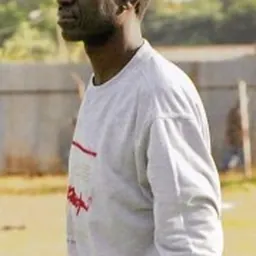



Related people
Same field, nearest in time



Contemporaries
People whose lives overlapped Jack Chanda's



Frequently asked questions
Who was Jack Chanda?
Zambian association football player (1958-1993)
When was Jack Chanda born?
Jack Chanda was born on 16 June 1958 in Luanshya.
When did Jack Chanda die?
Jack Chanda died on 20 April 1993 in Kabwe.
What was Jack Chanda's occupation?
Jack Chanda was an association football coach and association football player.
What nationality was Jack Chanda?
Jack Chanda was Zambian.
Sources & further reading
Cite this page
APA: Biography.guide. (2026). Jack Chanda. https://biography.guide/jack-chanda/
MLA: "Jack Chanda." Biography.guide, https://biography.guide/jack-chanda/.
Chicago: "Jack Chanda." Biography.guide. https://biography.guide/jack-chanda/.
Data last updated: 2026-09-20 · Spot an error? Report a correction.
Page generated 2026-09-27 05:32 UTC