
About Jack Burnham
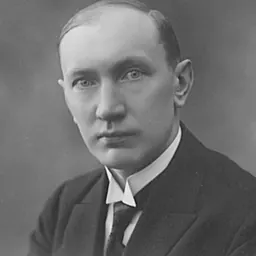
Lived 1931 – 2019 (aged 87–88). Jack Burnham was an American art historian, historian, journalist and sculptor.
Jack Wesley Burnham Jr. (born New York City, November 13, 1931 – February 25, 2019) was an American writer and theorist of art and technology, who taught art history at Northwestern University and the University of Maryland. He is one of the main forces behind the emergence of systems art in the 1960s.
Between the years of 1955 and 1965, he created sculptures many of which incorporated light.
From 1955 until 1965 he worked as a sculptor, often created sculptures that included light. In the 1960s he started teaching art history at Northwestern University, He was the Inaugural Fellow at MIT's Center for Advanced Visual Studies from 1968 to 1969.
Work as a writer Jack Burnham worked as a writer, and in the 1960s and 1970s made important contributions as an art theorist, critic and curator in the field of systems art. In systems art the concept and ideas of process related systems and systems theory are involved in the work to take precedence over traditional aesthetic object related and material concerns. Burnham named Systems art in the 1968 Artforum article "System Esthetics": "He had investigated the effects of science and technology on the sculpture of this century, and saw a dramatic contrast between the handling of the place-oriented object sculpture and the extreme mobility of Systems sculpture".
Burnham was the Associate editor of Arts Magazine between the years 1968 and 1970; he also published many articles in the magazine. From 1971 to 1973 he wrote for ARTFORUM magazine as a contributing editor.
In 1973, Burnham was awarded a fellowship from the John Simon Guggenheim Memorial Foundation to study the alchemical symbolism used in Marcel Duchamp's art. Following that, he continued to apply Kabbalistic interpretations of art thoroughout his life, and taught it as an art critical method at the University of Maryland.
Work as an artist
While he is best known as a theorist, Burnham was trained as an artist; the art he produced included alchemy-imspired diagramatic drawings, sculptures and works that incorporated light. From 1955 through the 1960s he focused on sculpture, many of which incorporated light During a fellowship at MIT, Burnham created a series of sculptures including Tape Light (1969). The sculptures and light environments were made with electroluminescent Tape-Lite, a material produced by the Sylvania Corporation that was used by the military for safety lights, instrument panels, and helicopter landing markers. Between the years of 1965–1969, he had five solo exhibitions of his work, and from 1957 to 1978, he participated in numerous group shows. This exhibition featured Andy Warhol's Andy Warhol Robot. Burnham speaks about the manner in which anthropomorphic figures became equivalent to traditional sculpture.
Publications Burnham wrote several books and dozens of articles in magazines like: Art and Artists magazine, Arts and Society, Artforum magazine, Arts magazine. His books: 1968, Beyond Modern Sculpture: The Effects of Science and Technology on the Sculpture of This Century, New York: George Braziller; London: Allen Lane/Penguin Press. 1969, Art in the Marcusean Analysis, vol 6 of the "Penn State Papers in Art Education", edited by Paul Edmonston (Philadelphia: Pennsylvania State University, 1969). 1973, The Structure of Art, Revised Edition, Brazillera. 1974, Great Western Salt Works: Essays on the Meaning of Post-Formalist Art, New York: George Braziller. 0-8076-0740-1. 1980, Art and Technology: The Panacea That Failed, The Myths of Information ed. Kathleen Woodward, Coda Press. . 2015, Dissolve into Comprehension: Writings and Interviews, 1964–2004, edited by Melissa Ragain (Massachusetts: The MIT Press, 2015).
About Jack Burnham Charlie Gere, Art, Time and Technology: Histories of the Disappearing Body (2005) Berg, pp. 124–138 Robert Horvitz (2000–), "A Node for Jack Burnham". Matthew Rampley (2005). Systems Aesthetics: Burnham and Others. In: Vector e-zine. issue B-12, January 2005. Corrine Robins (1972). Burnham's Burden: Art is Over...Again in Art in America. March 1972, pp. 14–15. Edward A. Shanken (1998). "The House That Jack Built: Jack Burnham's Concept of Software as a Metaphor for Art". In: Leonardo Electronic Almanac, Vol. 6, No. 10 (November 1998). Edward A. Shanken (2001). "Art in the Information Age: Technology and Conceptual Art" SIGGRAPH 2001 Electronic Art and Animation Catalog, (New York: ACM SIGGRAPH, 2001): 8–15. Expanded in Leonardo 35:4 (Aug 2002). Edward A. Shanken (2009). "Reprogramming Systems Aesthetics: A Strategic Historiography". Proceedings of the Digital Arts and Culture Conference, 2009. Willoughby Sharp (1970). Willoughby Sharp Interviews Jack Burnham in Arts magazine. Vol. 45, No. 2, November 1970, pp. 21–23 Luke Skrebowski (2006). All Systems Go: Recovering Jack Burnham's 'Systems Aesthetics. Tate Papers, Spring 2006 Luke Skrebowski (2016). Jack Burnham Redux published in Grey Room journal, Fall 2016, No. 65 (Fall 2016), pp. 88–113. The MIT Press Jack Burnham, Hans Haacke, Esthétique de systèmes, Emanuele Quinz (ed.), Dijon, Les presses du réel, 2015,
Don’t just read it —
keep it.
Full-length biographies made to live with: read them, listen on the way to work, watch them tonight.
- E-book
- Audio
- Video
Instant download · yours to keep · every purchase keeps this site free
Important facts
People in Jack Burnham's life
Named in this biography and alive at the same time





Related people
Same field, nearest in time

Contemporaries
People whose lives overlapped Jack Burnham's

Frequently asked questions
Who was Jack Burnham?
American art historian (1931–2019)
When was Jack Burnham born?
Jack Burnham was born on 13 November 1931 in New York City.
When did Jack Burnham die?
Jack Burnham died in 2019.
What was Jack Burnham's occupation?
Jack Burnham was an art historian, historian, journalist and sculptor.
What nationality was Jack Burnham?
Jack Burnham was American.
Sources & further reading
Cite this page
APA: Biography.guide. (2026). Jack Burnham. https://biography.guide/jack-burnham/
MLA: "Jack Burnham." Biography.guide, https://biography.guide/jack-burnham/.
Chicago: "Jack Burnham." Biography.guide. https://biography.guide/jack-burnham/.
Data last updated: 2026-09-20 · Spot an error? Report a correction.
Page generated 2026-09-27 05:23 UTC