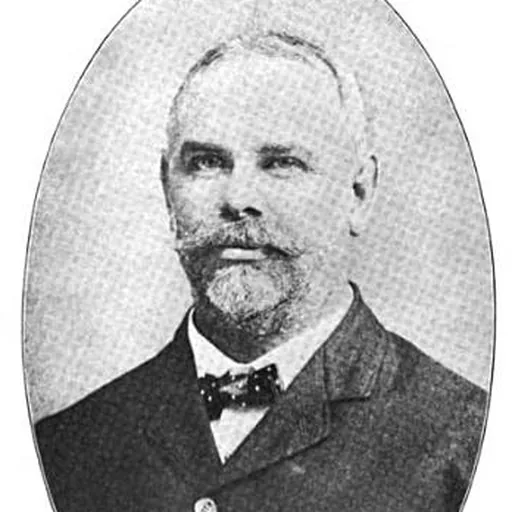
About J. Williams Beal
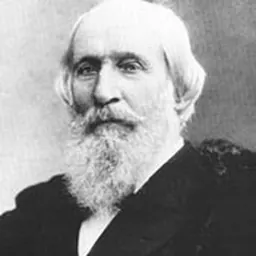
Lived 1855 – 1919 (aged 64). J. Williams Beal was an American architect.
J. Williams Beal (May 19, 1855 - July 7, 1919) was an American architect in practice in Boston, Massachusetts, from 1880 until his death in 1919. After his death his firm was continued by his sons and their partners as J. Williams Beal, Sons, until its eventual dissolution in 1981.
Biography John Williams Beal was born May 19, 1855, in South Scituate, now Norwell, Massachusetts, to John Beal and Lucy Ann Beal, née Barker. He was educated in the South Scituate public schools and at the former Hanover Academy before going on the Massachusetts Institute of Technology in Boston, from which he graduated in 1877. His first built work was the Civil War Memorial (1878) on the grounds of the First Congregational Church in Hanover, a town bordering South Scituate. At that time he was in the office of architect Samuel J. F. Thayer. He then worked in New York City for Richard Morris Hunt and McKim, Mead & White before opening an office of his own in Boston in 1880.
As an architect Beal designed a wide range of buildings, especially churches and public buildings. The most important of these is the Plymouth County Superior Court (1891) in Brockton. Beal concluded his career with the design of the Plymouth County Hospital (1919, demolished), later the Cranberry Specialty Hospital, in Hanson, which was completed and dedicated shortly before his death. The firm outlived both sons, who died in 1971 and 1964, respectively, and was active until sometime before March 1981, when its remaining assets were auctioned.
Architectural works All dates are date of completion.
1881: Walpole Town Hall, Walpole, Massachusetts NRHP-listed 1886: United Church of Norwood, Norwood, Massachusetts Built for a Universalist congregation 1887: First Baptist Church, Abington, Massachusetts 1888: Fogg Building, Weymouth, Massachusetts NRHP-listed 1888: Walcott Building, Natick, Massachusetts Contributes to the NRHP-listed Natick Center Historic District 1889: Charles Street African Methodist Episcopal Church, Roxbury, Boston Originally built for a Unitarian congregation; NRHP-listed 1889: Eliot Congregational Church (former), Roxbury, Boston After a 1929 fire, converted into a parish house; NRHP-listed 1889: Winter Hill Baptist Church (former), Somerville, Massachusetts As of 2026, a Presbyterian church 1890: Adams Building, Quincy, Massachusetts NRHP-listed 1891: Plymouth County Superior Court, Brockton, Massachusetts A Beal-designed addition was completed in 1908 1892: Highland Spring Brewery Bottling and Storage Buildings, Roxbury, Boston NRHP-listed 1892: Kilsyth Terrace, Brookline, Massachusetts NRHP-listed 1892: Trinity Episcopal Church, Randolph, Massachusetts 1893: Fred Holland Day House, Norwood, Massachusetts Incorporates the structure of an older house, built by Day's father in 1859; NRHP-listed 1893: First Baptist Church, Lexington, Massachusetts 1894: North Congregational Church, Middleborough, Massachusetts 1894: Unitarian Universalist Church of Haverhill, Haverhill, Massachusetts 1895: All Souls Unitarian Universalist Church, Greenfield, Massachusetts 1895: Abbott Memorial Library, Dexter, Maine NRHP-listed 1899: Albert F. Hayden house, Roxbury, Boston 1900: Central United Methodist Church, Brockton, Massachusetts 1900: Masonic Temple, Brockton, Massachusetts Demolished 1905: Acushnet-Wesley United Methodist Church, Acushnet, Massachusetts 1905: Anglim Building, Brockton, Massachusetts The first skyscraper—defined as a building with a steel frame that supports curtain walls—to be built in Brockton and Plymouth County 1905: Marthas Vineyard National Bank (former), Vineyard Haven, Massachusetts 1906: Plymouth County Registry of Deeds (former), Plymouth, Massachusetts 1907: First Congregational Church, Chelsea, Massachusetts 1907: First United Methodist Church, Melrose, Massachusetts 1912: Cobb Memorial Library (former), Truro, Massachusetts NRHP-listed 1912: Memorial Bridge, Island Grove Park, Abington, Massachusetts Incorporating sculpture by Bela Pratt 1914: Castle in the Clouds, Moultonborough, New Hampshire Demolished 1919: Cranberry Specialty Hospital, Hanson, Massachusetts Originally known as Plymouth County Hospital; demolished in 2017
Don’t just read it —
keep it.
Full-length biographies made to live with: read them, listen on the way to work, watch them tonight.
- E-book
- Audio
- Video
Instant download · yours to keep · every purchase keeps this site free
Important facts
People in J. Williams Beal's life
Named in this biography and alive at the same time



Related people
Same field, nearest in time



Contemporaries
People whose lives overlapped J. Williams Beal's





Frequently asked questions
Who was J. Williams Beal?
American architect
When was J. Williams Beal born?
J. Williams Beal was born on 19 May 1855 in Scituate, Massachusetts.
When did J. Williams Beal die?
J. Williams Beal died on 7 July 1919.
What was J. Williams Beal's occupation?
J. Williams Beal was an architect.
What nationality was J. Williams Beal?
J. Williams Beal was American.
Sources & further reading
Cite this page
APA: Biography.guide. (2026). J. Williams Beal. https://biography.guide/j-williams-beal/
MLA: "J. Williams Beal." Biography.guide, https://biography.guide/j-williams-beal/.
Chicago: "J. Williams Beal." Biography.guide. https://biography.guide/j-williams-beal/.
Data last updated: 2026-09-20 · Spot an error? Report a correction.
Portrait: Wikimedia Commons · author & licence
Page generated 2026-09-27 04:58 UTC