
About J. Thompson Brown
Lived 1835 – 1864 (aged 29). J. Thompson Brown was an American military officer.
John Thompson Brown (February 6, 1835 – May 6, 1864) was an American military officer who served as a Confederate States Army colonel and artillerist in the American Civil War. He participated in the first exchange of cannon fire, in fact the first shots fired, between a Confederate force and a Union force in Virginia during the Civil War. Brown's company of the Virginia (soon to be Confederate) Richmond Howitzers artillery regiment, with Brown in command according to some sources, and a Union force, the gunboat USS Yankee, had a minor engagement at the Battle of Gloucester Point, Virginia on May 7, 1861.
Civil War The Richmond Howitzers were organized in 1859 in response to John Brown's raid on Harpers Ferry, Virginia and expanded from volunteers not added to the First Regiment of Virginia Artillery in 1861. Captain (Major as of May 9, 1861) George W. Randolph took charge of the Howitzers Battalion. On May 7, 1861, Brown's second company of the battery fired its first shot from Gloucester Point, Virginia in the minor Battle of Gloucester Point, the first reported military action of the war in Virginia. On May 9, 1861, Brown was elected captain of the second company. Brown was promoted to the rank of colonel on June 2, 1862. He led the battalion at the Battle of Antietam and the Battle of Fredericksburg. In October 1862, Thompson was assigned to work with Brigadier General William N. Pendleton and Colonel, later Lieutenant General Stephen D. Lee to make recommendations for the reorganization of the army’s artillery. Pendleton recommended that Brown retain his battalion.
In 1863, at the Battle of Chancellorsville, Brown’s battalion served in the artillery brigade of Stonewall Jackson’s corps. Brown distinguished himself by protecting the Confederates involved in Jackson’s flanking movement from a probe by the federal III Corps. After the wounding of Colonel Stapleton Crutchfield, Brown became acting chief of artillery of Jackson’s corps.
During the reorganization of the army after the death of Jackson, Lieutenant General Richard S. Ewell took charge of II Corps. Colonel Brown became the commander of the artillery reserve of the corps. The battalions of Captain Willis J. Dance, formerly Brown’s own, and Lieutenant Colonel William Nelson served under him. Dance's battalion played a part in the Second Battle of Winchester. Their guns reached the field at the Battle of Gettysburg but too late for the fighting on July 1. Dance’s guns were employed on Seminary Ridge and Nelson’s near Benner’s Hill on July 2 and 3. Brown is among those criticized for the failure to get ammunition trains to the front, reducing the number of guns available for the grand bombardment on July 3. Brown’s gunners helped cover the retreat of the army to the Potomac River, reaching Hagerstown, Maryland on July 7. They were assigned on the left of General Robert E. Lee's defensive position near Williamsport, Maryland as the army waited to cross the river. Brown reported on the role of the corps' artillery in the campaign.
Shortly after Gettysburg, Lee named his military secretary, Brigadier General Armistead L. Long, chief of artillery of II Corps. Despite being the senior artillerist of the corps, Brown is not found on record complaining about Long’s promotion. Others, however, thought Long was promoted because of his West Point education. Brown returned to command of his battalion for the Bristoe Campaign and the Mine Run Campaign.
Before the Overland Campaign began, Long divided his corps artillery into two divisions. Brown took command of one. It contained the battalions of Nelson, Lieutenant Colonel Robert A. Hardaway and Lieutenant Colonel Carter M. Braxton. On May 6, 1864, while seeking a position for the guns in his division, Colonel J. Thompson Brown was killed by a sharpshooter. Brigadier Generals Pendleton and Long praised their fallen lieutenant for his character and skill.
William S. White, of the Third Richmond Howitzers, wrote:
Don’t just read it —
keep it.
Full-length biographies made to live with: read them, listen on the way to work, watch them tonight.
- E-book
- Audio
- Video
Instant download · yours to keep · every purchase keeps this site free
Important facts
People in J. Thompson Brown's life
Named in this biography and alive at the same time
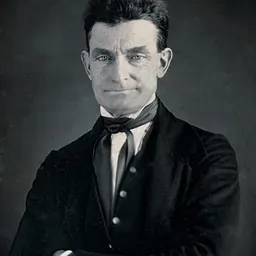


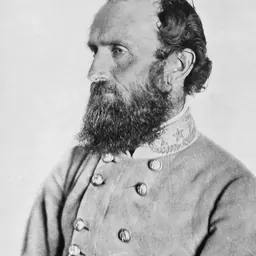

Related people
Same field, nearest in time

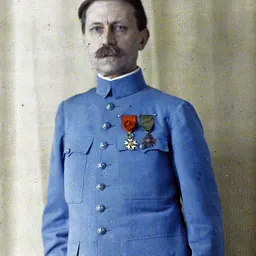
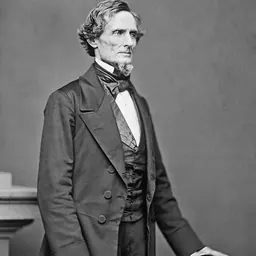


Contemporaries
People whose lives overlapped J. Thompson Brown's





Frequently asked questions
Who was J. Thompson Brown?
Confederate States Army officer,
When was J. Thompson Brown born?
J. Thompson Brown was born on 6 February 1835 in Virginia.
When did J. Thompson Brown die?
J. Thompson Brown died on 6 May 1864 in Spotsylvania County.
What was J. Thompson Brown's occupation?
J. Thompson Brown was a military officer.
What nationality was J. Thompson Brown?
J. Thompson Brown was American.
Sources & further reading
· Wikipedia: J. Thompson Brown
Cite this page
APA: Biography.guide. (2026). J. Thompson Brown. https://biography.guide/j-thompson-brown/
MLA: "J. Thompson Brown." Biography.guide, https://biography.guide/j-thompson-brown/.
Chicago: "J. Thompson Brown." Biography.guide. https://biography.guide/j-thompson-brown/.
Data last updated: 2026-09-20 · Spot an error? Report a correction.
Page generated 2026-09-27 05:19 UTC