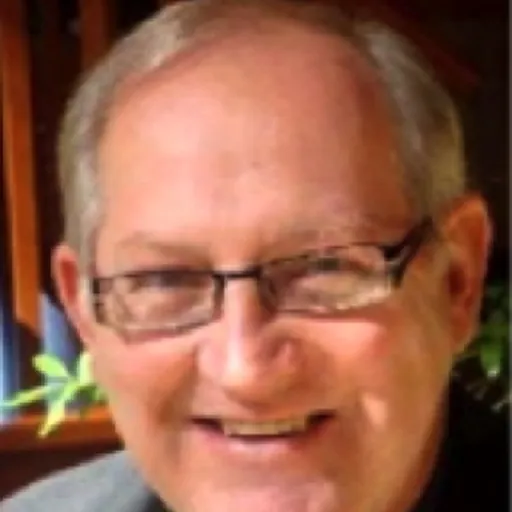
J. Paul Fedoroff
Canadian sexologist and psychiatry professor at the University of Ottawa
About J. Paul Fedoroff
Lived 1958 – 2023 (aged 64–65). J. Paul Fedoroff was a Canadian researcher.
John Paul Fedoroff (August 23, 1958 – January 16, 2023) was a Canadian forensic psychiatrist, sexologist, and researcher who specialized in treating individuals with certain problematic paraphilias and/or individuals with developmental delay. He was the first director of the Sexual Behaviours Clinic (SBC) at the Institute of Mental Health Research at the Royal Ottawa Mental Health Centre located in Ottawa, Ontario. He was a full professor of forensic psychiatry, criminology, and law at the University of Ottawa.
Fedoroff was known for his research on assessing and treating individuals who have unusual sexual interests (known as paraphilic interests) who have committed sexual offences. One of his research articles claimed to prove that pedophilia could be eliminated, but his conclusions were dismissed by the scientific community.
Biography
Early life and education
John Paul Fedoroff was born and raised in Saskatoon, Saskatchewan. He is the son of Sergey Fedoroff, the fourth president of the Pan American Association of Anatomy (1975–1978), who is considered the father of tissue culture for his research in tissue culture and nerve cell regeneration.
Career Fedoroff worked at several psychiatry sites as a staff psychiatrist, including Johns Hopkins School of Medicine, Toronto Hospital, Whitby Medical Health Centre, and Centre for Addiction and Mental Health (CAMH).
Views
Pedophilia Psychiatrist Paul Fedoroff and the ROMHC have come under criticism for claims they could eliminate pedophilia, despite the medical consensus of the opposite. In 2014, Fedoroff claimed his program can treat pedophilia and other disorders "so successfully that people who were aroused by children, exhibitionism or rape can eventually lead healthy, consensual sex lives." This contrasted with other experts who said, "There is absolutely, positively no evidence that we can cure 'a paraphilic disorder'". The study was strongly criticized, with experts noting that Fedoroff's measurement technique was unreliable and could be manipulated by the test-takers trying to look normal, and that the finding was actually a statistical illusion caused by a phenomenon called regression to the mean. According to sex researcher J. Michael Bailey, "I think his data were not appreciably different than random coin tossing...Extraordinary claims require extraordinary evidence, and yet Paul's paper is extraordinarily weak." Fedoroff dismissed the analyses and criticisms, however, saying they "are concerns to be raised about any un-replicated study" and asking "Why all the fuss about this one, especially since the news appears to be good?"
In 2017, Fedoroff and the ROMHC continued their claims of success (called a "boast" by the National Post). Fedoroff's response to the National Post was that there is no evidence that pedophilia cannot be altered and that he and his team are "working on" studies to prove their claims.
Awards and honours
In 2015, Fedoroff was the president of the International Academy of Sex Research (IASR) and the Canadian Association of Psychiatry and the Law. He was also awarded as Specialist of the Year from the Royal College of Physicians and Surgeons of Canada in the same year. During the same year, his work was also recognized by the American Psychiatric Association (APA). The APA awarded the Sexual Behaviours Clinic with the Gold Achievement Award. The Gold Achievement Award is the highest honour from the APA for excellence in academic clinical research program in North America.
In 2017, he was awarded the Earl L. Loschen Award for Clinical Practice from the National Association for the Dually Diagnosed (NADD).
In 2018, the Sexual Behaviours Clinic was awarded the Innovation Award from Crime Prevention Ottawa for community safety. This award was given for his team's work in preventing sex crimes in the community by treating individuals who are at risk of committing them.
Don’t just read it —
keep it.
Full-length biographies made to live with: read them, listen on the way to work, watch them tonight.
- E-book
- Audio
- Video
Instant download · yours to keep · every purchase keeps this site free
Important facts
People in J. Paul Fedoroff's life
Named in this biography and alive at the same time




Related people
Same field, nearest in time





Contemporaries
People whose lives overlapped J. Paul Fedoroff's



Frequently asked questions
Who was J. Paul Fedoroff?
Canadian sexologist and psychiatry professor at the University of Ottawa
When was J. Paul Fedoroff born?
J. Paul Fedoroff was born in 1958 in Saskatoon.
When did J. Paul Fedoroff die?
J. Paul Fedoroff died on 16 January 2023.
What was J. Paul Fedoroff's occupation?
J. Paul Fedoroff was a researcher.
What nationality was J. Paul Fedoroff?
J. Paul Fedoroff was Canadian.
Sources & further reading
Cite this page
APA: Biography.guide. (2026). J. Paul Fedoroff. https://biography.guide/j-paul-fedoroff/
MLA: "J. Paul Fedoroff." Biography.guide, https://biography.guide/j-paul-fedoroff/.
Chicago: "J. Paul Fedoroff." Biography.guide. https://biography.guide/j-paul-fedoroff/.
Data last updated: 2026-09-23 · Spot an error? Report a correction.
Portrait: Wikimedia Commons · author & licence
Page generated 2026-09-27 05:06 UTC