
About J. Henry Burch
Lived 1836 – 1883 (aged 46–47). J. Henry Burch was an American politician.
James Henri Burch, often written as J. Henri Burch, (1836 – July 29, 1883) was an African-American state legislator in Louisiana during Reconstruction, the years after the Civil War. He represented East Baton Rouge Parish in both the state's House of Representatives and Senate and was an important Black political leader in the period.
Early life Burch was not a Louisiana native. He was born in 1836 in New Haven, Connecticut, and grew up in Hartford, the son of the Rev. Charles Burch, a successful African-American minister. He attended school at the Owego Academy in Tioga County, New York, where he was the only black student. After the Civil War, the Rev. Burch went to Louisiana to preach to the freedmen there, and his son moved to Baton Rouge in 1868. He ran a local freedmen's school until he was elected to the Louisiana House.
Along with politics, he was active in newspapers. He wrote for the Republican Standard and was co-publisher, with P. B. S. Pinchback, of the Louisianian. He later bought the Baton Rouge Courier and rebranded it as The Grand Era, publishing until 1878. and continued in office until 1872. He was one of a number African-American state legislators who wrote to U.S. president Ulysses S. Grant requesting he declare martial law and oust Governor Henry Clay Warmoth after an 1871 fracture in the Republican Party over Warmoth's veto of a public accommodations bill. Twice in 1871, he finished second in votes to elect the speaker of the House. He was an ally of Oscar Dunn, William Pitt Kellogg, and C. C. Antoine in Republican internecine battles, and a sometimes rival of P. B. S. Pinchback.
In 1872, he was elected to the state Senate, serving until 1876. There, he criticized Democrats for not having any African-American legislators despite the state's black and white populations being of similar size.
Also, that year, he was one of Louisiana's 8 Republican electors in the Electoral College. That election famously ended with Rutherford B. Hayes defeating Democrat Samuel Tilden by one Electoral College vote, as a result of the Compromise of 1877.
But that compromise also gave control of the Louisiana state government to Democrats, which marked the end of Reconstruction and the beginning of the end for black political power in the state.
Personal life
He married Ellen Boyd Marshall in 1875. She was the widow of Louisiana lieutenant governor Oscar Dunn, the first Black statewide elected official in the United States, who had died in office four years earlier.
Burch was also well known as a musician and singer, sometimes organizing benefit concerts to help his political causes.
Don’t just read it —
keep it.
Full-length biographies made to live with: read them, listen on the way to work, watch them tonight.
- E-book
- Audio
- Video
Instant download · yours to keep · every purchase keeps this site free
Important facts
People in J. Henry Burch's life
Named in this biography and alive at the same time


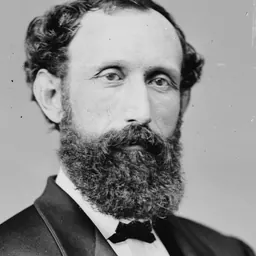
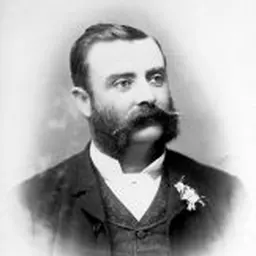
Related people
Same field, nearest in time






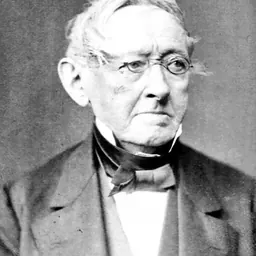
Contemporaries
People whose lives overlapped J. Henry Burch's





Frequently asked questions
Who was J. Henry Burch?
politician; (1836-1883)
When was J. Henry Burch born?
J. Henry Burch was born in 1836 in New Haven.
When did J. Henry Burch die?
J. Henry Burch died on 29 July 1883.
What was J. Henry Burch's occupation?
J. Henry Burch was a politician.
What nationality was J. Henry Burch?
J. Henry Burch was American.
Sources & further reading
Cite this page
APA: Biography.guide. (2026). J. Henry Burch. https://biography.guide/j-henry-burch/
MLA: "J. Henry Burch." Biography.guide, https://biography.guide/j-henry-burch/.
Chicago: "J. Henry Burch." Biography.guide. https://biography.guide/j-henry-burch/.
Data last updated: 2026-09-20 · Spot an error? Report a correction.
Page generated 2026-09-27 05:02 UTC