
About J. B. Matthews
Lived 1894 – 1966 (aged 72). J. B. Matthews was an American peace activist.
Joseph Brown "Doc" Matthews Sr. (1894–1966), best known as J. B. Matthews, was an American linguist, educator, writer, and political activist. A committed pacifist, he became a self-described "fellow traveler" of the Communist Party USA in the mid-1930s, achieving national prominence as a leader of a number of the party's so-called "mass organizations". Disillusionment with communism led to anti-communist testimony before the Dies Committee in 1938. He then served as chief investigator for the House Committee on Un-American Activities, headed by Martin Dies Jr., consultant on Communist affairs for the Hearst Corporation, and by June 1953 research director for Joseph McCarthy's Permanent Subcommittee on Investigations of the United States Senate. When Matthews published claims that the Protestant clergy comprised a base of support of the American Communist movement, he was forced to resign. This was regarded as McCarthy's first big defeat, signaling that his position was starting to weaken among his colleagues.
Background
Joseph Brown Matthews was born on June 28, 1894, in Hopkinsville, Kentucky, of French Huguenot, Scottish, and English ancestry. Matthews' paternal grandfather was killed fighting for the Confederacy during the American Civil War, with his father subsequently orphaned shortly after the war and left to fend for himself at a very young age.
Activism
In 1928, Matthews was one of approximately 500 delegates to the first World Youth Peace Congress, held in the Netherlands. He was elected as chairman of the gathering and later earned plaudits for his efficient conduct of the group's sessions. He was an adherent of the Militant faction of the Socialist Party and was chairman of its Revolutionary Policy Committee and sat on the board of directors of the League for Industrial Democracy. He also served on the national committee of the American Youth Congress (AYC) and the National Student League (NSL), two of the Communist Party's efforts to make inroads with American students. in reality the phrase was an anglicization of a Russian word in common currency since the time of the Russian Revolution of 1917 — poputchik (literally: "one who walks the same path"). Regardless of this misconception of the phrase's origin, Matthews unquestionably helped popularize the term in so describing himself in the title of his repentant 1938 memoir. Matthews went on to become the research director for the Dies Committee, opening up a new career for him as a professional anti-communist investigator.
With the Dies Committee seemingly scheduled for termination in 1944, Matthews scrambled to preserve the material that he had compiled through an official committee publication. Over 2,100 pages were rushed to the printer and published in seven volumes, which together were known as Appendix IX of the committee's report. The US Government Printing Office had already distributed a number of sets to members of the Dies Committee, government agencies, and private individuals, however, making the volume's complete suppression impossible.
Matthews became a symbol of the repentant former Communist who rendered expert service to the US government in its crackdown against what it perceived to be a network of underground subversion. In his column of October 6, 1947, syndicated columnist George Sokolsky wrote: I have among my friends and acquaintances literally dozens of men and women who during the Hitler-Stalin Alliance were so ashamed of Soviet cynicism that from ardent Communists they became ardent anti-Communists. Such a man was Dr. J.B. Matthews, while never a Communist, was associated with that party as a fellow traveler ... In fighting Communists, our Government is absolutely dependent upon the ex-Communists ... If the government is seriously trying to tackle the Communist menace, then the first step is to employ qualified experts.... Amateurs can bring only discredit upon the government. Every effort should be made to ensure the cooperation and protection of friendly witnesses....
In 1947 the state of Washington established its own Joint Legislative Fact-Finding Committee on Un-American Activities, established on the model employed previously in California. This so-called "Canwell Committee" took aim at proving the radical connections of such local figures and institutions as Harry Bridges, the Seattle Labor School, the Seattle Repertory Playhouse, and various left-wing members of the faculty of the University of Washington.
These published charges enraged the ranking Democratic member of McCarthy's committee, Senator John McClellan of Arkansas, who together with his colleagues, Stuart Symington and Henry "Scoop" Jackson, marched into McCarthy's office and demanded that Matthews be fired. McCarthy refused and reiterated his support for Matthews. Matthews actually died of a brain tumor in New York City on July 16, 1966, aged 72.
Legacy
Matthews' papers are housed in Durham, North Carolina, at the Duke University Rare Book, Manuscript, and Special Collections Library. The papers include a massive 479 linear feet of material, consisting of 307,000 individual items. An on-line finding aid is available.
Two additional accumulations of Matthews' papers may or may not be extant. In 1964, with his health in decline, Matthews left the employ of the Hearst organization and sold a substantial part of his files to the Church League of America based in Wheaton, Illinois, before passing to Jerry Falwell's Liberty University in Lynchburg, Virginia. This material may today currently reside at the Tamiment Institute at New York University. A further group of papers were sold to the Freedom Foundation of Valley Forge, Pennsylvania, in 1972: the whereabouts of this latter material remain unknown.
Works Christianity The Way. Garden City, NY: Doubleday, Doran & Co., 1929. Youth Looks at World Peace: A Story of the First World Youth Peace Conference (The Netherlands, 1928). New York: American Committee World Youth Peace Congress, 1929. Traffic in Death: A Few Facts Concerning the International Munitions Industry. New York: League for Industrial Democracy, 1934. Fascism. With R.E. Shallcross. New York: League for Industrial Democracy, 1934. "Must America Go Fascist?" Harpers, June 1934, pp. 1–15. Partners in Plunder: The Cost of Business Dictatorship (with R.E. Shallcross). Washington, NJ: Consumers' Research, 1935. Guinea Pigs No More. Washington, NJ: Consumers' Research, 1936. Odyssey of a Fellow Traveler. New York: Mount Vernon Publishers, 1938. —Memoir. Doctor Matthews' amazing statement : before the Dies' Committee investigating un-American activities New York : American Immigration Conference Board Special Committee on Un-American Activities, House of Representatives, Investigation of Un-American Propaganda Activities in the United States: Appendix—Part IX, Communist Front Organizations, Second Section. Washington: US Government Printing Office, 1944.—Prepared by Matthews. "Did the Movies Really Clean House?" American Legion Magazine, December 1951, pgs. 12, 51–56, 93 Tactics and Methods of Communism in America: A Harding College Freedom Forum Presentation. Searcy, AR: National Education Program, Harding College, n.d. . "Communism and the Colleges", The American Mercury, May 1953, pgs. 111–4 "Reds and Our Churches", The American Mercury, July 1953, pgs. 3–13 "Moscow's Medicine Men," The American Mercury, October 1953, pgs. 58–62 "Red Infiltration of Theological Seminaries", The American Mercury, November 1953, pgs. 31–6 "Now They're for Stevenson", National Review, February 1956, pgs. 20–1. "Relief for America's Reds" American Legion Magazine, October 1957, pgs. 14–5, 43–6 Communism and the NAACP. Atlanta: Georgia Commission on Education, n.d. [c. 1958]
Don’t just read it —
keep it.
Full-length biographies made to live with: read them, listen on the way to work, watch them tonight.
- E-book
- Audio
- Video
Instant download · yours to keep · every purchase keeps this site free
Important facts
People in J. B. Matthews's life
Named in this biography and alive at the same time


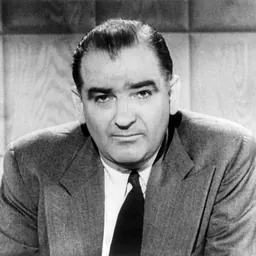

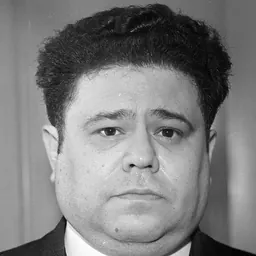
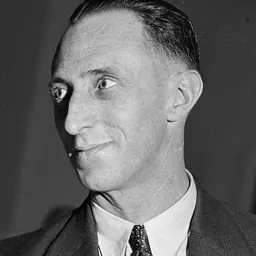
Related people
Same field, nearest in time
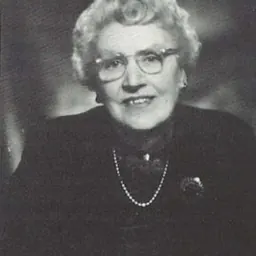


Contemporaries
People whose lives overlapped J. B. Matthews's


Frequently asked questions
Who was J. B. Matthews?
American political activist
When was J. B. Matthews born?
J. B. Matthews was born on 28 June 1894 in Hopkinsville.
When did J. B. Matthews die?
J. B. Matthews died on 16 July 1966 in New York City.
What was J. B. Matthews's occupation?
J. B. Matthews was a peace activist.
What nationality was J. B. Matthews?
J. B. Matthews was American.
Sources & further reading
Cite this page
APA: Biography.guide. (2026). J. B. Matthews. https://biography.guide/j-b-matthews/
MLA: "J. B. Matthews." Biography.guide, https://biography.guide/j-b-matthews/.
Chicago: "J. B. Matthews." Biography.guide. https://biography.guide/j-b-matthews/.
Data last updated: 2026-09-20 · Spot an error? Report a correction.
Page generated 2026-09-27 05:24 UTC