
About J. B. Jackson
Lived 1909 – 1996 (aged 86). J. B. Jackson was an American writer, historian, geographer, landscape architect and sketch artist.
'John Brinckerhoff "Brinck"
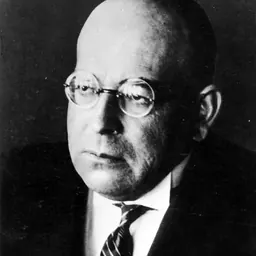
Jackson's experiences in college were influential in his approach to the shaping of the landscape. He attended the Experimental College of the University of Wisconsin–Madison. Jackson gained an insight into architecture and planning from the social criticism of Lewis Mumford and Oswald Spengler's revelation in Decline of the West that "landscapes reflected the culture of the people that were living there." In 1938, his novel, titled Saints in Summertime, was published. The book revealed the infiltration of Nazism and the soldiers' attraction to energy emanating from power.
Military service
After briefly trying his hand at ranching in New Mexico, Jackson enlisted in the army, in 1940. As an officer during war, he studied books to gain insight on the geography of the location. He deciphered code, studied maps, and learned the terrain. He read books by French geographers—Pierre Deffontaines, Paul Vidal de la Blache, and Albert Demangeon. He was a part of the Ritchie Boys and his language skills were used to serve the United States Army in understanding issues on the European front. It was at this time that he developed his interpretation that the shaping and devastation of the landscape came from the necessities for human existence. Jackson believed that human history brought about human geography. The landscape was the product of humankind's effort to "recreate heaven on earth". As the war ended, Jackson began to contemplate publishing a magazine of geography.
Landscape magazine In the spring of 1951, he published the first issue of Landscape, with the subtitle "Human Geography of the Southwest;" this was later dropped. Jackson served as the magazine's publisher and editor until 1968. At first, Jackson argued, quite literally, for a lofty – an airborne – view of the world, reveling in the perspective of aerial photographs. But Jackson's work, which dominated the first five issues of the magazine, was grounded in what he would later call the vernacular: an interest in the commonplace or everyday landscape. Jackson expressed an innate confidence in the ability of people of small means to make significant changes in their surroundings. In an opening essay, The Need of Being Versed in Country Things, Jackson states that "It is from the air that the true relationship between the natural and the human landscape is first clearly revealed. The peaks and canyons lose much of their impressiveness when seen from above. What catches our eye and arouses our interest is not the sandy washes and the naked rocks, but the evidences of man." His writings allowed him to raise questions and present controversial statements especially in reference to humans and their role in shaping the landscape.
Jackson's collected essays have been published in seven books, in addition to A Sense of Place, a Sense of Time, which won the 1995 PEN prize for essays.
Teaching Jackson was influential in the lives of many students, colleagues, admirers, and friends. He taught landscape history courses as adjunct professor at Harvard University's Graduate School of Design beginning in 1969 and at the College of Environmental Design and the Department of Geography at the University of California, Berkeley. He ended teaching classes in the late 1970s. Since then he has given lectures, especially on themes pertaining to urban issues. Jackson states that "We are not spectators; all human landscape is not a work of art." He felt strongly that the purpose of landscape is to provide a place for living and working and leisure.
The Association of American Geographers established a Jackson Prize, to "reward American geographers who write books about the United States which convey the insights of professional geography in language that is interesting and attractive to a lay audience."
Cultural Landscapes Studies As a scholar, historian and writer, John B. Jackson greatly influenced the development and trajectory of contemporary cultural landscape studies in America.
The history of landscape study and, more broadly, place and regional studies, illustrates the convergences with some of the histories here, both across discipline and nation.
In the United States a popular fascination with vibrant architecture, communities, and landscapes of everyday America has been expressed by writers ranging from Walt Whitman to Mark Twain, and by painter Winslow Homer through early-twentieth artists of common landscapes. The New Deal writers and painters explored a strong regionalist theme, which was also connected to the architectural and urban criticism of Lewis Mumford. The concern for environmental degradation caused by human activities was another American theme, spurred particularly by the Vermont writer George Perkins Marsh.
Comparison of American trends to cultural landscape studies in other places is illuminating. Wilson and Groth write that German cultural landscape studies were primarily based on scientific categorizations of regions and settlements, with strong cross-disciplinary ties to geology and economic analysis. Historical accounts of landscape influenced British cultural studies, but the study of cultural landscapes also was strongly based on field observation and map interpretations. In France, the emphasis on unique culture and geography shaped the field, especially in ideas of genre de vie (ways of life) and pays (social regions), ideas that have had particular resonance in American landscape studies. "By World War II," the editors remark, "each French region had its own well-written guidebooks to local physical and social landscapes" (4).
Geographer Carl Sauer, who had studied in Germany and had long tenure as the chair of the Geography department at Berkeley, in 1925 wrote the now classic definition of a cultural landscape: "The cultural landscape is fashioned from the natural landscape by a cultural group. Culture is the agent, the natural area is the medium, and cultural landscape is the result."
Personal life During the height of his career, Jackson lived just southwest of Santa Fe, New Mexico, near an historic property known as El Rancho de las Golondrinas (The Ranch of the Swallows).
Jackson died on August 29, 1996, at St. Vincent Hospital in Santa Fe. He was 86 and lived in La Cienega, New Mexico.
Awards and honors John Brinckerhoff Jackson received the PEN/Diamonstein-Spielvogel Award for the Art of the Essay for A Sense of Place, a Sense of Time in 1995.
J.B. Jackson received the Silver Star for exemplary service in WWII.
Published works Jackson's published works include:
Landscapes: Selected Writings of J. B. Jackson (1970) American Space: The Centennial Years, 1865–1876 (1972) The Interpretation of Ordinary Landscapes: Geographical Essays edited with D. W. Meinig (1979) The Necessity for Ruins and Other Topics (1980) Discovering the Vernacular Landscape (1984) A Sense of Place, a Sense of Time (1994) Landscape in Sight: Looking at America'' (1997)
Quotes "The older I grow and the longer I look at landscapes and seek to understand them, the more convinced I am that their beauty is not simply an aspect but their very essence and that that beauty derives from the human presence." "Let us hope that the merits and charm of the highway strip are not so obscure but they will be accepted by a wider public." "The bicycle had, and still has, a humane, almost classical moderation in the kind of pleasure it offers. It is the kind of machine that a Hellenistic Greek might have invented and ridden. It does no violence to our normal reactions: It does not pretend to free us from our normal environment." "The way a city grows, the direction in which it spreads, is a factor not so much of zoning or real estate activity or land values but of highways." "Ruins provide the incentive for restoration, and for a return to origins. There has to be an interim of death or rejection before there can be renewal and reform."
Don’t just read it —
keep it.
Full-length biographies made to live with: read them, listen on the way to work, watch them tonight.
- E-book
- Audio
- Video
Instant download · yours to keep · every purchase keeps this site free
Important facts
People in J. B. Jackson's life
Named in this biography and alive at the same time



Related people
Same field, nearest in time



Contemporaries
People whose lives overlapped J. B. Jackson's



Frequently asked questions
Who was J. B. Jackson?
American writer (1909–1996)
When was J. B. Jackson born?
J. B. Jackson was born on 25 September 1909 in Dinard.
When did J. B. Jackson die?
J. B. Jackson died on 29 August 1996 in Santa Fe, New Mexico.
What was J. B. Jackson's occupation?
J. B. Jackson was a writer, historian, geographer, landscape architect and sketch artist.
What nationality was J. B. Jackson?
J. B. Jackson was American.
Sources & further reading
Cite this page
APA: Biography.guide. (2026). J. B. Jackson. https://biography.guide/j-b-jackson/
MLA: "J. B. Jackson." Biography.guide, https://biography.guide/j-b-jackson/.
Chicago: "J. B. Jackson." Biography.guide. https://biography.guide/j-b-jackson/.
Data last updated: 2026-09-22 · Spot an error? Report a correction.
Page generated 2026-09-27 05:27 UTC