
About Izabela Sadoveanu-Evan
Lived 1870 – 1941 (aged 71). Izabela Sadoveanu-Evan was a Romanian literary historian, literary critic, essayist, biographer, translator and writer.
Izabela Sadoveanu-Evan (, last name also Sadoveanu-Andrei, first name also Isabella or Izabella; born Izabela Morțun, pen names I.Z.S.D. and Iz. Sd.; February 24, 1870 – August 6, 1941) was a Romanian literary critic, educationist, opinion journalist, poet and feminist militant. She spent her youth advocating socialism, and rallied with left-wing politics for the remainder of her life, primarily as a representative of Poporanist circles and personal friend of culture critic Garabet Ibrăileanu. Under Ibrăileanu's guidance, Sadoveanu wrote for Viața Românească review, where she tried to reconcile ethnic nationalism and traditionalism with aestheticism. As literary critic, she championed the recognition of Symbolism as an independent cultural phenomenon, and reviewed modern developments in English literature.
Sadoveanu represented Romanian feminism at International Alliance of Women congresses, but took a gradualist approach to women's suffrage, and, during the interwar, became interested in creating links between feminism and eugenics. With her activities as schoolteacher and militant, she supported education reform, and qualified to propagate the Montessori method. Late in life, she added feminist anti-fascism to her list of political and social involvements.
The cousin of socialist politico Vasile Morțun, Izabela was the sister-in-law of novelist and political figure Mihail Sadoveanu. She was also related to various families of importance in Romanian political history.
Biography
Early life Izabela Morțun hailed from the historical region of Moldavia: her place of birth is given as Săucești, Bacău County, but she may also have been born in Hertsa region. Her parents were Gheorghe Grigore and Eleonora Morțun, uncle and aunt of the socialist Vasile Morțun.
The future author attended primary school in Bacău city, before being sent over to a girls' institute and boarding school in Iași. It was during those years that Izabela was first drawn into socialist militancy, attending the left-wing cultural circle of Ioan and Sofia Nădejde, and read widely on various subjects. Acquainted with poet-novelist Nicolae Beldiceanu, she also frequented Beldiceanu's own literary society, meeting with the celebrated raconteur Ion Creangă. She was at the time in Bacău city, a substitute teacher at the day school for girls.
The young woman attended the University of Bucharest Faculty of Philosophy, where she was colleagues with several male writers, including Ioan Alexandru Brătescu-Voinești and O. Carp (Gheorghe Proca). In 1892, Carp married Adela Andrei.
Poporanist debut Sadoveanu qualified to be a schoolteacher, and later took up a teaching position in Brăila. In his 1930s review of Romanian literature, Lovinescu took a reserved view of Sadoveanu's Poporanist activity, suggesting that her nationalist advocacy echoed the right-wing competitors at Sămănătorul magazine, the home of historian and critic Nicolae Iorga, while deeming her critical approach "lyrical, verbose and sectarian."
By 1906, Sadoveanu was also contributing to Revista Idealistă, the Neoclassical magazine of Mihail G. Holban, where she discussed "Romanticism in literature", and the mainstream review Noua Revistă Română.
Impresii literare and studies on Symbolism In 1908, Editura Minerva published a volume of Izabela Sadoveanu's critical essays, Impresii literare ("Literary Impressions"). The book earned the attention of critics, and was reviewed in the national press. In Luceafărul, a tribune of the Romanians in Austria-Hungary, fellow writer Ion Duma contrasted Impresii literare with another work of "impressionistic" criticism, that of traditionalist journalist Ilarie Chendi: while Sadoveanu's text demanded didacticism and morality in literature, Chendi, a Sămănătorul dissident, was writing in favor of art for art's sake. As noted by Duma, Sadoveanu's pronouncements defended writers for their moral mission, even to the detriment of art, equally praising Sofia Nădejde and novelist Constantin Sandu-Aldea for their sense of "pity [...] for those less fortunate". The same reviewer also claimed that Sadoveanu, "a womanly character", lacked an understanding of extrovert and "combative" traditionalists like Sandu-Aldea and Luceafărul poet Octavian Goga. Another Luceafărul chronicler, academic Gheorghe Bogdan-Duică, contrarily asserted that Sadoveanu was "rather the warrior", but described Impresii... as inconsistent: "Yes and no; neither here nor there; this, that and the other. And yet it carries a note that ought to be signaled." From his traditionalist standpoint, Bogdan-Duică argued that Sadoveanu erred in reaching beyond "impressions" to consider herself a professional critic, and to advocate the "primacy of the senses" in art: "Ms. Sadoveanu-Evan has a philosophy, even though she is a woman." This assessment is partly contradicted by researcher Angelo Mitchievici, who reviews earlier such essays written by Alexandru Bibescu and Elena Bacaloglu.
Sadoveanu stood out for rejecting the "degeneration" concept introduced, against modern literature, by pathologist Max Nordau. She called Nordau "banal" and "an illusionist", arguing that Symbolism had proven capable of nurturing "poetic geniuses", but, like Nordau, she still looked down on the decadent movement. In her opinion, Symbolism was a worthy counterpart to the "pessimism" of literary naturalism, but a failed one when, as with Stuart Merrill, it veered into the "artificial". Her primary interest was in showing how the anti-positivist poetry of Frenchman Arthur Rimbaud had created a fashion in Romania, but she also discussed the roles that Jean Moréas and Anatole France had in making Symbolism known to a French and international public. She also became noted as a translator of foreign-language works, primarily Italian, into her native Romanian; and Giovanni Verga's Royal Tiger.
Beginning 1912, Sadoveanu-Evan furthered her education in Geneva, Switzerland, where she attended the Rousseau Institute and graduated among its first-ever alumni. She returned to take up a headmistress' office at Iași's Pedagogic Institute for Girls, and later at the Elena Cuza School of Bucharest. In fact, Sprijinul grouped together political women (including its president, Smaranda "Ema" Beldiman) and male pro-feminists (the socialist lawyer Toma Dragu). With Mărgărita Miller Verghy, Bucura Dumbravă and other women writers, Sadoveanu was also a founding member of the Româncele Cercetașe Association, an early branch of Romanian Scouting, preceding the Asociația Ghidelor și Ghizilor din România.
AECPFR, UFR and IAWSEC In 1918, shortly after World War I had ended, Izabela Sadoveanu was a founding member of Asociația pentru emanciparea civilă și politică a femeilor române (the Association for the Civil and Political Emancipation of Romanian Women, AECPFR), which unified several of the feminist associations in Greater Romania around the ideal of women's suffrage. Through this affiliation, she became a delegate of Romanian women to several international congresses held by the International Alliance of Women for Suffrage and Equal Citizenship (IAWSEC).
After the region of Transylvania, formerly in Austria-Hungary, was united with Romania, Sadoveanu established contacts with its feminist scene. By 1920, she was elected to the Steering Committee of the Transylvanian-based Romanian Women's Union (UFR), assisting its President Maria Baiulescu as one of the UFR's three Vice Presidents for Muntenia (alongside Micaela Catargi and Eugenia de Reuss Ianculescu). She later traced the origin of Romania's organized feminist movement with the UFR's earliest nucleus, created in the 1840s by Maria Nicolau. Her interest in Transylvania also surfaced in her work as a teacher: in the summer months of 1919, she was in Cluj, instructing locals on the practical use of the Montessori method. Her work as a journalist diversified, and she was, before 1924, one of the regular writers in Lamura, a literary review published by Vlahuță.
In September 1925, Sadoveanu was guest speaker at the UFR's 6th Congress in Timișoara, and reported on its proceedings in Iorga's newspaper Neamul Românesc. Sadoveanu was a Vice President of the Society, and took up a similar position in Asociația Universitară, the female Academic Society. Historian Roxana Cheșchebec reviews this incident as proof that "the fate of women's activism was related in that period to the promotion of national interests."
Other interwar causes
By 1927, Sadoveanu was also becoming involved in a major debate about eugenics and feminism, carried out in the pages of (the mouthpiece of eugenicists active within ASTRA Society). These articles purported that the main cause of feminism was to empower women as homemakers and nurturers, instead of or before granting them political rights and representation. Her collaboration with the Vălenii de Munte institution continued and, together with Iorga and Constanța Evolceanu, she helped organize a preparatory School of National and Moral Female Missionaries (1927). She also lectured there about the implementation of education reform.
Izabela Sadoveanu's preoccupation with early childhood education led her to explore the opportunities offered by radio, a new media at the time: she produced and voiced one of Radio România's first-ever thematic broadcasts, the 1929 Ora Copiilor ("Children's Hour"). Also in 1929, she contributed the preface to an essay by writers R. Catarg and I. C. Chiriacescu, Femeia în epoca nouă a omenirii ("Woman in the New Era of Mankind"). Her tract on Romanian education policies, titled Educația nouă ("The New Education"), saw print the next year.
Sadoveanu and Alexandrina Cantacuzino were reconciled by May 1933, when they were AECPFR delegates to Constanța city, paying homage to the Dobrujan wing of the women's emancipation movement. In later years, Sadoveanu wrote more positively of Cantacuzino, noting her role in propagating the feminist ideal and her participation with the International Council of Women. The latter also published her April 1928 interview with writer Sylvia Stevenson, on the state of English literature, discussing authors from Virginia Woolf to John Galsworthy (a preoccupation which resurfaced in Sadoveanu's articles as late as 1937). She also alleged that, as a very young man, Ibrăileanu had been in love with her sister Adela (the argument, according to which Adela is the mysterious "Estella" in Ibrăileanu's autobiographical notes, was judged unconvincing by historian Anais Nersesïan). She was also contributing to the provincial press: in 1934, her piece "How to Create a Reading Public" ran in the Ploiești paper Gazeta Cărților.
Final years After witnessing the impact of fascist movements on Europe's societies, Sadoveanu-Evan combined her feminist stance with the cause of anti-fascism. Together with actress Lucia Sturdza Bulandra, she was active within Frontul Feminin (Feminine Front), an organism designed to defend women's rights against the far right threat, and presided upon by Nădejde. According to researcher Ștefania Mihalache, the Front, which was created in 1936 and soon after published a manifesto, had a Marxist bias, centered on "the woman's right to work". Sadoveanu's made trips abroad, and attended, in Paris, the exhibit marking the 50 years since the Symbolist Manifesto. A year later, she withdrew from teaching with a state pension, and dedicated her energy to editorial work for Adevărul Literar și Artistic, before the entire Adevărul family of papers were banned by King Carol II's authoritarian regime.
Legacy According to George Călinescu, Izabela Sadoveanu was a prototype of the "cerebral woman" in local letters. She is mentioned, as Sidonia Alexe, in În preajma revoluției ("On the Eve of the Revolution") a 1930s novel and hidden memoir by Constantin Stere, former member of the Viața Românească circle (Mihail Sadoveanu is also a character of the book, hidden under the name Nicolae Pădureanu).
An eponymous monograph on Izabela Sadoveanu-Evanu was published by Editura Didactică și Pedagogică, in 1970; her own work of memoirs, Sufletul altor generații, was included in a 1980 Editura Eminescu anthology, covering mainly the autobiographic texts of folklorist Aristița Avramescu.
Don’t just read it —
keep it.
Full-length biographies made to live with: read them, listen on the way to work, watch them tonight.
- E-book
- Audio
- Video
Instant download · yours to keep · every purchase keeps this site free
Important facts
People in Izabela Sadoveanu-Evan's life
Named in this biography and alive at the same time
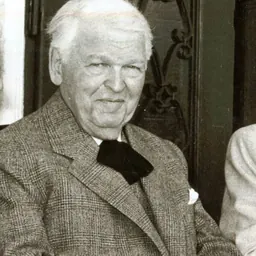
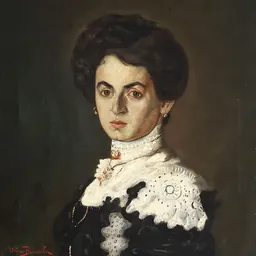

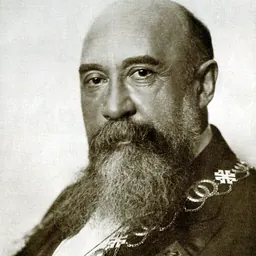



Related people
Same field, nearest in time
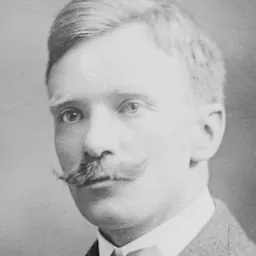

Contemporaries
People whose lives overlapped Izabela Sadoveanu-Evan's





Frequently asked questions
Who was Izabela Sadoveanu-Evan?
Romanian writer (1870-1941)
When was Izabela Sadoveanu-Evan born?
Izabela Sadoveanu-Evan was born on 24 February 1870 in Săucești.
When did Izabela Sadoveanu-Evan die?
Izabela Sadoveanu-Evan died on 6 August 1941.
What was Izabela Sadoveanu-Evan's occupation?
Izabela Sadoveanu-Evan was a literary historian, literary critic, essayist, biographer, translator and writer.
What nationality was Izabela Sadoveanu-Evan?
Izabela Sadoveanu-Evan was Romanian.
Sources & further reading
· Wikipedia: Izabela Sadoveanu-Evan
· DBpedia: Izabela Sadoveanu-Evan
Cite this page
APA: Biography.guide. (2026). Izabela Sadoveanu-Evan. https://biography.guide/izabela-sadoveanu-evan/
MLA: "Izabela Sadoveanu-Evan." Biography.guide, https://biography.guide/izabela-sadoveanu-evan/.
Chicago: "Izabela Sadoveanu-Evan." Biography.guide. https://biography.guide/izabela-sadoveanu-evan/.
Data last updated: 2026-09-20 · Spot an error? Report a correction.
Page generated 2026-09-27 05:17 UTC