
About Iwan Roberts
Born 1968. Iwan Roberts is a British association football player.
Iwan Wyn Roberts (born 26 June 1968) is a Welsh former professional footballer who played as a forward from 1986 to 2005 for a number of clubs and the Wales national team. His footballing career started at Watford as a trainee before signing his first professional contract with the club in 1986. He moved to Huddersfield Town in 1990 where he remained for three seasons before transferring to Leicester City. Roberts signed for Wolverhampton Wanderers after three further seasons, but stayed for a single campaign before transferring to Norwich City, where he spent seven years. He played international football for Wales and amassed fifteen caps between 1989 and 2001, without scoring.
Roberts made 647 league appearances during his career, almost half of which were for Norwich, where he overcame a weak start to become a fan favourite. At his peak, he scored 61 goals in three seasons, and finished with two goals in his final game as Norwich achieved promotion to the Premiership. He was elected to the Norwich City F.C. Hall of Fame in 2002, while still at the club. His professional career ended with spells at Gillingham and on loan to Cambridge United.
Since retiring as a player, Roberts, who speaks fluent Welsh, has worked as a commentator for Sky Sports, BBC Radio Cymru and BBC Cymru Wales. His book, All I Want for Christmas ..., a reference to his gap-toothed appearance, prompted both controversy and praise when it was published in 2004.
Early life Iwan Wyn Roberts was born in Bangor, Gwynedd, on 26 June 1968. He grew up in Barmouth, on the west coast of Wales, as a Liverpool fan.
Roberts says that most football fans would know him ("if you know me at all") as "that gap-toothed ginger lunk". He started losing his front tooth when he was just 10: his best friend's heel chipping half of his tooth off, the result of an incident playing football. He lost his second front tooth as the result of an elbow to the mouth from Darran Rowbotham when he was 18, Critical to Roberts' thinking when he joined Watford was that coach Tom Walley was, like himself, Welsh-speaking, as was professional Malcolm Allen, against whom Roberts had played in the local Welsh leagues. He was also influenced by Graham Taylor's record of giving youth players opportunities. Roberts joined Watford as a trainee, signing his first professional contract in July 1986, shortly after his 18th birthday.
Club career Watford Roberts made his first-team debut during the 1985–86 season and scored his first goal in professional football on 16 September 1986; it was the only goal in a 1–0 win against Manchester United at Vicarage Road. Having made only one full first team appearance for Watford prior to the match, Roberts came on as a second-half substitute to score the winning goal from a narrow angle. Watford ended the season in ninth position, and despite having three years of his contract remaining, Taylor left the club to join Aston Villa. Roberts broke through in the following season, making 31 appearances in all competitions and scoring three goals, but Watford finished 19th in the table and were relegated to the Second Division. The 1988–89 season saw him make 32 appearances in total, scoring six goals, Roberts' chances were restricted the following season, when he made just nine league appearances, scoring twice. but felt that he was failing to get enough opportunities and moved to Division Three club Huddersfield Town prior to the start of the 1990–91 season, for £275,000. One of his contemporaries at Watford was future Norwich City manager, Glenn Roeder. Roberts remembers Roeder as "an absolute gentleman ... I can't speak highly enough of him. He helped me a great deal with his experience and any problems that the young lads had they knew he would help them with."
Huddersfield Town Roberts credits a lot of his success as a striker to the interaction he had with Huddersfield's then first-team coach, Peter Withe: "Peter was exceptional in the air and he taught me so much on how to use my physicality properly and how to move defenders about especially in the penalty box which would enable me a bit more time and space in the box." The club then signed Frank Stapleton, who helped the young Roberts develop "awareness in the opposition's penalty box" and how to "steal goals" to increase his goal tally, getting a final touch to 'help' a goalbound ball cross the line. His efforts helped the club to finish third and qualify for the play-offs. There they lost to Peterborough United where Roberts failed to score in either leg. Overall, whilst playing for Huddersfield he scored 50 goals in 142 games. Neil Warnock, Huddersfield's manager, needed to sell players and Leicester manager Brian Little took an interest.
Leicester City Roberts made his debut for Leicester in a Midlands derby against Wolverhampton Wanderers. In the second half, Roberts scored two goals to secure a draw. After retiring, Roberts said he still regretted not completing a hat-trick in the match, a feat he did achieve in April 1994, in a 28-minute spell against local rivals Derby County. Roberts broke some ribs a few weeks later and returned to the first-team squad just in time for the 1993–94 play-off final, which Leicester won 2–1 against Derby. In the semi-final, Leicester drew 0–0 with Stoke City in the first leg at home and won 1-0 in the second leg from a Garry Parker goal, to qualify for the final. What followed was one of the only two incidents that "bugged" Roberts during his playing career: while celebrating the win, he suddenly realised he was in danger due to a pitch invasion by Stoke supporters. Although it was reported that Roberts had recovered from injury, he was not selected for the squad for the play-off final against Crystal Palace. Leicester won the match which secured them promotion to the Premiership. He spent only one season at Molineux in which he scored 12 goals in 33 games, including one hat-trick for the club in a match against their local rivals West Bromwich Albion in the Black Country derby.
In the summer off-season of 1997, Roberts returned from holiday and came into the club for the first day of pre-season training where manager Mark McGhee called him into his office. There McGhee said that he had been told that in order to bring in new players, he had to sell first, and that Roberts was the only player for whom an offer had been made – by Norwich City. His time at the club (nicknamed the Canaries) did not begin happily, however. Following his debut in August 1997 against his former club Wolves, he struggled throughout the 1997–98 season and scored just seven goals; "there were certainly those in the stands who were questioning whether he was worth the near £1,000,000 splashed out on him". There were crowd chants about him being a "waste of money" and Roberts remembers that someone wrote to the Eastern Daily Press and described him as "the worst ever to wear a Norwich shirt", adding the reflection that "it was the bleakest period of all my years as a pro." Roberts had scored just four goals heading into the end of the season; however, his fitness slowly began to improve and "three goals in the final two home games of the season left in good heart for the next campaign".
Roberts threw himself into weight training and soon reached a target weight of 13 stone 10 pounds.
During that 1999–2000 campaign there was speculation about Roberts's future as his contract was due to expire in the summer of 2000. Roberts had an agent, former team-mate and close friend David Speedie, who advised him to turn down Norwich's offer and sign for Nottingham Forest or Huddersfield Town. Ultimately, "he couldn't produce anything on paper that told me I'd be signing... so I could have got injured in training, never played again and not got a penny."
Under Nigel Worthington, Roberts became club captain, but also finished his Norwich City career. Although Roberts was personally enjoying the most productive spell of his career, his first four years at Carrow Road had seen the club struggle. They had barely threatened to qualify for the end of season play-offs, ending the 2000–01 campaign in 15th place, six points above the relegation zone. The 2001–02 season, with new manager Nigel Worthington in his first full season in charge, saw the team fare better and they reached the Division One play-off final at the Millennium Stadium in Cardiff. Roberts missed much of the second half of the season because of injury, but came off the substitute's bench in the final to give Norwich the lead in the first minute of extra-time with a header. Norwich lost the match in a penalty shoot-out after Birmingham City had equalised. Roberts took – and scored – the first penalty of the shoot-out but misses by Phil Mulryne and Daryl Sutch meant Birmingham won 4–2 and were promoted to the Premiership.
During the 2002–03 season, Roberts captained the Norwich team. That season, in a match against Sheffield Wednesday at Carrow Road, Roberts scored twice to move into third place on the list of Norwich City's all-time leading goalscorers, overtaking Robert Fleck in the process. The Canaries faded after a good start to the season, finishing in eighth place and failing to qualify for the play-offs. Roberts scored just 7 goals in 47 games. Roberts scored some important goals, including the winning strike in a top-of-the-table match against Sheffield United. Roberts revealed in his autobiography that in February of that season he had a cancer scare and had to have a melanoma removed from his arm.
A few days before the club's last home match of the 2003–04 season, Worthington announced that Roberts would not be offered a new contract when his deal expired that summer. Worthington felt that, following promotion to the Premiership, the club had to look to the future and that Roberts was now surplus to requirements. he described the occasion and the goal: "I'd never scored on the final day of a season before, it was my final game in a Norwich shirt, which was a very sad occasion, Nigel Worthington made me captain for the day and I'll be forever thankful for that, and I managed to cap it all off by getting two goals. One of them was a left footed volley into the top corner and I haven't got too many of those in my career!" His debut was against Ipswich, Norwich's local rivals, and was booked after less than five seconds. In December 2004 Roberts had himself served as joint caretaker manager, along with Darren Hare and Paul Smith, after the sudden departure of both Hessenthaler and initial caretaker John Gorman. In March 2005 he joined Cambridge United on loan until the end of the season to play under the management of former Norwich team-mate, Rob Newman. In August 2005, Roberts retired from playing after reaching an agreement with Gillingham to pay the final year of his contract. He made his debut for the Welsh national team on 11 October 1989, when he took to the field in a 2–1 defeat to the Netherlands in a World Cup qualifier at the Racecourse Ground, Wrexham. With both Ian Rush and Mark Hughes suspended, Roberts started the game alongside Malcolm Allen. He had to wait more than two years for his next international appearance, when his domestic form for Huddersfield saw him leading scorer in Division Two. He earned two more caps that year at the Kirin Cup in Japan, suffering a 1–0 loss against Argentina and receiving a red card in a 1–0 victory over the host nation for a foul on Masami Ihara. Roberts made three appearances for the senior Wales team in 1994, including two qualification matches for UEFA Euro 1996 against Albania and Moldova. but failed to score for the senior team.
Style of play
Standing at , They also featured together for Wales, although Roberts never managed to score in 15 appearances for the national side. Roberts said "I absolutely loved playing up-front with [Bellamy]... we hit it off straight away, probably more so than anyone else I ever played with. It was like telepathy between us." Roberts stated in the book that the stamp was a payback for a serious injury that Muscat had inflicted on Craig Bellamy while Bellamy and Roberts were playing together for Norwich, and that Muscat held no grudges over it.
Because of the coverage in the book, the Football Association retrospectively investigated the incident and Roberts, then playing at Gillingham, was banned for three matches and fined £2,500 for the offence. Roberts commented that this "left 'a bitter taste' – especially after England captain David Beckham escaped without a punishment for his deliberate foul in the World Cup qualifier against Wales." The Football Association said there was "insufficient evidence" to charge Beckham with bringing the game into disrepute. This was "despite his admission in The Daily Telegraph and subsequent apology." At the time, Roberts told The Daily Telegraph, "I do not want players to get suspensions and fines, but there must be consistency, regardless of who the player is."
Post-playing career Roberts has the UEFA A Licence for football coaching and, speaking in 2007, had not ruled out getting into management. He told the Eastern Daily Press, "I've done my qualifications. It's just getting a club to give me a chance and taking it." He also works for BBC Cymru Wales. He writes regularly for the local press in Norfolk, commenting on Norwich City and also contributes to the weekly podcast Elis James Feast of Football with comedian Elis James and fellow Welsh former international player Danny Gabbidon.
Personal life
Roberts was married in 2016, and has three children; a son and twin daughters. It followed research, published by the University of Glasgow in 2019. He has "taken a series of simple memory, attention and spatial-awareness tests and he will repeat them every six months", and will ask former Norwich City colleagues to do the same.
Legacy In 2002, Roberts was made an inaugural member of the Norwich City F.C. Hall of Fame. In 2007, Roberts came third in a vote run by the Norwich Evening News to determine which Norwich legend would be inaugurated into the Professional Footballers' Association Centenary Hall of Fame.
Career statistics
Club + Appearances and goals by club, season and competition
Division!!Apps!!Goals!!Apps!!Goals!!Apps!!Goals!!Apps!!Goals!!Apps!!Goals
1985–86 First Division
1986–87 First Division
1987–88 First Division
1988–89 Second Division
1989–90 Second Division
63!!9!!7!!0!!8!!3!!5!!0!!83!!12
1990–91 Third Division
1991–92 Third Division
1992–93 Second Division
1993–94 Second Division
142!!50!!12!!4!!14!!6!!15!!8!!183!!68
1993–94 First Division
1994–95 Premiership
1995–96 First Division
100!!41!!5!!2!!5!!1!!1!!0!!111!!44 Wolverhampton Wanderers 1996–97 First Division
1997–98 First Division
1998–99 First Division
1999–2000 First Division
2000–01 First Division
2001–02 First Division
2002–03 First Division
2003–04 First Division
278!!84!!7!!2!!18!!10!!3!!1!!306!!97 Gillingham 2004–05 Championship
Cambridge United (loan) 2004–05
Individual PFA Team of the Year: 1991–92 Third Division
Don’t just read it —
keep it.
Full-length biographies made to live with: read them, listen on the way to work, watch them tonight.
- E-book
- Audio
- Video
Instant download · yours to keep · every purchase keeps this site free
Important facts
People in Iwan Roberts's life
Named in this biography and alive at the same time
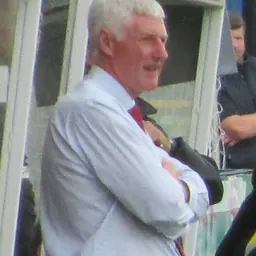




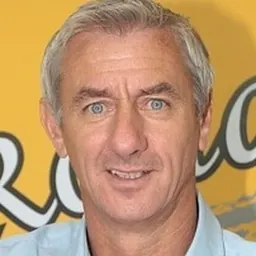

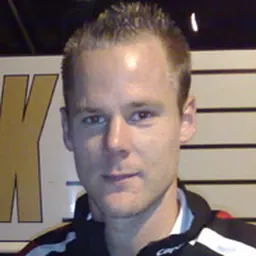
Related people
Same field, nearest in time




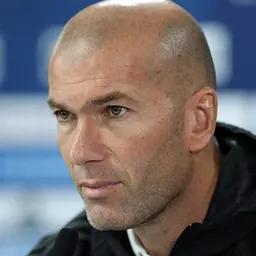

Contemporaries
People whose lives overlapped Iwan Roberts's



Frequently asked questions
Who is Iwan Roberts?
Welsh footballer (born 1968)
When was Iwan Roberts born?
Iwan Roberts was born on 26 June 1968 in Bangor.
What is Iwan Roberts's occupation?
Iwan Roberts is an association football player.
What nationality is Iwan Roberts?
Iwan Roberts is British.
Sources & further reading
Cite this page
APA: Biography.guide. (2026). Iwan Roberts. https://biography.guide/iwan-roberts/
MLA: "Iwan Roberts." Biography.guide, https://biography.guide/iwan-roberts/.
Chicago: "Iwan Roberts." Biography.guide. https://biography.guide/iwan-roberts/.
Data last updated: 2026-09-26 · Spot an error? Report a correction.
Page generated 2026-09-27 05:15 UTC