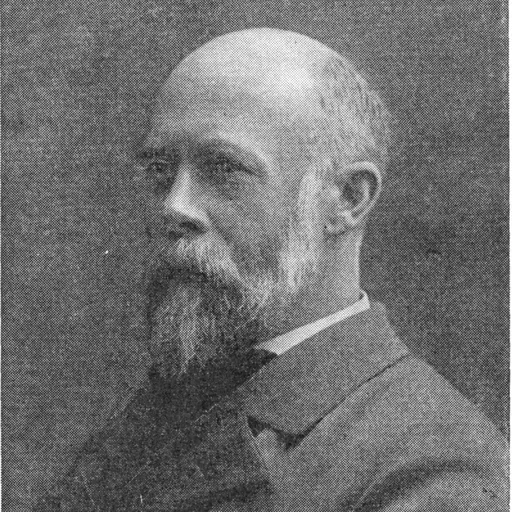
About Ivar Mortensson-Egnund
Lived 1857 – 1934 (aged 76). Ivar Mortensson-Egnund was a Norwegian journalist, translator, writer, poet, lutheran pastor and vicar.
Ivar Mortensson-Egnund (originally Ivar Julius Mortensen and also referred to as Ivar Matlaus; 24 July 1857 – 16 February 1934) was a Norwegian author, journalist, theologian, researcher, translator, writer, philosopher and advocate of nynorsk (the new Norwegian language). He was born in Tynset Municipality (now part in Alvdal Municipality) in North Østerdalen. His parents were Anne Petronelle Tangen, and Morten Mortensen Ogarden, a former parliament member for the Liberal Party, both from Tynset Municipality. He studied theology in Christiania and got his cand. theol. in 1883. However, he did not practice as a priest before he became a diocese curate at Hamar in 1909. In 1894 he married Karen Nilsen and they farmed at Einabu in Folldal Municipality, a farm which his family had purchased in 1873.
Childhood Ivar Mortensson grew up in a religiously Haugianistic and politically liberal home. He completed the examen artium at Aars og Voss` school in Christiania in 1875 and the cand. theol. in 1883.
Ivar Mortensson-Egnund is often mentioned as a sponsor of and influence on Olav Aukrust. After Aukrust had finished his three years of teacher's education in Elverum in 1906 and moved to Folldal Municipality as a teacher, where he lived at Einabu the two years he was there. Helge Groth wrote "Of all the Norwegian poets and authors, none more directly influenced Olav Aukrust than Ivar Mortensson-Egnund."
Mortensson-Egnund had built a poet's retreat on the top of the ridge in the direction of Egnund chapel, sitting on the ridge of an esker—a trace from the last ice age. Mortensson-Egnund worked there in the daytime during the summer, but used his farm Einabu for meals and lodging.
He lived at the Einabu farm with the poet's retreat up along Norwegian Highway 29, near the Einunna river bridge, for much of his life. The main building from the 1870s stands still as it did in his time. Along the road there is a bust of Ivar Mortensson-Egnund carved by Trygve Dammen bust; it was unveiled on the 100-anniversary of his birth in 1957. The North Østerdal museum includes a display covering his history.
Revolutionary
From 1888 on Fedraheimen was edited from this log cabin, now in Tynset Bygdemuseum.
Mortensson-Egnund was a powerful and intense revolutionary. He was arrested in 1881 when he led a rebellion in Skien in support of Johan Sverdrup, parliamentary reform and Nynorsk. He attempted to unify nationalism, anarchism, mysticism and religion in his poetry and his work.
In 1883 Mortensson-Egnund became editor of the paper Fedraheimen, and served until 1889. Under Mortensson leadership the newspaper embraced the war against "the moneyed, ministers of state and imperialism". Mortensson called the magazine a "communist-anarchist organ for the country" and published extensive material from the international anarchist movement.
In 1888 Mortensson supported Garborg as Storting representative for Hedmark; the campaign was unsuccessful. The following year he held a 17 May independence celebration in Tynset Municipality, where he argued against cowardliness of the members of the Norwegian Constitutional Assembly, but praised the French Revolution. He concluded by singing La Marseillaise for shocked farmers. He and Garborg resigned from the Liberals and formed a workers party for Tynset Municipality and Røros Municipality.
Fedraheimen ceased publication in 1891, two years after Mortensson-Egnund resigned as editor; his successor was Rasmus Steinsvik.
Mortensson-Egnund published the anarchist magazine Fridom (freedom) from 1896 to 1899,
Don’t just read it —
keep it.
Full-length biographies made to live with: read them, listen on the way to work, watch them tonight.
- E-book
- Audio
- Video
Instant download · yours to keep · every purchase keeps this site free
Important facts
People in Ivar Mortensson-Egnund's life
Named in this biography and alive at the same time

Related people
Same field, nearest in time

Contemporaries
People whose lives overlapped Ivar Mortensson-Egnund's






Frequently asked questions
Who was Ivar Mortensson-Egnund?
Norwegian writer (1857–1934)
When was Ivar Mortensson-Egnund born?
Ivar Mortensson-Egnund was born on 24 July 1857 in Alvdal Municipality.
When did Ivar Mortensson-Egnund die?
Ivar Mortensson-Egnund died on 16 February 1934 in Egnund.
What was Ivar Mortensson-Egnund's occupation?
Ivar Mortensson-Egnund was a journalist, translator, writer, poet, lutheran pastor and vicar.
What nationality was Ivar Mortensson-Egnund?
Ivar Mortensson-Egnund was Norwegian.
Sources & further reading
· Wikipedia: Ivar Mortensson-Egnund
· DBpedia: Ivar Mortensson-Egnund
Cite this page
APA: Biography.guide. (2026). Ivar Mortensson-Egnund. https://biography.guide/ivar-mortensson-egnund/
MLA: "Ivar Mortensson-Egnund." Biography.guide, https://biography.guide/ivar-mortensson-egnund/.
Chicago: "Ivar Mortensson-Egnund." Biography.guide. https://biography.guide/ivar-mortensson-egnund/.
Data last updated: 2026-09-20 · Spot an error? Report a correction.
Page generated 2026-09-27 05:10 UTC