
Ivan Vsevolozhsky
Russian theatre director and director of the Hermitage
About Ivan Vsevolozhsky
Lived 1835 – 1909 (aged 74). Ivan Vsevolozhsky was a Russian choreographer, librettist, composer, theatre manager and artist.
Ivan Alexandrovich Vsevolozhsky (; 1835–1909) was the Director of the Imperial Theatres in Russia from 1881 to 1898 and director of the Hermitage from 1899 to his death in 1909.
Vsevolozhsky ran the Imperial Theatres with a determination for excellence. In 1886, Vsevolozhsky initiated two major reforms for the St. Petersburg Imperial Theatres, namely the relocation of the Imperial Ballet and Opera from the Bolshoi Kamenny Theatre (deemed unsafe by 1886) to the Mariinsky Theatre, and the abolition of the post of First Imperial Ballet Composer, a post previously held by such composers as Léon Minkus and Cesare Pugni. Alexandre Benois and Roland John Wiley credit him with the revival of ballet as a serious art form in Russia.
Early life The Vsevolozhsky family was descended from the Rostislavichi of Smolensk. He graduated from the University of St Petersburg before working in the Asian section of the Department of International Affairs, the Russian consulate in The Hague, and as an official in St Petersburg. Despite having no background in management, or indeed theatre, Vsevolozhsky developed a love for theatre and French culture in general during his assignment to the Russian consulate in Paris from 1876. After the ascension of Alexander III, he was appointed as Director of Imperial Theatres from 3 September 1881.
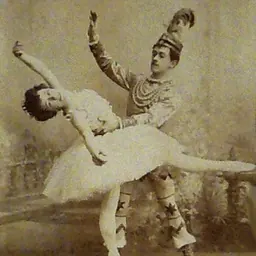
Role as Director of Imperial Theatres Though relative unknown, Vsevolozhsky was noted as an 'enchantingly kind' figure with 'astonishing insight'. Vsevolovsky allowed for ballets as The Sleeping Beauty (Tchaikovsky/Petipa) and The Nutcracker (Tchaikovsky/Ivanov) to exist.
Artistic relationships Vsevolozhsky's artistic preferences were French, though it was his refined yet unpretentious personal manner that attracted Tchaikovsky to working with him. He was one of Tchaikovsky's most vehement supporters. This relationship, however, worked both ways; the demand for new music well overshadowed supply and it was this permanent pressure that drove Tchaikovsky back to ballet after the lukewarm reception of Swan Lake, as well as Vsevolozhsky's generous facilitation of his resumed efforts. The composer's diary suggests a close relationship between himself and the Director; he recounts rushing to the former's house for urgent creative meeting that included Marius Petipa and Alexandre Petrovich Frolov.
Vsevolozhsky similarly championed Marius Petipa, with whom he had a fruitful relationship culminating in productions of 'L'Ordre du roi', 'Les Ruses d'amour' and 'Sleeping Beauty' that echoed the French golden age of ballet. However, his main allegiance remained to the cause for which he had been appointed, namely championing Russian ballet. His critics, such as Skalkovsky, lamented the lack of foreign dancers, and only in exceptional cases did he waver in his commitment to Russian art, as Wiley attests. This also reflected the wishes of the Russian royal family; the Tsar had abolished the Italian imperial opera in favour of the Russian before his appointment. Vsevolozhsky was also expected to positively influence Russian literatures, social mores and the national consciousness. His views on the state monopoly on theatrical productions are unknown, though contemporary critics appreciated its role in maintaining highbrow, high quality performances (for example, as opposed to Opera in Paris).
Later years In 1899 Vsevolozhsky become director of the Hermitage Museum until his death in 1909. He married Ekaterina Dmitrievna Volkonsky, grand daughter of Field Marshal Prince P.M. Volkonsky (1776–1852) who, under Tsar Alexander I, had participated in the battle of Austerlitz against Napoleon.
Gallery
Don’t just read it —
keep it.
Full-length biographies made to live with: read them, listen on the way to work, watch them tonight.
- E-book
- Audio
- Video
Instant download · yours to keep · every purchase keeps this site free
Important facts
People in Ivan Vsevolozhsky's life
Named in this biography and alive at the same time




Related people
Same field, nearest in time

Contemporaries
People whose lives overlapped Ivan Vsevolozhsky's




Frequently asked questions
Who was Ivan Vsevolozhsky?
Russian theatre director and director of the Hermitage (1835–1909)
When was Ivan Vsevolozhsky born?
Ivan Vsevolozhsky was born on 2 April 1835 in Saint Petersburg.
When did Ivan Vsevolozhsky die?
Ivan Vsevolozhsky died on 10 November 1909 in Saint Petersburg.
What was Ivan Vsevolozhsky's occupation?
Ivan Vsevolozhsky was a choreographer, librettist, composer, theatre manager and artist.
What nationality was Ivan Vsevolozhsky?
Ivan Vsevolozhsky was Russian.
Sources & further reading
· Wikipedia: Ivan Vsevolozhsky
Cite this page
APA: Biography.guide. (2026). Ivan Vsevolozhsky. https://biography.guide/ivan-vsevolozhsky/
MLA: "Ivan Vsevolozhsky." Biography.guide, https://biography.guide/ivan-vsevolozhsky/.
Chicago: "Ivan Vsevolozhsky." Biography.guide. https://biography.guide/ivan-vsevolozhsky/.
Data last updated: 2026-09-20 · Spot an error? Report a correction.
Page generated 2026-09-27 05:32 UTC