
About Ivan Sollertinsky
Lived 1902 – 1944 (aged 41). Ivan Sollertinsky was a Russian historian, music critic, musicologist, music educator, theatre critic and literary critic.
Ivan Ivanovich Sollertinsky (3 December 1902 in Vitebsk – 11 February 1944 in Novosibirsk) (Cyrillic: Ива́н Ива́нович Соллерти́нский) was a Soviet polymath. He specialized in fields including linguistics, theatre, literature, history, and philology, but was most known for his work in the musical field as a critic and musicologist. He was a professor at the Leningrad Conservatory, as well as an artistic director of the Leningrad Philharmonic, and a prominent orator. In these capacities, he was an active promoter of Mahler's music in the Soviet Union. Sollertinsky was also interested in ballet and often wrote essays on the subject during the 1930s, along with teaching ballet history at the Leningrad Choreographic Institute. According to contemporaries – most famously Irakly Andronikov – he had a phenomenal memory, and supposedly spoke 26 languages and 100 dialects. However, Nicolai Malko claimed that Sollertinsky was able to speak 32 languages, some of which were also considered dialects.
Biography Sollertinsky's father, Ivan Ivanovich Sollertinsky, came from a family of Russian Orthodox priests and served as a presiding judge, a privy councillor and a senator. His mother was Ekaterina Iosifovna Bobashinskaya, whose family belonged to a noble szlachta branch of the House of Sas.
Early in life he met Mikhail Bakhtin and took part in his philosophical meetings. After moving from Vitebsk to Leningrad, Sollertinsky graduated from the Leningrad University with a degree in Romano-Germanic philology, specializing in Spanish language and literature, particularly the works of Cervantes. In 1927 he became close friends with Dmitri Shostakovich, and is credited with introducing him to the works of Mahler, which had a profound impact on his composition style. Shostakovich's letters to Sollertinsky, written from 1927-1944, reveal many aspects of the composer's personality seen in few other sources, along with sharp opinions and crippling vulnerabilities.
Sollertinsky supported Shostakovich's opera, Lady Macbeth of the Mtsensk District, writing that it was an "enormous contribution to Soviet musical culture" in his 1934 review of it in Rabochii i Teatr (English: "Workers and Theatre"). In the wake of Shostakovich's first denunciation in 1936, Sollertinsky was called "the troubadour of formalism" by Pravda. Criticism of Lady Macbeth grew after its denunciation, resulting in mounting pressure on Sollertinsky to recant his previous statements, as he was largely blamed for influencing Shostakovich's "formalist" musical style by introducing him to the works of western composers. According to Isaac Glikman, a mutual friend of both Sollertinsky and Shostakovich, Sollertinsky did not denounce Lady Macbeth until Shostakovich told him to, out of concern for his safety. Once he retracted his previous positive statements on Lady Macbeth, Sollertinsky claimed that he would instead study the folklore of the Caucasus region and the Georgian language, perhaps to appeal to Stalin, a native of Georgia. While the denunciation did not deter Shostakovich and Sollertinsky's friendship, they did abandon plans to collaborate on a ballet adaptation of Don Quixote in 1936. On the night of February 10, 1944, Sollertinsky, feeling unwell, stayed at the house of the conductor A.P. Novikov. He died in his sleep at the age of 41 and was buried at the Zayeltsovskoye Cemetery. His funeral was attended by his students, colleagues, and admirers of his work.
Shostakovich dedicated his Second Piano Trio op. 67 (started December 1943) to the memory of Sollertinsky. The lively second movement of the Trio, according to Sollertinsky's sister, Ekaterina Ivanovna, appears to be a "musical portrait" of its dedicatee, while the third movement, in Passacaglia form, is a solemn dirge. The fourth and most famous movement uses klezmer-inspired themes, a possible reference to the victims of the Holocaust, due to the fact that news of the genocide was reaching the Soviet Union at the time. It may also be interpreted as a reference to Sollertinsky's birthplace of Vitebsk, which was associated with famous Jewish artist Marc Chagall, and had a sizeable Jewish population until the Vitebsk Ghetto Massacre of 1941, a Nazi atrocity which took place in the city during the war; the klezmer theme is quoted in Shostakovich's 1960 String Quartet no. 8. Shostakovich's setting of Pasternak's translation of Shakespeare Sonnet no. 66 in his Six Romances on Verses by English Poets is dedicated to Sollertinsky as well.
Don’t just read it —
keep it.
Full-length biographies made to live with: read them, listen on the way to work, watch them tonight.
- E-book
- Audio
- Video
Instant download · yours to keep · every purchase keeps this site free
Important facts
People in Ivan Sollertinsky's life
Named in this biography and alive at the same time
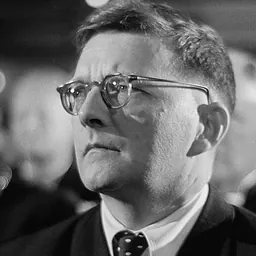
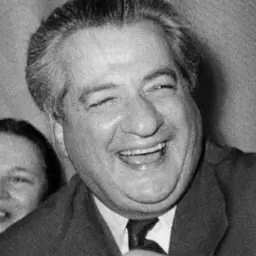

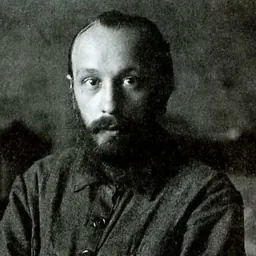
Related people
Same field, nearest in time
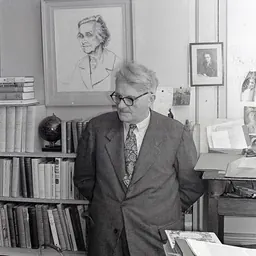

Contemporaries
People whose lives overlapped Ivan Sollertinsky's




Frequently asked questions
Who was Ivan Sollertinsky?
Soviet polymath (1902–1944)
When was Ivan Sollertinsky born?
Ivan Sollertinsky was born on 20 November 1902 in Vitebsk.
When did Ivan Sollertinsky die?
Ivan Sollertinsky died on 11 February 1944 in Novosibirsk.
What was Ivan Sollertinsky's occupation?
Ivan Sollertinsky was a historian, music critic, musicologist, music educator, theatre critic and literary critic.
What nationality was Ivan Sollertinsky?
Ivan Sollertinsky was Russian.
Sources & further reading
· Wikipedia: Ivan Sollertinsky
Cite this page
APA: Biography.guide. (2026). Ivan Sollertinsky. https://biography.guide/ivan-sollertinsky/
MLA: "Ivan Sollertinsky." Biography.guide, https://biography.guide/ivan-sollertinsky/.
Chicago: "Ivan Sollertinsky." Biography.guide. https://biography.guide/ivan-sollertinsky/.
Data last updated: 2026-09-20 · Spot an error? Report a correction.
Page generated 2026-09-27 05:24 UTC