
About Ivan Kolev
Lived 1863 – 1917 (aged 53). Ivan Kolev was a Bulgarian military officer and military personnel.
Ivan Kolev Stoyanov (15 September 1863 in – 29 July 1917 in Vienna) was a Bulgarian lieutenant general and distinguished cavalry commander during World War I.
Biography Ivan Kolev was born in the southern Bessarabian village of , then part of Romania, which was founded by Bulgarian refugees from Thrace and situated about 25 kilometers to the east of Bolhrad. Ivan received his primary education in his birthplace and from 1875 continued studying in the Bolhrad High School which he graduated in 1882. After this, he wanted to become a teacher in Banovka but his application was rejected and instead Kolev became a clerk in the local municipality.
In 1884, he moved to Sofia where he worked as assistant secretary of the Sofia District Court and was soon promoted to secretary. A year later, Ivan took part in the defense of the unification of the Principality of Bulgaria and the province of Eastern Rumelia as volunteer in the Student's Legion during the Serbo-Bulgarian War.
On 2 August 1915, Kolev was promoted to major general. This decision proved crucial in preventing a disaster on the right wing of the Third Army as it allowed Kolev's 1st Cavalry Division to appear and attack the flank of the Serbo-Croatian Division at a critical point of the Battle of Dobrich, forcing the retreat of that division which in turn caused the retreat of all the other Russian and Romanian forces. Following this victory, the Bulgarians continued pursuing their retreating opponents and once again defeated them on the Lake Oltina - Cara-Omer - Mangalia line and reached the Cobadin fortified line.
General Kolev led his division in the First Battle of Cobadin, but despite their efforts the Bulgarians were forced to suspend their attack due to the losses and exhaustion they had suffered from the almost three weeks of continuous fighting. This allowed the Romanians and Russians for the first time since the beginning of the campaign to gain the initiative and prepare a major offensive aimed at the destruction of the Bulgarian Third Army. To achieve this they concentrated a force of 124 infantry battalions, 89 artillery batteries and 31 cavalry squadrons that were supposed to attack and penetrated the Bulgarian lines while the Romanian Third Army crossed the Danube at Flămânda and advanced in their rear. The Bulgarians also consolidated their position when the Ottoman 25th Division and General Kolev's cavalry division took the villages of Amzacea and Perveli (now Moşneni) on 24 of September.
General Kolev's actions and personal example earned him the respect of his superiors and, on 30 September 1916, Field Marshal Mackensen arrived in the headquarters of the cavalry division to personally award him the German Iron Cross on behalf of Kaiser Wilhelm II. The field marshal, who was a cavalryman himself, praised the actions of General Kolev as proof that the cavalry was still able to beat the infantry in the field in spite of the opposite opinion that prevailed among the prominent German cavalry commanders.
On 19 October, the Central Powers began the decisive second attempt to break the Allied Cobadin Fortified Line. The right wing of the forces was tasked with delivering the decisive blow but its initial assault achieved little. Only General Kolev's cavalry division, reinforced with infantry units, once again enjoyed somewhat greater success. It was in this difficult situation that the cavalry proved the advantage of its mobility and managed to overcome the heavy enemy fire on 20 October. Breaking through the main defensive line, General Kolev pushed back the Romanians and Russians towards the important village of Topraisar and threatened their flank. This and the success of the left wing of the Central Powers forces made the Allied positions untenable and they soon began a general retreat. Following his orders, General Kolev began their pursuit almost immediately, defeated the withdrawing Romanians and Russians at Constanţa, and entered the vital port city. These successes allowed the Bulgarian Third Army to advance some 80 kilometers and assume defensive positions along the narrowest part of Dobruja between the Danube and the Black Sea which in turn permitted Field Marshal Mackensen to focus on the crossing of the river at Svishtov and the operations against Bucharest that were to be carried out in conjunction with the German 9th Army.
In November, the cavalry division had to undergo some structural changes ordered by the new commander of the Third Army, General Stefan Nerezov, that were opposed by Kolev. Despite the reduction of its size, however, the division continued fighting in Dobruja and ended the campaign on 4 January 1917 with the capture of Tulcea. By now, however, the general's health had begun to decline and, after a battle journey of 1000 kilometers, he gave up the command of his division on 10 March 1917.
On 28 July 1917, Ivan Kolev was promoted to lieutenant general; at the time, he was undergoing medical treatment in Austria. The disease he had contracted, however, proved fatal and Ivan Kolev died on 29 of July in Vienna. His body was returned to Bulgaria and laid to rest in Sofia.
His favorite horse, Pirin, with which he fought throughout the four months of the Dobruja Campaign, became a legend in the army and continued serving until 21 May 1925 when it was retired due to its old age (it was 15 years old at that time).
Today, two villages in Southern Dobruja as well as numerous streets in several Bulgarian cities are named after him.
Awards Order of Bravery, II grade and III grade, 1st and 2nd class Order of St Alexander, III grade with swords Order of Military Merit, IV and V grade with crown Order for Merit Commemorative Medal for the Serbian-Bulgarian War 1885 Commemorative Medal for the accession to the throne of Prince Ferdinand I in 1887 German Iron Cross, I and II class Italian Order of the Crown of Italy, IV grade Romanian Order of the Romanian Crown, III grade Russian Order of Saint Stanislaus II grade Serbian Order of the White Eagle III grade Ottoman Gallipoli Star ("Iron Crescent") Austro-Hungarian Franz Joseph 60th Jubilee Medal
Don’t just read it —
keep it.
Full-length biographies made to live with: read them, listen on the way to work, watch them tonight.
- E-book
- Audio
- Video
Instant download · yours to keep · every purchase keeps this site free
Important facts
People in Ivan Kolev's life
Named in this biography and alive at the same time
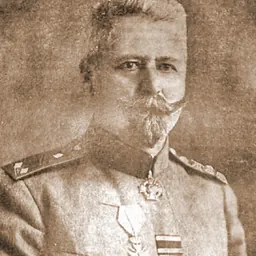


Related people
Same field, nearest in time


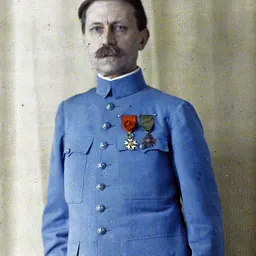


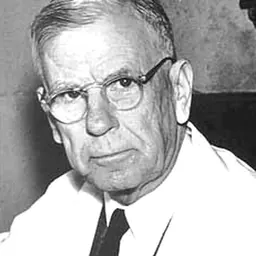
Contemporaries
People whose lives overlapped Ivan Kolev's

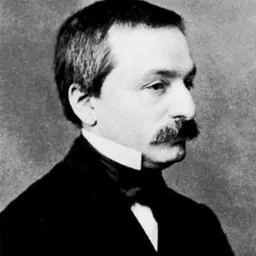


Frequently asked questions
Who was Ivan Kolev?
Bulgarian general (1863-1917)
When was Ivan Kolev born?
Ivan Kolev was born on 15 September 1863 in Bannivka.
When did Ivan Kolev die?
Ivan Kolev died on 29 July 1917 in Vienna.
What was Ivan Kolev's occupation?
Ivan Kolev was a military officer and military personnel.
What nationality was Ivan Kolev?
Ivan Kolev was Bulgarian.
Sources & further reading
· DBpedia: Ivan Kolev (general)
Cite this page
APA: Biography.guide. (2026). Ivan Kolev. https://biography.guide/ivan-kolev-military-officer/
MLA: "Ivan Kolev." Biography.guide, https://biography.guide/ivan-kolev-military-officer/.
Chicago: "Ivan Kolev." Biography.guide. https://biography.guide/ivan-kolev-military-officer/.
Data last updated: 2026-09-20 · Spot an error? Report a correction.
Page generated 2026-09-27 05:24 UTC