
About Ivan Gronsky
Lived 1894 – 1985 (aged 90). Ivan Gronsky was a Russian journalist.
Ivan Mikhailovich Gronsky (Russian: Иван Михайлович Гронский) (real surname: Fedulov) (30 November 1894 – 15 August 1985) was a Russian Soviet public figure, journalist, literary critic and Communist Party official, who survived long imprisonment in the Gulag.
Early life
Ivan Fedulov/Gronsky was born into a peasant family in the Lyubimsky district of Yaroslavl province, in Russia. His father died when he was young, and at the age of 12 he was sent to St Petersburg where he worked as a cook, loader, and locksmith. As a teenager he joined the Union of Socialists-Revolutionaries Maximalists in 1912. He had a few pieces published in radical newspapers, for which he was invited by Maxim Gorky to his home, when he met some of Russia's leading cultural figures. He served in the Russian army during World War I, and awarded the St George for bravery. Gronsky broke with the Socialist Revolutionaries when right wing SRs, led by Boris Savinkov attempted a coup against Bolshevik rule in Yaroslavl in 1918. He joined the Russian Communist Party (b) soon afterwards, in July 1918. In 1921, he was enrolled in the Institute of Red Professors, to study economics. In 1924, he was selected for an internship to study in the United Kingdom. under John Maynard Keynes, but was assigned to party work in Kolomna instead.
'Socialist Realism' and the Writers' Union In April 1932, Gronsky was appointed a member of a five-man commission to review the situation in the soviet arts, in the wake of the disbanding of RAPP. Shortly before the commission met, he was summoned to a private session with Joseph Stalin, in which they discussed literary politics, and came up with the term Socialist Realism to define what was to be the official style of soviet literature for the remainder of the 1930s. Gronsky later defined Socialist Realism as "Rembrant, Rubens and Repin put at the service of the working class".
In May 1932, he was appointed Chairman of the Organising Committee of the USSR Writers' Union, with Maxim Gorky as Honorary Chairman. As Gorky was being lured back to live permanently in Russia, and take on the chairmanship of the Writers Union, Gronsky was at a meeting in which Stalin proposed to rename Nizhny Novgorod, Tverskaya Street in Moscow, and the Moscow Art Theatre in Gorky's honour, Gronsky claimed later that he objected that the MAT was more associated with Anton Chekhov than Gorky, but was overruled.
In 1932–37, Gronsky was chief editor of the literary magazine Novy Mir, and instigated the practice of printing a portrait of Stalin and a poem to his glory in almost every issue of the magazine. The poet Boris Pasternak thought he was "stupid", telling the visiting French writer André Gide that Gronsky had introduced a practice of printing a portrait of Stalin and a poem to his glory in almost every issue of Novy Mir, and that he talked in political cliches - "but it is impossible to blame him for that".
Gronsky's wife's sister was married to the poet, Pavel Vasiliev, from whom he learnt that one of Russia's most talented living poets, Nikolai Klyuev was an active homosexual. Gronsky immediately denounced Klyuev, who was arrested on 2 February 1934, and later shot.
Role in the Purges On 1 September 1936, after the conclusion of the first of the Moscow Show Trials, Gronsky summoned a meeting of Novy mir's staff and contributors, telling them the magazine had been infiltrated by the alleged 'Trotskyite-Zinovievite conspiracy', and criticised himself and others, including Boris Pilnyak, in what was an evident attempt to save himself and the magazine. The first story seems unlikely, because Marshal Tukhachevsky's arrest came a month after Gronsky had been sacked, and Marshal Blyukher was the one who sentenced Tukhachevsky to death. The second is certainly untrue, because when Blyukher was arrested in October 1938, Gronsky was already in custody.
Arrest and Exile Gronsky was summoned to NKVD headquarters on 30 June 1938, and went voluntarily, not expecting to be arrested. He was held in solitary confinement and accused of creating a conspiratorial 'centre' in 1932 with Aleksei Stetsky. in Arkhangelsk province, and then to Vorkuta, where he was compelled to do hard labour, including coal mining. In April 1953, he was exiled to Karaganda.
Release and later life He was released from exile and allowed to return to Moscow when his case was reviewed in February 1954. The case was officially closed on the 16th anniversary of his arrest.
Don’t just read it —
keep it.
Full-length biographies made to live with: read them, listen on the way to work, watch them tonight.
- E-book
- Audio
- Video
Instant download · yours to keep · every purchase keeps this site free
Important facts
People in Ivan Gronsky's life
Named in this biography and alive at the same time
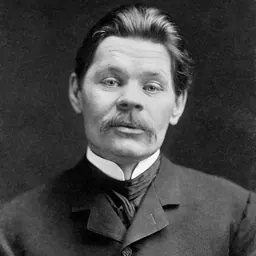




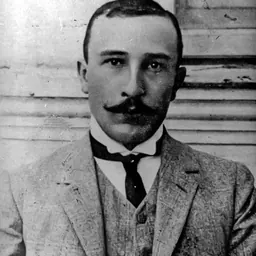
Related people
Same field, nearest in time


Contemporaries
People whose lives overlapped Ivan Gronsky's


Frequently asked questions
Who was Ivan Gronsky?
Soviet journalist (1894–1985)
When was Ivan Gronsky born?
Ivan Gronsky was born on 30 November 1894 in Lyubimsky Uyezd.
When did Ivan Gronsky die?
Ivan Gronsky died on 15 August 1985 in Moscow.
What was Ivan Gronsky's occupation?
Ivan Gronsky was a journalist.
What nationality was Ivan Gronsky?
Ivan Gronsky was Russian.
Sources & further reading
Cite this page
APA: Biography.guide. (2026). Ivan Gronsky. https://biography.guide/ivan-gronsky/
MLA: "Ivan Gronsky." Biography.guide, https://biography.guide/ivan-gronsky/.
Chicago: "Ivan Gronsky." Biography.guide. https://biography.guide/ivan-gronsky/.
Data last updated: 2026-09-20 · Spot an error? Report a correction.
Page generated 2026-09-27 05:29 UTC