
About István Szántó
Lived 1540 – 1612 (aged 71–72). István Szántó was a Hungarian translator, catholic priest, philosopher and catholic theologian.
István Szántó (also known as István Arator; 1541–1612) was a Hungarian Jesuit missionary and teacher.
Life Szántó was born in 1541 in Diocese of Győr, Hungary. He was fifteen years old when his mother and three siblings were kidnapped by the Turks. He was then cared for by his uncle. In 1560, the Bishop of Nitra sent him to the German College in Rome. The following year, he applied to enter the Jesuits, and studied philosophy and theology at the Roman College.
In 1565 he was sent to Vienna, where he taught grammar and thence went as professor to a boarding school in Nagyszombat (now Trnava, Slovakia). He was ordained priest in 1566. The succeeding years were spent studying at the university of Vienna, where he lectured on philosophy. Szántó proved highly influential among his students, but was a bit overbearing in other contexts. In 1575 he was appointed the Hungarian confessor at St. Peter's Basilica. In 1580 he founded a college at Cluj. At this time occurred his literary polemics with the Protestant preacher , against which he wrote his Epistola apologetica. Because of his outspoken, blunt character, he had many enemies among the Protestants, but he also got into heated arguments with his own comrades.
In 1585, Szántó proceeded to Gyulafehérvár (now Alba Iulia, Romania), and thence, on the expulsion of the Jesuit order from Transylvania; in 1590 he became head of the Jesuit house in Vágsellyto Vágsellye (now Šaľa, Slovakia). The following year, he went as a preacher to Znióvàralja (now Kláštor pod Znievom, Slovakia). He taught in Vienna from 1592–4, and thereafter worked as a Hungarian preacher and confessor. He was pastor in Turóc. The soldiers of Stephen Bocskai drove away the Jesuits, set the house on fire, and all its buildings were burned. He fled to Alamóc, where he began the translation of the Vulgate. He then moved to Olomouc, Moravia, where he wrote his memoirs. He died in Olomouc in 1612.
Works During the siege of Znióvàralja his books and manuscripts, including the Hungarian catechism which he composed in Rome, were lost; until his death, he was working on a translation of the New Testament, which may have been was used by György Káldy. Szántó must also be credited with the Hungarian portion of the dictionary of Calepino.
Don’t just read it —
keep it.
Full-length biographies made to live with: read them, listen on the way to work, watch them tonight.
- E-book
- Audio
- Video
Instant download · yours to keep · every purchase keeps this site free
Important facts
People in István Szántó's life
Named in this biography and alive at the same time
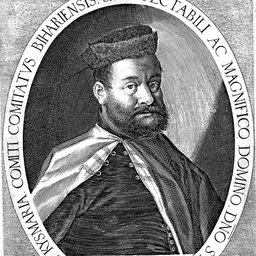

Related people
Same field, nearest in time
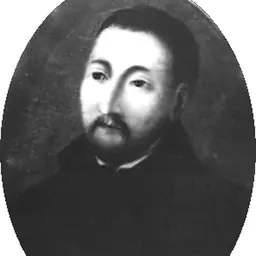
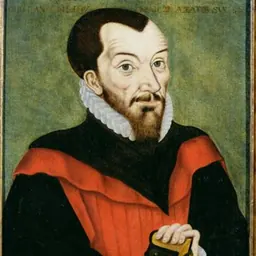



Contemporaries
People whose lives overlapped István Szántó's





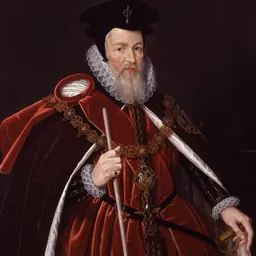
Frequently asked questions
Who was István Szántó?
Hungarian Jesuit (1540-1612)
When was István Szántó born?
István Szántó was born in 1540 in Devecser.
When did István Szántó die?
István Szántó died on 3 July 1612 in Olomouc.
What was István Szántó's occupation?
István Szántó was a translator, catholic priest, philosopher and catholic theologian.
What nationality was István Szántó?
István Szántó was Hungarian.
Sources & further reading
Cite this page
APA: Biography.guide. (2026). István Szántó. https://biography.guide/istvan-szanto/
MLA: "István Szántó." Biography.guide, https://biography.guide/istvan-szanto/.
Chicago: "István Szántó." Biography.guide. https://biography.guide/istvan-szanto/.
Data last updated: 2026-09-20 · Spot an error? Report a correction.
Page generated 2026-09-27 05:28 UTC