
István Győrkös
Hungarian far-right political activist and convicted murderer
About István Győrkös
Born 1940. István Győrkös is a Hungarian political activist, known for Hungarism and Neo-Nazism.
István Győrkös (born 20 November 1940) is a Hungarian far-right political figure and convicted murderer. He was the founder and leader of the Hungarist and neo-Nazi paramilitary movement Hungarian National Front (MNA) from 1989 to 2016. He had been a leading and prominent figure in Hungarian extremist and neo-Nazi politics in the 1990s. In 1995, he proclaimed himself the sole leader of the Hungarist movement under the title Vezető ("Leader"), a term similar to Duce (Italian) for Benito Mussolini, Führer (German) for Adolf Hitler and Nemzetvezető (Hungarian) for Ferenc Szálasi.
Győrkös fatally shot a police officer during a search of his property in Bőny, Győr-Moson-Sopron County on 26 October 2016. In 2019, he was found guilty of murder and sentenced to life in prison.
Biography
Early life Despite his rapid rise by the early 1990s to become the "leader of the neo-Nazis in Hungary", as a 1995 academic work by Sabrina P. Ramet referred to Győrkös, not much was publicly known about him before the transition to democracy in 1989. According to himself, he participated in the Hungarian Revolution of 1956.
After the uprising was crushed by the Soviet invasion, Győrkös was arrested and imprisoned by the new pro-Soviet regime. He spent his sentence for his "crime against the state" from September 1961 to April 1963. In jail, his political views were influenced by former Arrow Cross Party-member cellmates. Thereafter, Győrkös identified himself as National Socialist and Hungarist (the ideology of the war-time Arrow Cross Party). Other sources claim Győrkös lived in emigration for some time after release from prison. There is no report of his political activity after his release, but National Socialist and anti-Soviet propaganda rapidly appeared in his residence Győr since the early 1980s. According to Paul Hockenos, Győrkös was an unemployed electrical engineer during the early 1990s.
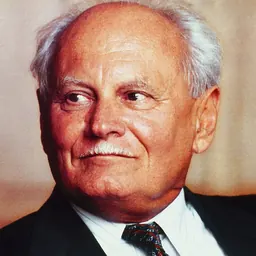
Hungarist leader Based in Győr, he founded the Hungarian National Socialist Action Group in 1989 (according to other sources, in January 1991), a fascist and neo-Nazi civil organization, which functioned under the cover of the Peregrine Falcon Hiker Association. Some argue that, Győrkös actively played in the organization of that event when a group of far-right young skinheads hissed and booed President Árpád Göncz, who delivered his annual memorial speech at Kossuth Square on the national day of 23 October 1992. The Hungarian National Socialist Action Group adopted its current name (Hungarian National Front, MNA) on 29 November 1992, after a court ruled to ban National Socialist name and symbols. Győrkös' activity have attracted significant international attention in the early 1990s. The Nouvel Observateur wrote about Győrkös in June 1993, that he is "a convinced neo-fascist, who most overtly emphasizes in interviews that he works for the preparation of a National Socialist state in Hungary". Two days later both Szabó and Győrkös were arrested and imprisoned in custody for charges of incitement against the community and use of banned totalitarian symbols. They were released on 25 July and the charges were dropped by the Metropolitan Court in that year, referring to freedom of expression, and this decision was also confirmed by the Supreme Court in 1996.
Due to the organizational work with the skinhead groups, the MNA remained the only major Hungarist organization by the second half of the 1990s (while Albert Szabó abolished his party and returned to Australia). As manifestation of this status, the first Day of Honour was held on 15 February 1997, which commemorated the Hungarian and German (mostly Waffen-SS) soldiers (they called "heroic defenders"), who died fighting against the Soviet troops in the Siege of Budapest. An Index.hu article claimed the MNA had established ties to Russian diplomats, who sometimes participated in military trainings at Bőny too. Later the Hídfő.net was handed over directly to Russian intelligence, and the site even moved to a new Russian domain, Hidfő.ru, as the Index.hu analysis assumed.
In November 2012, the MNA and the Hungarian Workers' Party led by Gyula Thürmer held a joint protest in Érd during an official eviction. Thürmer and István Győrkös, Jr. both gave a speech. As a result, there was a split within MNA under the leadership of Gábor Szalma, who disagreed with the new policy stance. According to the "separatists", based in Borsod-Abaúj-Zemplén County, who were in the majority and also reserved the name of the organization, Győrkös "questioned the Hungarism's Christian basics" and they criticized Győrkös's "imprudent infatuation with Russia". In 2013, Győrkös also distanced himself from the terms "Hungarism" and "National Socialism" and adopted a new ideology, called "Popular Socialism". Several members of the leadership of MNA at that time also had a dispute over financial issues with István, Jr., who embezzled the organization's funds, as they claimed.
2016 shooting On 26 October 2016, two detectives of the National Bureau of Investigation (NNI) arrived to Győrkös' property in Bőny to investigate a complaint of illegal weapons during a house search. According to the daily Magyar Idők, the official procedure connected to the investigation of the 2016 Budapest bombing occurred on 24 September 2016. However Győrkös was not cooperating and opened fire with a Kalashnikov rifle on the two police officers, while they entered the house entrance. One of them, principal detective Péter Pálvölgyi, aged 46, was shot in the head and died at the scene. According to Lokál, Győrkös' wife tried to disarm her husband, but without success (later that day she suffered a heart attack). Pálvölgyi's partner returned fire and shot Győrkös in the back and the bullet exited through his stomach. After that Győrkös locked himself inside the house and threatened further shootings. Thereafter, the special units of Counter Terrorism Centre (TEK) arrived at the crime scene, and Director-General János Hajdu negotiated with Győrkös by telephone, when it became apparent that Győrkös' health condition was deteriorating due to his wound, and officers were sent in the house to disarm him.
Several experts criticized the unprofessional procedure and the lack of cooperation between the National Bureau of Investigation (NNI) and the Counter Terrorism Centre (TEK). Despite intelligence reports, which confirmed that Győrkös owned firearms and explosives illegally, the NNI had sent only two detectives, while not informing the TEK of their authority procedure, despite the general instruction of the Ministry of Interior in similar situations. The Heti Világgazdaság published exclusive details on 3 November. According to the weekly's website (hvg.hu), the NNI was already aware of possession of assault rifles by Győrkös when it ordered the house search. Thus it had to inform the TEK under the 295/2010. (XII. 22.) government regulation, but failed to do so. The website also reported that the injured Pálvölgyi, who did not die immediately, was inaccessible within the house for half an hour, despite the fact that dozens of police officers arrived at the scene just after the shooting. On 7 November, Heti Világgazdaság shared further details from police sources. It claimed the search team consisted of four detectives and three demolition experts, not only Pálvölgyi and his colleague. According to the HVG's information, Győrkös did not shoot immediately, there was a verbal dispute between the policemen and him, and Győrkös even secluded his watch dog. Then the discussion escalated and Győrkös opened fire in unexplained circumstances.
István Győrkös' two surviving sons (Csaba, their younger brother, died in 2013, and according to reports, Győrkös was unable to process his death) were interviewed by blog Pesti Srácok. Kolos Győrkös expressed his condolences to Pálvölgyi's family, but also added that his father was already wounded when he returned fire and killed the police officer. According to him, Pálvölgyi and his partner burst into the hall and immediately fired, when Győrkös' wife opened the front door upon their request. István, Jr., who acted as deputy leader of the MNA since 29 September 2012, denied the existence of training camps and claimed the MNA had abolished them "years ago". On 10 November, István Jr. blamed the police for the death of Pálvölgyi, which was the result of an "unprofessional police action" and found the date of the search as "suspicious" and "politically motivated".
Győrkös refused to testify on 9 November. His lawyer, György Léhner insisted that his client bought the Kalashnikov rifle ten years ago after receiving a death threat.
Political reactions and aftermath Prime Minister Viktor Orbán and his party Fidesz sent their condolences to the family of the victim in a statement. Orbán said "it is unacceptable that anyone should attack those who uphold order and lawfulness". Minister of Interior Sándor Pintér declared Pálvölgyi, who had been serving as a police officer for 25 years, as "hero", and also posthumously promoted him to lieutenant colonel. The coalition partner Christian Democratic People's Party (KDNP) expressed there is "need to fight against such dangerous extremism with any possible methods". Zsolt Molnár, the Socialist Chairman of the Parliamentary Committee on National Security convened the committee to investigate the question of adequate action by the law enforcement and discuss indispensable steps to prevent members of "far-right paramilitary groups" from obtaining guns, while the Democratic Coalition called the crime as an "act of terror" and added, the real threat to the Hungarian security comes from the extreme right groups, and not the migrants, as the Fidesz government campaigned in the 2016 migrant quota referendum. The party also criticized the "incompetence" of Counter Terrorism Centre (TEK). The far-right Jobbik also condemned the murder and rejected suggestions which linked connection between the party and Győrkös' MNA.
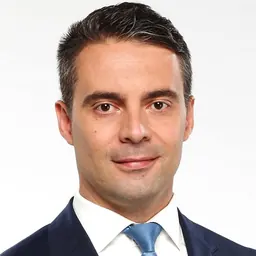
Following the murder, the MNA's links with the Russian intelligence were revealed, albeit Political Capital already wrote about this close relationship in August 2014, but with limited attention in accordance with the MNA's marginalization. Gyöngyösi was interviewed by Index.hu, where he denied any relationship with the MNA. According to him, the photo have been made only by secret service background. On 5 November, Fidesz-backed 888.hu published a photo, where Jobbik leader Gábor Vona and István Győrkös, Jr. together were present on the occasion of Nowruz at the Iranian Embassy in Budapest. The website considered the photo as proof for the existing relationship between Jobbik and the Russian intelligence via the MNA. In response, Jobbik identified nine Fidesz MPs too who participated in that event to demonstrate "unfounded and absurd accusations by the Fidesz-backed media".
On 7 November, the Parliamentary Committee on National Security held its private meeting, inter alia, on the subject of Győrkös. After the meeting, Zsolt Molnár said Pálvölgyi was killed as a result of "professional misconduct". He confirmed that information which suggested the MNA sought to establish a relationship with the Russian intelligence. Molnár added the murder had no ideological motivation, Győrkös killed the police officer in "impaired consciousness". Fidesz MP and deputy chairman of the committee Szilárd Németh urged authorities to investigate the "linkage between far-right paramilitary groups and the foreign [Russia] and domestic politics [Jobbik]."
Trial Győrkös' trial for murder, violence against an official person and keeping a firearm without permission began on 25 April 2018 in Szombathely. Győrkös was arraigned and pleaded not guilty to the murder of Pálvölgyi, but he admitted the illegal possession of weapons.
Győrkös was sentenced to life imprisonment - which would mean only after 25 years the conditional release may be discussed - for murder by the court of first instance at Szombathely on 21 June 2019. An appeal court in Győr handed a life sentence to Győrkös for murdering a police officer on 11 December 2019. He was also found guilty of illegal use of a firearm.
Don’t just read it —
keep it.
Full-length biographies made to live with: read them, listen on the way to work, watch them tonight.
- E-book
- Audio
- Video
Instant download · yours to keep · every purchase keeps this site free
Important facts
People in István Győrkös's life
Named in this biography and alive at the same time




Related people
Same field, nearest in time

Contemporaries
People whose lives overlapped István Győrkös's



Frequently asked questions
Who is István Győrkös?
Hungarian far-right political activist and convicted murderer
When was István Győrkös born?
István Győrkös was born on 20 November 1940.
What is István Győrkös's occupation?
István Győrkös is a political activist.
What is István Győrkös known for?
István Győrkös is known for Hungarism and Neo-Nazism.
What nationality is István Győrkös?
István Győrkös is Hungarian.
Sources & further reading
Cite this page
APA: Biography.guide. (2026). István Győrkös. https://biography.guide/istvan-gyorkos/
MLA: "István Győrkös." Biography.guide, https://biography.guide/istvan-gyorkos/.
Chicago: "István Győrkös." Biography.guide. https://biography.guide/istvan-gyorkos/.
Data last updated: 2026-09-20 · Spot an error? Report a correction.
Page generated 2026-09-27 05:17 UTC