
About Issa Tchiroma
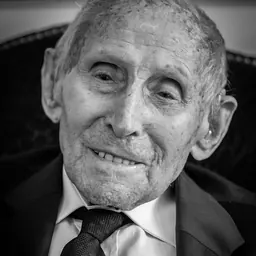
Born 1949. Issa Tchiroma is a Cameroonian engineer, politician and minister.
Personal life Tchiroma studied in France and became a materials and construction engineer. Working in Douala, Tchiroma was a Research Officer at the Cameroon Railways Camrail (Regie des Chemins de Fer, Regifercam), the state railway company of Cameroon, until April 1984. When soldiers attempted to overthrow President Paul Biya in a coup attempt on 6 April 1984, sparking days of fighting in Yaoundé, Tchiroma was in Douala. According to Tchiroma, he was uninvolved in the coup attempt and the violence was as mysterious to him as it was to others at the time; he said that he observed the gloomy atmosphere that prevailed in the city and noted the general lack of reliable information about what was occurring in Yaoundé.
The coup was foiled by loyalist troops, and the government arrested the supposed perpetrators. Tchiroma, being from the North, one of the regions that are purported to be a stronghold of the supposed coup plotters, was amongst the ones under suspicion. After several searches and damages to his home, he was arrested on April 16, 1984. Despite no charges being brought against him, Tchiroma was imprisoned first at Kondengui prison, then transferred to Yoko prison, where he endured lengthy detention under harsh conditions denounced by Amnesty International. During his years in detention, Tchiroma, a French-speaking Cameroonian, taught himself English. After more than six years, he was released in 1990.
Political career
Following Tchiroma's release, he participated in a protest in Garoua against the actions of those who, in his view, were impeding the implementation of the law providing amnesty to individuals implicated in the 1984 coup attempt. He was then arrested and jailed again. According to Tchiroma, his arrest provoked anger among northerners, and he credited Edgar Alain Mebe Ngo'o, the Secretary-General of North Province, with securing his release in order to defuse the situation. In the March 1992 parliamentary election, he was elected to the National Assembly as a UNDP candidate in the Bénoué constituency of North Province. Later in the year, after Biya controversially won the October 1992 presidential election, Tchiroma was appointed to the government as Minister of Transport by Biya on 27 November 1992, along with another UNDP leader, Hamadou Moustapha. He and Moustapha accepted their appointments without the approval of UNDP President Maigari Bello Bouba; the appointments were viewed by some as a way of dividing and weakening the opposition by coopting certain opposition figures.
After Tchiroma and Moustapha were retained in their posts as part of the government named in July 1994, Bello Bouba said on 23 July 1994 that their continued inclusion in the government would mean the end of their membership in the UNDP. Tchiroma and Moustapha challenged their removal from the party, but they were expelled by the UNDP Central Committee in January 1995. Following their expulsion, Tchiroma and Moustapha established their own "authentic" faction of the UNDP, rejecting Bello Bouba's leadership. That faction then became the (NADP), a new party featuring a slight alteration of the UNDP's name, Despite their creation of a new party, Moustapha and Tchiroma still legally contested Bello Bouba's leadership of the UNDP. He departed the government on 19 September 1996, when Joseph Tsanga Abanda was appointed to replace him as Minister of Transport.
Return to the UNDP and creation of the FSNC Tchiroma ultimately left the ANDP and rejoined the UNDP at a January 2002 party congress in Maroua. He also joined other northern politicians in signing a September 2002 memo decrying the government's alleged marginalization and neglect of the north and urging that more attention be paid to addressing the north's problems.
At the time of the October 2004 presidential election, Tchiroma was part of the opposition coalition and denounced President Biya, urging the people to vote him out. He took that stance even though Bello Bouba and the UNDP leadership chose to support Biya's candidacy.
Tchiroma later left the UNDP again and founded a new party, the Front for the National Salvation of Cameroon (FSNC), which was officially registered in January 2007. At the time, he said that the FSNC "intends to contribute to the advent of a free society and promote the democratisation process in Cameroon".
At a press conference on 20 February 2008, he announced his party's support for constitutional amendments favored by the government, including the elimination of presidential term limits. Although other opposition leaders viewed the amendments as a transparent effort to allow Paul Biya to remain in power, Tchiroma argued that the amendments should be considered on their own merits. He particularly stressed his support for extending the 45-day period for organizing a new presidential election following a vacancy in the office, arguing that it was "almost impossible" to do so within that length of time.
Minister of Communication President Biya appointed Tchiroma to the government as Minister of Communication on 30 June 2009. According to Tchiroma, he learned of his appointment when someone who had just heard the announcement called him to tell him to turn on the radio. He said that he initially took it as a joke and that he was very happy when he learned it was true, while stressing that "the responsibility and challenge is enormous".
On 17 August 2009, Tchiroma announced that he had ordered the closure of Sky One Radio due to "multiple infringements of laws governing communications in Cameroon". According to the government, the station was trying to solve social problems through its Le Tribunal program and thereby supersede the Ministry of Social Services. Tchiroma said that he had tried three times to reach an agreement with the station management, but was unsuccessful; he added that the station would be reopened if the management "promises to respect the code of ethics and the ministry's specifications".
When President Biya took an expensive vacation in France in September 2009, the vacation's cost generated some anger, but Tchiroma argued that Biya, "like any other worker ... has a right to his vacations" and that in taking vacations he was free to use "the means put at his disposal by the sovereign people ... to provide his needs".
The journalist Bibi Ngota, who was arrested on charges of fraud on 10 March 2010, died at Kondengui prison in April 2010. Tchiroma said that Ngota had been HIV positive and that he had died due to infections that had "overwhelmed" his weakened immune system, despite the best efforts of prison doctors. However, some expressed skepticism regarding the official version of events, claiming that Ngota had not received treatment. Ngota's brother was angered by Tchiroma's explanation and said that he was lying.
As Cameroon held celebrations marking its 50th year of independence from France in May 2010, Tchiroma acknowledged in an interview that "Cameroon has suffered from poor governance, mismanagement and corruption", while arguing that the country was making progress under President Biya. He noted that a high level of peace and stability had been preserved in Cameroon, in contrast to many other African nations. Regarding the controversy surrounding Ngota's death and allegations that he was tortured in hopes of extracting information on his sources, Tchiroma described the journalist as a "rascal" but insisted that Ngota was not subjected to torture and that his arrest had not been politically motivated.
On 21 June 2010, Tchiroma announced the news that the wreckage of a missing plane carrying the Australian businessman Ken Talbot and the rest of the board of the mining company Sundance Resources had been found in Congo-Brazzaville following an extensive search. The plane had taken off in Yaoundé and was travelling to the Congolese town of Yangadou, when all 11 people on board apparently died in the crash.
After a gay Cameroonian man was granted asylum in the United Kingdom due to his sexuality, Tchiroma said in July 2010 that, although homosexuality was illegal in Cameroon, homosexuals were not prosecuted for their private activities. He dismissed the asylum-seeker's claims, arguing that the man had nothing to fear from the law.
Tchiroma stated on 20 April 2017 that Biya had ordered the restoration of internet service in Anglophone parts of Cameroon, where it had been cut off in January 2017 due to unrest. Tchiroma said that the denial of internet service was no longer necessary because the situation in the Anglophone regions had largely returned to normal.
Minister of Employment and Vocational Training, 2019–2025 Tchiroma also served as Minister of Employment and Vocational Training, overseeing the construction of several training centers in partnership with France, South Korea, the World Bank, and the African Development Bank (AfDB). He pushed for a law requiring foreign companies to contribute to the training of young Cameroonians. The cost of vocational training was also lowered to 50,000 FCFA annually so that the training became more accessible to a wider portion of the population.
A strong figure in the government, Tchiroma grew disillusioned with the weakening of leadership, the centralization of power, the despair of the youth, and the stagnation of the state. The absence of cabinet meetings for over a decade was said to further solidified his belief that it was time to break away. In June 2025, he publicly announced his resignation from the government.
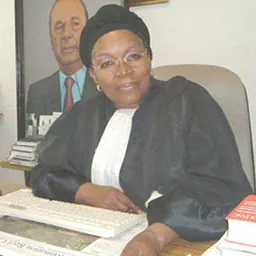
2025 presidential candidacy On 25 June 2025, Tchiroma officially announced his candidacy for the 2025 presidential election, with the slogan "Le peuple au pouvoir / We are the power". In an open letter to the Cameroonian people, he stated his intention to break with a government he believes has run out of steam after 43 years of unbroken rule by President Biya. After voting was held on 12 October, Tchiroma proclaimed himself the winner despite official results not having been released yet. He was supported by the Human right's lawyer Alice Nkom. Following violent protests over Biya's reelection and subsequent inauguration, Tchiroma fled to the Gambia due to safety concerns on 7 November and was granted asylum.
Don’t just read it —
keep it.
Full-length biographies made to live with: read them, listen on the way to work, watch them tonight.
- E-book
- Audio
- Video
Instant download · yours to keep · every purchase keeps this site free
Important facts
People in Issa Tchiroma's life
Named in this biography and alive at the same time





Related people
Same field, nearest in time
Contemporaries
People whose lives overlapped Issa Tchiroma's



Frequently asked questions
Who is Issa Tchiroma?
Cameroonian politician
When was Issa Tchiroma born?
Issa Tchiroma was born on 10 September 1949 in Garoua.
What is Issa Tchiroma's occupation?
Issa Tchiroma is an engineer, politician and minister.
What nationality is Issa Tchiroma?
Issa Tchiroma is Cameroonian.
Sources & further reading
Cite this page
APA: Biography.guide. (2026). Issa Tchiroma. https://biography.guide/issa-tchiroma/
MLA: "Issa Tchiroma." Biography.guide, https://biography.guide/issa-tchiroma/.
Chicago: "Issa Tchiroma." Biography.guide. https://biography.guide/issa-tchiroma/.
Data last updated: 2026-09-25 · Spot an error? Report a correction.
Page generated 2026-09-27 05:10 UTC