
About Isabella Parasole
Lived 1580 – 1617 (aged 36–37). Isabella Parasole was a textile artist, lace maker, xylographer, printmaker, writer and draftsperson.
Isabella Parasole (ca. 1570 – ca. 1620) was an Italian engraver and woodcutter of the late-Mannerist and early-Baroque periods also known as Isabella Catanea Parasole and Isabetta Catanea Parasole.
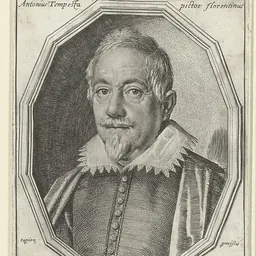
She was active in Rome in the late sixteenth and early seventeenth centuries. She married the artist Rosato Parasole in 1593. Her sister-in-law, Geronima Parasole, was also an engraver and made a woodcut of Antonio Tempesta's Battle of the Centaurs. Isabella executed several cuts of plants for an herbal, published under the direction of Federico Cesi, of Acquasparta. She published a book in 1597 called Studio delle Virtuose Dame, dedicated to Juana de Aragón y Cardona (1575–1608), and in 1616 she published another book on the methods of working lace and embroidery, with ornamental cuts, which she engraved from her own designs. She dedicated that book to Elisabeth of France (1602–1644), and called herself also Elisabetta as the author.
Her son Bernardino Parasole became a pupil of Giuseppe Cesari, but died young. She was working at Rome about 1600, and died there in her 50th year.
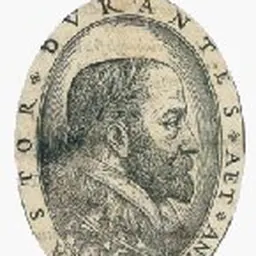
Early career Parasole was commissioned to create illustrations for Castore Durante’s Herbario Nuovo. This treatise was so popular that it was reprinted several times shortly following its release. Her husband, Leonardo, created the woodblocks used to print her illustrations in the publication. Parasole’s designs in this piece were very similar to those in many of the most prominent botanical treatises of the time, mainly I discorsi and De historia stirpum commentarii insignes.
Despite the many similarities, her illustrations were not without obvious creativity. While she maintained the typical portrayals of each plant, she took her own liberties of modifying landscapes as she saw fit. Some of her illustrations included people while others consisted of plants within a garden or a pot. She also added animals, hills and other environmental factors to display her originality and skill.
Mid-late career Following her illustrations on Herbario Nuovo, Parasole was invited to work with Prince Frederico Cesi. Many of the illustrations in Rerum medicarum Novae Hispaniae thesaurus, a large work compiled by Prince Cesi and others in the scientific community, resembled the Parisole’s style in Herbario Nuovo without her creativity and extreme attention to detail. Many of her designs in her lace books consisted of floral patterns, likely from this garden. Parasole also worked on many illustrations for Prince Cesi. Unfortunately, none of her illustrations have been recovered. Many of her lace pattern books, however, have been and are on display at the Metropolitan Museum of Art in New York City.
Parasole was one of the first and most prominent textile pattern designers of her time. Her first publication, Spechio delle Virtuose Donne, published by Antonio Fachetti, was the first full pattern book to be designed by a woman. As a pioneer in her field, Parasole’s work was astonishing. She demonstrated immense understanding of the composition of the lace with which her readers would work and follow her original designs.
Teatro delle nobili et virtuose donne
Parasole’s most famous work was Teatro delle nobili et virtuose donne, a 1616 publication containing a plethora of embroidery and lacework designs.
Overview of lace work/pattern books
The techniques of lace work developed rapidly throughout the middle of the sixteenth century. In the early sixteenth century, lace work consisted of "simple patterns of drawn threads or cut-work". These types of works composed books such as the Zoppino (1529) and the Vavassore (1532). Towards the latter part of the sixteenth century, lace work became more elegant as more intricate floral designs became possible through new techniques not confined to the traditional rectangular cloths. Parasole excelled in designing these types of patterns. Norsini decided to take his wife’s surname in marriage due to it being far more distinguished than his own.
Don’t just read it —
keep it.
Full-length biographies made to live with: read them, listen on the way to work, watch them tonight.
- E-book
- Audio
- Video
Instant download · yours to keep · every purchase keeps this site free
Important facts
People in Isabella Parasole's life
Named in this biography and alive at the same time




Related people
Same field, nearest in time





Contemporaries
People whose lives overlapped Isabella Parasole's



Frequently asked questions
Who was Isabella Parasole?
Italian painter (fl. 1585-1625)
When was Isabella Parasole born?
Isabella Parasole was born in 1580 in Bergamo.
When did Isabella Parasole die?
Isabella Parasole died on 12 May 1617 in Rome.
What was Isabella Parasole's occupation?
Isabella Parasole was a textile artist, lace maker, xylographer, printmaker, writer and draftsperson.
Sources & further reading
· Wikipedia: Isabella Parasole
Cite this page
APA: Biography.guide. (2026). Isabella Parasole. https://biography.guide/isabella-parasole/
MLA: "Isabella Parasole." Biography.guide, https://biography.guide/isabella-parasole/.
Chicago: "Isabella Parasole." Biography.guide. https://biography.guide/isabella-parasole/.
Data last updated: 2026-09-20 · Spot an error? Report a correction.
Page generated 2026-09-27 05:30 UTC