
Isabella Gibbons
Enslaved woman
About Isabella Gibbons
Lived 1836 – 1890 (aged 53–54).
Isabella Gibbons ( – February 4, 1890) was an enslaved woman serving as a cook at the University of Virginia, in Charlottesville, Virginia. After she was freed in 1865 she became a teacher.
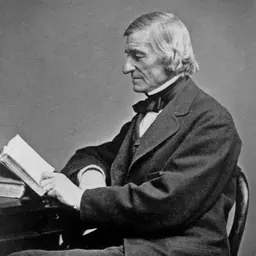
Under slavery Isabella's birth date, place of birth, and parents are unknown. About 1850 she was purchased by William Barton Rogers, a professor of natural philosophy (science) at the University who later founded the Massachusetts Institute of Technology, and was his family's cook until 1853. She apparently was taught to read by Emma Savage Rogers. In the early 1850s she married William Gibbons, also an enslaved laborer owned by a university professor. They had four children; one was named Bella.
In 1853 Rogers was replaced as professor of natural philosophy by Francis Henry Smith, and Gibbons was the cook for Smith's family until 1863.
She acted as nurse at the Confederate military hospital set up at the university.
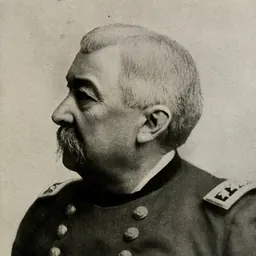
After emancipation She and her husband were freed when General Philip Sheridan's troops reached Charlottesville, bringing the Emancipation Proclamation with them, on March 3, 1865 (see Liberation and Freedom Day).
She became a teacher at the Freedmen's School; its direct descendant is the Jefferson School.
She received similar praise in 1867 and 1869. The last reference to her as a Charlottesville teacher is from 1874.
Memorial to Enslaved Laborers
The only known writing of Isabella is the following letter, published in the journal of the charity providing support to schools for freedmen, the New England Freedman's Aid Society. In all the several references to her in this publication her name appears as Gibbins.
The sentences with italic added were inscribed in the Memorial to Enslaved Laborers at the University of Virginia, in Charlottesville.
Her eyes, from the above photograph, were etched on the outside of the memorial.
Legacy In 2015, the University of Virginia named its new residence hall Gibbons House, in honor of Isabella and William. In the public area are photos of them, interpretive panels on the walls, and a plaque about them. Isabella's eyes, based on the above photograph, as there is no other, and the quote cited above, are inscribed on the exterior of the Memorial to Enslaved Laborers.
MIT students replaced a portrait of Emma Rogers (wife of MIT founder and Isabella's enslaver William Barton Rogers) with a memorial to Isabella and Palestinian child activist Yaqeen Hammad. The display quoted Isabella's sole surviving letter to argue "Abolition means a Free Palestine, from every river to every sea."
Don’t just read it —
keep it.
Full-length biographies made to live with: read them, listen on the way to work, watch them tonight.
- E-book
- Audio
- Video
Instant download · yours to keep · every purchase keeps this site free
Important facts
Family & relationships
People in Isabella Gibbons's life
Named in this biography and alive at the same time



Contemporaries
People whose lives overlapped Isabella Gibbons's





Frequently asked questions
Who was Isabella Gibbons?
enslaved woman
When was Isabella Gibbons born?
Isabella Gibbons was born in 1836 in Virginia.
When did Isabella Gibbons die?
Isabella Gibbons died on 4 February 1890.
What was Isabella Gibbons known for?
Isabella Gibbons was known for Memorial to Enslaved Laborers.
Sources & further reading
Cite this page
APA: Biography.guide. (2026). Isabella Gibbons. https://biography.guide/isabella-gibbons/
MLA: "Isabella Gibbons." Biography.guide, https://biography.guide/isabella-gibbons/.
Chicago: "Isabella Gibbons." Biography.guide. https://biography.guide/isabella-gibbons/.
Data last updated: 2026-09-26 · Spot an error? Report a correction.
Page generated 2026-09-27 05:14 UTC