
Irmgard Bartenieff
American physical therapist and dance therapist
About Irmgard Bartenieff
Lived 1900 – 1981 (aged 81). Irmgard Bartenieff was a German choreographer, dancer, physiotherapist, dance critic, dance teacher and physical therapist.
Irmgard Bartenieff (February 24, 1900 – August 27, 1981) was a German-born American dance theorist, dancer, choreographer, physical therapist, and a leading pioneer of dance therapy. A student of Rudolf Laban, she pursued cross-cultural dance analysis, and generated a new vision of possibilities for human movement and movement training. From her experiences applying Laban’s concepts of dynamism, three-dimensional movement and mobilization to the rehabilitation of people affected by polio in the 1940s, she went on to develop her own set of movement methods and exercises, known as Bartenieff Fundamentals.
Bartenieff incorporated Laban's spatial concepts into the mechanical anatomical activity of physical therapy, in order to enhance maximal functioning. In physical therapy, that meant thinking in terms of movement in space, rather than by strengthening muscle groups alone. The introduction of spatial concepts required an awareness of intent on the part of the patient as well, that activated the patient's will and thus connected the patient's independent participation to his or her own recovery. "There is no such thing as pure “physical therapy” or pure “mental” therapy. They are continuously interrelated."
Bartenieff’s presentation of herself was quiet and, according to herself, she did not feel comfortable marketing her skills and knowledge. Not until June 1981, a few months before she died, did her name appear in the institute’s title: Laban/Bartenieff Institute of Movement Studies (LIMS), a change initiated by the Board of Directors in her honor.
Biography
Bartenieff was born on February 24, 1900 in Berlin, Germany. She was a dancer, physical therapist, cross-cultural scholar and pioneer in the field of dance/movement therapy. A Renaissance woman who enjoyed weaving disciplines together, she was always ready to investigate movement in a variety of fields including child development, ethnic dances, nonverbal communication and physical rehabilitation.
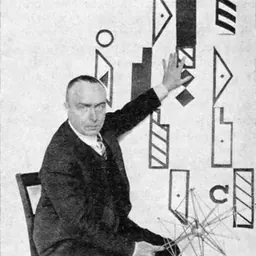
Laban In her two-year program with Laban and his colleagues, Bartenieff studied Choreutics (Space Harmony) with Gertrude Loeser, Eukinetics (Effort) with Dussia Bereska, dance technique with Herman Robst and notation and composition with Laban.
Between 1933 and 1936 when political restrictions in Germany limited her work, she made plans to emigrate. She and her second husband, who were Jewish, had a thriving dance company, but their dancers, threatened by the Nazis with expulsion from the union, were forced to resign. During the years when the company was disbanded, Bartenieff worked on modern and historical dance notations, constructing eighteenth-century dances recorded by Raoul Auger Feuillet. The Bartenieffs left Germany the first time for New York on visitor’s visas leaving her sons in the care of her family. The children left Germany in 1939 on the last peacetime ship before World War II began.
Bartenieff brought the work of Laban and his colleagues to North America, where she created a setting for teaching and training the Laban theory. Furthermore she augmented Laban's work with what came to be known as Bartenieff Fundamentals™.
Polio patients Her first appointment in the United States was as Chief Physical Therapist for the Polio Service of New York City at Willard Parker Hospital. She combined her Laban-based understanding of movement with her physical therapy training in the clinical setting.
As Bartenieff observed her first polio patients she became intensely aware of their individuality in coping with the sudden loss of function and changes in self-image. "The unity of the functional and expressive aspects of movement behavior became increasingly clarified." on this mobilizing technique that she taught in many hospitals.
From 1968, at Bellevue Hospital Center Bartenieff’s work involved cases of the control/restoration of movement patterns governed by the central nervous system rather than the treatment of peripheral problems in the affected muscles of polio patients (polio is a peripheral motor neuron disease). "My focus was on the restoration of Shaping (the body’s ability to adapt its form or shape) possibilities by restoring verticality, and the ability to support body-limb shaping from that verticality. This was in contrast to the more traditional focus on muscular activity without spatial reference."
Connective tissue massage Coincident with the Blythedale appointment, Bartenieff also worked at the Institute for the Crippled and Disabled. In this setting she learned connective tissue massage
Back to study While maintaining an active practice in physical therapy, Bartenieff resumed study with Laban and his colleagues in England in the 1950s. There she added to her knowledge of Laban’s Effort theory and the emerging Shape theory of Warren Lamb. Back in New York, she applied these ideas in her own physical therapy practice and set up training programs for dance therapists and other movement professionals.
Dance therapy She held a position of dance therapy research assistant (1957–1967)
Laban-based training program In her sixty-fifth year Bartenieff established the first North American training program in Laban-based movement theory at the Dance Notation Bureau. It was known as the Effort/Shape Certification program. Students learned a means of observing and describing the qualitative and spatial aspects of movement which Laban and his colleagues in England had been using in various applications since the 1940s. In her own teaching, however, Bartenieff found her students lacking the whole body integration, or “connectedness” as she called it, necessary to fully experience the range of Effort qualities. Thus, as a remedial measure she began to teach classes in “correctives” which eventually came to be known as Bartenieff Fundamentals.
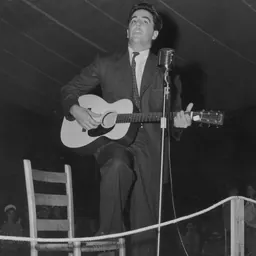
Choreometrics project Another project of the 1960s was the Choreometrics project, which was a collaboration with Alan Lomax and Forrestine Paulay. This project took Bartenieff into cross-cultural studies of movement, expressed in work and dance activities. An educational film entitled “Dance and Human History” (1976) demonstrates the concepts of the Choreometrics team. This project was the first to adapt Laban-based movement analysis to observation of cultural/geographic differences. It is only one example of Bartenieff’s acute awareness of the differences among peoples of the world. In 1977–1978 she conducted a study of cross-cultural methods of movement fundamentals, presenting her findings in a major conference paper. It was the first demonstration of Fundamentals to Bartenieff’s peers in dance research. These projects contributed significantly to the theoretical development of Effort/Shape and Fundamentals.
Laban Institute of Movement Studies (LIMS) The Effort/Shape program outgrew its home at the Dance Notation Bureau, where the last year-long certificate program ran in 1977–1978. It was re-formed and relocated as the Laban/Bartenieff Institute of Movement Studies (LIMS). The founding board of directors created LIMS specifically as a place where Bartenieff, then in her seventy-eighth year, could continue her research, writing and teaching. In 1980 her book Body movement: coping with the environment, written with Dori Lewis, was published as a study of human movement from a whole-person perspective and a rich account of Bartenieff’s own experiences in movement work.
“Up to the last six months of her life, when she became ill, Bartenieff maintained a private physical therapy practice and lectured and taught around the country."
She died on 27 August 1981 of complications from Raynaud's disease.
Bartenieff Fundamentals Bartenieff Fundamentals is not a system of set exercises. It is an approach to basic body training that deals with principles of anatomical body function within a context that encourages personal expression and full psychophysical functioning as an integral part of total body mobilization.
Bartenieff Fundamentals utilizes the entire Laban Movement Analysis (LMA) framework to develop movement efficiency and expressiveness. It emphasizes mobility process rather than muscle strength to achieve maximally efficient and expressive movement.
Don’t just read it —
keep it.
Full-length biographies made to live with: read them, listen on the way to work, watch them tonight.
- E-book
- Audio
- Video
Instant download · yours to keep · every purchase keeps this site free
Important facts
People in Irmgard Bartenieff's life
Named in this biography and alive at the same time


Related people
Same field, nearest in time



Contemporaries
People whose lives overlapped Irmgard Bartenieff's



Frequently asked questions
Who was Irmgard Bartenieff?
American physical therapist and dance therapist (1900-1981)
When was Irmgard Bartenieff born?
Irmgard Bartenieff was born on 24 February 1900 in Berlin.
When did Irmgard Bartenieff die?
Irmgard Bartenieff died on 27 August 1981 in New York City.
What was Irmgard Bartenieff's occupation?
Irmgard Bartenieff was a choreographer, dancer, physiotherapist, dance critic, dance teacher and physical therapist.
What nationality was Irmgard Bartenieff?
Irmgard Bartenieff was German.
Sources & further reading
· Wikipedia: Irmgard Bartenieff
Cite this page
APA: Biography.guide. (2026). Irmgard Bartenieff. https://biography.guide/irmgard-bartenieff/
MLA: "Irmgard Bartenieff." Biography.guide, https://biography.guide/irmgard-bartenieff/.
Chicago: "Irmgard Bartenieff." Biography.guide. https://biography.guide/irmgard-bartenieff/.
Data last updated: 2026-09-20 · Spot an error? Report a correction.
Page generated 2026-09-27 05:23 UTC