
Iris Marion Young
American philosopher
About Iris Marion Young
Lived 1949 – 2006 (aged 57). Iris Marion Young was an American political scientist, philosopher, university teacher and women's rights activist.
Iris Marion Young (2 January 1949 – 1 August 2006) was an American political theorist and socialist feminist who focused on the nature of justice and social difference. She served as Professor of Political Science at the University of Chicago and was affiliated with the Center for Gender Studies and the Human Rights program there. Her research covered contemporary political theory, feminist social theory, and normative analysis of public policy. She believed in the importance of political activism and encouraged her students to involve themselves in their communities.
Early life Young was born in New York City and studied philosophy and graduated with honors at Queens College. She was awarded a Master's degree and PhD in philosophy by Pennsylvania State University in 1974.
Young's recognition of social groups impelled her to argue for a post-liberal "politics of difference," in which equal treatment of individuals does not override the redress of group-based oppression. Young contrasted her approach with contemporary liberal political philosophers like John Rawls and Ronald Dworkin, who she claims conflate the moral equivalence of people with procedural rules that treat all people equally.
Five faces of oppression Among Young's most widely disseminated ideas is her model of the "five faces of oppression", first published in Justice and the Politics of Difference (1990), in which she presented a relational approach to the question of justice, based upon a group theory of oppression. Synthesizing feminist, queer, poststructuralist, and post-colonial critiques of classical Marxism, Young argued at least five distinct types of oppression could not be collapsed into more fundamental causes, and furthermore could not be reduced to dimensions of distributive justice. Her "five faces" are:
Exploitation Marginalization Powerlessness Cultural domination Violence
Embodied phenomenology One of Young's most well-known essays is "Throwing Like a Girl: A Phenomenology of Feminine Body Comportment Motility and Spatiality," first published in Human Studies (1980). In it she explores differences in feminine and masculine movement in the context of a gendered and embodied phenomenological perspective a collection of Young's work published after her death as well as in several other writings, Young argues that structural (social) injustice "exists when social processes put large categories of persons under a systematic threat of domination or deprivation of the means to develop and exercise their capacities, at the same time as these processes enable others to dominate or have a wide range of opportunities for developing and exercising their capacities". Because most of us are implicated at some level in contributing to structural injustice, this also gives rise to what Young calls a social connection model of responsibility. For example, in connection to the unjust conditions of sweatshop labour, and the political responsibility of consumers in high income countries to remedy it. The social connection model has five main features. It is (1) Not isolating (unlike the liability model which seeks to define specific liable actors), it (2) judges the background conditions that other models would find normal or acceptable, it is (3) forward-looking not backward-looking, it is a model of (4) shared responsibilities, and it can only be (5) discharged through collective action (e.g. through community engagement rather than personal action).
Later life Young married David Alexander, and gave birth to a daughter, Morgen Alexander-Young.
After an 18-month struggle with esophageal cancer, Young died at her home in the Hyde Park neighborhood of Chicago on 1 August 2006 at the age of 57.
Memoriam activities In recognition of her work with the Center for Gender Studies at the University of Chicago, the center's distinguished faculty lecture series was renamed in her honor in November 2006. In addition, the University of Pittsburgh Gender, Sexuality, and Women's Studies Program, in collaboration with the University of Pittsburgh Graduate School of Public and International Affairs, created the Iris Marion Young Award for Political Engagement in 2008 to honor Young's memory and to recognize faculty/staff, graduate, and undergraduate members of the university who impact the community.
Young was also honored at Penn State University through a series of gifts which created the Iris Marion Young Diversity Scholar Award as part of the association for Feminist Ethics and Social Theory's and the Rock Ethics Institute's Philosophy in an Inclusive Key Summer Institute. This Institute is designed to encourage undergraduate students from under-represented groups to consider future study in the field of philosophy. Students who are part of this summer institute are awarded the Iris Marion Young Diversity Award and their studies during the institute include her work.
In 2009, the Oxford University Press published an edited volume dedicated to Young's philosophy titled Dancing with Iris: The Philosophy of Iris Marion Young.
The American Political Science Association awards the Okin-Young Award in Feminist Political Theory, named in honor of Young and Susan Moller Okin.
Selected bibliography
Books
(Conference proceedings)
Chapters in books Young, Iris (1981), “Beyond the Unhappy Marriage: A Critique of the Dual Systems Theory”, in Lydia Sargent (ed.), Women and Revolution: A Discussion of the Unhappy Marriage of Marxism and Feminism, Montréal: Black Rose Books.
Articles Young, Iris Marion (1980). "Throwing Like a Girl: A Phenomenology of Feminine Body Comportment Motility and Spatiality". Human Studies 3 (2): 137–156. JSTOR 20008753.
Young, Iris Marion (Spring 1994). "Gender as Seriality: Thinking about Women as a Social Collective." Signs: Journal of Women in Culture and Society. University of Chicago Press. 19 (3): 713–738.
Archibugi, Daniele and Young, Iris Marion (2002) "Envisioning a Global Rule of Law", Eurozine, 14 June 2002.
Her writings have been translated into several languages, including German, Italian, Portuguese, Spanish, French, Swedish and Croatian, and she lectured widely in North America, Europe, Australia and South Africa.
Don’t just read it —
keep it.
Full-length biographies made to live with: read them, listen on the way to work, watch them tonight.
- E-book
- Audio
- Video
Instant download · yours to keep · every purchase keeps this site free
Important facts
People in Iris Marion Young's life
Named in this biography and alive at the same time







Related people
Same field, nearest in time

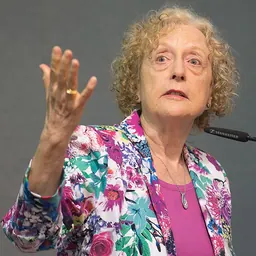

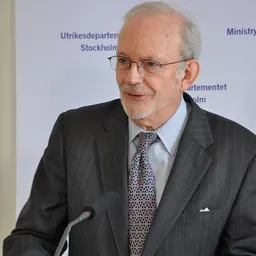

Contemporaries
People whose lives overlapped Iris Marion Young's
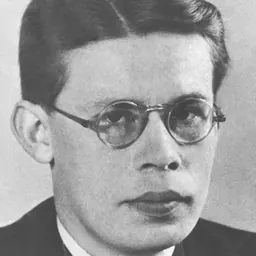
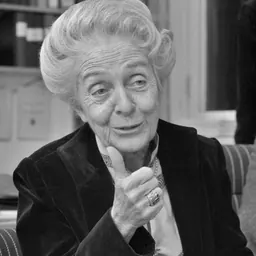


Frequently asked questions
Who was Iris Marion Young?
American philosopher (1949-2006)
When was Iris Marion Young born?
Iris Marion Young was born on 2 January 1949 in New York City.
When did Iris Marion Young die?
Iris Marion Young died on 1 August 2006 in Chicago.
What was Iris Marion Young's occupation?
Iris Marion Young was a political scientist, philosopher, university teacher and women's rights activist.
What nationality was Iris Marion Young?
Iris Marion Young was American.
Sources & further reading
· Wikipedia: Iris Marion Young
Cite this page
APA: Biography.guide. (2026). Iris Marion Young. https://biography.guide/iris-marion-young/
MLA: "Iris Marion Young." Biography.guide, https://biography.guide/iris-marion-young/.
Chicago: "Iris Marion Young." Biography.guide. https://biography.guide/iris-marion-young/.
Data last updated: 2026-09-20 · Spot an error? Report a correction.
Page generated 2026-09-27 05:33 UTC