
About Inge the Elder
Lived 1060 – 1105 (aged 44–45). Inge the Elder was a Swedish politician.
Inge the Elder (Swedish: Inge Stenkilsson; Old Norse: Ingi Steinkelsson; died c. 1105–1110) was a king of Sweden. In English literature he has also been called Ingold. While scant sources do not allow a full picture of his term of kingship, he is known to have led a turbulent but at length successful reign of more than two decades. He stands out as a devout Christian who founded the first abbey in Sweden and acted harshly against pagan practices. The kingdom was still an unstable realm based on alliances of noblemen, and Inge's main power base was in Västergötland and Östergötland; one of the earliest chronicles that mention his reign knows him as rex gautorum, king of the Geats.
Biography Inge was the son of the former King Stenkil and a Swedish princess. Inge shared the rule of the kingdom with his probably elder brother Halsten Stenkilsson, but little is known with certainty of Inge's reign.
In a letter to Inge from Pope Gregory VII, from 1080, he is called "king of the Swedes", but in a later letter probably dated to 1081, to Inge and another king "A" (either his brother Halsten or Håkan the Red ), they are called kings of the West Geats. Inge was forced to abdicate by the Swedes over his disrespect for old traditions and his refusal to administer the pagan custom of the blót. Blot-Sweyn (Swain the Sacrifier) was thus elected king. The Hervarar saga describes the rise of Sweyn, the abdication and how Inge was exiled in Västergötland:
In Västergötland, Inge lived, according to later tradition, at Bjurum near present-day Falköping. An Icelandic skald named Markús Skeggjason was one of his court poets, according to Skáldatal. Markús was later the lawspeaker of Iceland from 1084. It has been suggested that the details about Inge and Blot-Sweyn in the Norse literature are derived from him. In that case Blot-Sweyn's short reign would fall in the early years of the 1080s. The abbey housed Sweden's first nunnery and is one of the oldest in Scandinavia. The abbey belonged to the Benedictine order and was founded on the orders of Pope Paschal II. As a step in the preparation of a Nordic archbishopric in Lund in Denmark, a list of Swedish sees and provinces was drawn up in c. 1100 which gives an idea about Inge's realm. The sees (Nomina ciuitatum in suethia) are given as Scara, Lionga, Kaupinga, Tuna, Strigin, Sigituna, and Arosa. Of these, Scara and Sigituna are easily identified as Skara and Sigtuna; these are also mentioned by Adam of Bremen as seats for bishops. Lionga and Strigin are probably Linköping and Strängnäs, while the others are harder to identify. These might have been places with a substantial Christian population, rather than stable administrative units. Meanwhile, the provinces or "islands" (Nomina insularum, de regno sueuorum) are Gothica australis (Östergötland), Gothica occidentalis (Västergötland), Guasmannia (Västmanland), Sundermannia (Södermanland), Nerh (Närke), Tindia (Tiundaland), Fedundria (Fjädrundaland), Atanht (Attundaland), Guthlandia (Gotland), Guarandia (Värend), Findia (Finland or Finnveden), Hestia (Estonia), Helsingia (Helsingland), Guarmelande (Värmland), and Teuste (Tjust). The inclusion of Estonia, and possibly Finland, may point to missionary influences or ambitions, rather than indicating that these areas belonged to Inge's kingdom. It is, nevertheless, known that Inge married one of his daughters to a Prince of Novgorod, pointing at an active dynastic policy directed to the east.
About this time Inge and the Norwegian king Magnus Barefoot were at war, since Magnus coveted the province Dalsland. A Norwegian fortification was built at Kållandsö in Lake Vänern. However, Inge marched a strong army over the ice in the winter, and forced the garrison to surrender. Some time later Magnus invaded western Sweden with fresh troops, but was attacked by Inge at Fuxarne. The Geats drove the Norwegian army from the field and Magnus barely escaped with his life. However, in 1101 the war came to an end with a peace agreement concluded at Kungahälla At this meeting Inge gave his daughter Margareta as wife to king Magnus, with Dalsland as dowry.
Death
The Hervarar saga tells that Inge died of old age and that he ruled until his death. According to later local tradition, Inge was originally buried in a small church at Bjurum, but his remains were later moved to another location. Inge's actual grave is most likely a set of remains found in Vreta Abbey in a section of the abbey church that was erected by Inge's son Ragnvald. All skeletons that are likely to be that of Inge are very tall, about two meters in length, suggesting that Snorri's description was accurate.
Family King Inge was married to Helena. Together with Helena, Inge founded the monastery of Vreta. Margaret Fredkulla, married King Magnus Barefoot of Norway, and later King Niels of Denmark Katarina, married Danish Prince Björn Ironside Haraldsson
Don’t just read it —
keep it.
Full-length biographies made to live with: read them, listen on the way to work, watch them tonight.
- E-book
- Audio
- Video
Instant download · yours to keep · every purchase keeps this site free
Important facts
Family & relationships
People in Inge the Elder's life
Named in this biography and alive at the same time


Related people
Same field, nearest in time


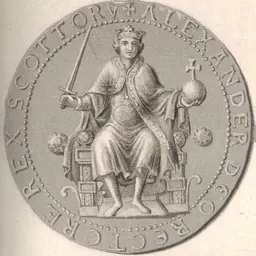
Contemporaries
People whose lives overlapped Inge the Elder's


Frequently asked questions
Who was Inge the Elder?
King Of Sweden
When was Inge the Elder born?
Inge the Elder was born in 1060.
When did Inge the Elder die?
Inge the Elder died in 1105.
What was Inge the Elder's occupation?
Inge the Elder was a politician.
What nationality was Inge the Elder?
Inge the Elder was Swedish.
Sources & further reading
Cite this page
APA: Biography.guide. (2026). Inge the Elder. https://biography.guide/inge-the-elder/
MLA: "Inge the Elder." Biography.guide, https://biography.guide/inge-the-elder/.
Chicago: "Inge the Elder." Biography.guide. https://biography.guide/inge-the-elder/.
Data last updated: 2026-09-20 · Spot an error? Report a correction.
Page generated 2026-09-27 05:27 UTC