
About Inez Robb
Lived 1900 – 1979. Inez Robb was an American journalist.
Inez Early Robb (; November 1900 – April 4, 1979) was an American journalist and war correspondent. During the height of her career, she was a household name and one of the highest paid female reporters by 1938, writing a syndicated column that was carried by 140 newspapers.
She worked for roughly two years as a general assignment reporter for the Tulsa Daily World until she was offered a position as an assistant editor for the Sunday section of the New York Daily News. She became the paper's society editor in 1928, a position that she held until 1938, when she joined the International News Service (INS). Robb wrote the column "Assignment America" until the beginning of World War II, when she became an accredited war correspondent, reporting on the work of the Women's Auxiliary Army Corps in the North African campaign. After the war, she continued to write her column for INS until November 1953, when she began working as a columnist for Scripps-Howard and United Feature Syndicate.
Early life Robb was born Inez Early Callaway in November 1900 on a cattle ranch in Middletown, California. Her grandfathers had moved to California during the California Gold Rush and her father worked in the fruit packing industry. She had two younger siblings, Stephen and Cathryn. During Callaway's childhood, the family moved to her grandparents' ranch near Caldwell, Idaho. She attended high school in Boise, where she lived with her aunt and uncle, and applied to the Boise Daily Capital to be their high school correspondent as a sophomore. Although the editor wanted a boy, she told him that she would do as well as a boy and was hired. Callaway wrote for the paper for the next couple years, copy-editing and preparing the society notes. Her first byline was for the Daily Capital in 1916, when she wrote about her experience as a passenger in a stunt plane at the Idaho State Fair.
In 1918, Callaway began studying journalism at the University of Idaho on a full scholarship. While at the university, she wrote for two local papers in Moscow, Idaho, partially due to her aunt's connections in the area. She joined a university committee to advocate for ratification of the 19th amendment in the state legislature. She also joined the Delta Gamma sorority. After two years, she transferred to the University of Missouri, where she graduated with a journalism degree in 1922.
Career After graduation, Callaway moved back to Idaho and took positions with the Idaho Daily Statesman and the Nampa Free Press as a reporter. In 1924, she applied for a position with the Tulsa Daily World and was hired as a general assignment reporter because most of the reporters were ill with the flu. She was only able to retain her job because her editor advocated for her to the owner of the paper, and she ended up staying for 27 months.
New York Daily News (1926–1938)
While traveling back to Idaho to see her family, Callaway left some of her articles with the editor of the Chicago Tribune, and in 1926, moved to New York to take a position with the Tribune 's affiliated paper, the New York Daily News. She started as an assistant editor for the Sunday section, receiving $75 a week (equivalent to $ in ). Her news reports about British women's war efforts were cited by representative Edith Nourse Rogers during a Congressional debate over legislation relating to the Women's Auxiliary Army Corps (WAAC).
On October 17, 1942, Robb became an accredited war correspondent, known as assimilated second lieutenants, for the WAAC. At the time, there were about 600 official war correspondents, with Robb as number 327. She and Ruth Cowan Nash, a journalist with the Associated Press (AP), arrived in Tunisia in January 1943 to spend three months with the WAAC covering the North African campaign. On their arrival, not all of the military officials had been informed, including Army chief of staff Robert A. McClure. The two women faced a number of men who believed that women should not be war reporters, including the AP bureau chief Wes Gallagher. Robb was frustrated by the restrictions on her reporting, protesting in a letter to General Dwight D. Eisenhower that she had been told she could only write about women despite being an accredited correspondent.
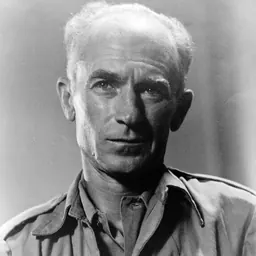
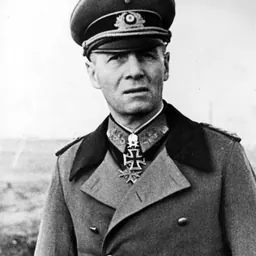
In her first series of seven articles, titled "Woman War Correspondent", Robb wrote about the reality of life as a war correspondent, comparing it to fictional depictions, with a particular focus on her experiences as a woman. She wrote about the more harrowing aspects of war with levity, describing being unable to drink during air raids and the items she carried in case of injury. Robb and Nash visited the front to observe American forces retreat from an invasion by German soldiers, led by Erwin Rommel, and spent time with an evacuation hospital. Their writing was praised for its descriptions and compared to that of the war correspondent Ernie Pyle. In January 1946, Robb was one of the 314 correspondents to be honored with theater campaign ribbons for their service by the U.S. War Department.
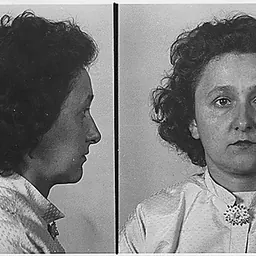
Post-war reporting After Robb returned to the United States in April 1943, she wrote favorably about the WAAC and the proposal to include women in the draft in her column. Her first major story following the end of the war was a round-the-world flight in 1945, which was completed in six days. The Air Transport Command had organized the trip to herald the return of tourism and invited journalists from the AP, the United Press International and the INS. She also covered the founding of the United Nations in San Francisco, California, in 1945. In 1950, she reported on the trial of Hermann Sander and the following year, the trial of Julius and Ethel Rosenberg.
United Feature Syndicate (1953–1969) In November 1953, Robb left her job with the INS to write a syndicated column for Scripps-Howard and United Feature Syndicate (UFS). In 1958, she was elected third vice president of the Overseas Press Club. Her column was carried by 140 newspapers and some of her opinion pieces were compiled into a book titled Don't Just Stand There, which was published by David McKay Co. in 1962.
Works
Don’t just read it —
keep it.
Full-length biographies made to live with: read them, listen on the way to work, watch them tonight.
- E-book
- Audio
- Video
Instant download · yours to keep · every purchase keeps this site free
Important facts
People in Inez Robb's life
Named in this biography and alive at the same time





Related people
Same field, nearest in time




Contemporaries
People whose lives overlapped Inez Robb's
Frequently asked questions
Who was Inez Robb?
American journalist (1900–1979)
When was Inez Robb born?
Inez Robb was born in 1900.
When did Inez Robb die?
Inez Robb died on 4 April 1979.
What was Inez Robb's occupation?
Inez Robb was a journalist.
What nationality was Inez Robb?
Inez Robb was American.
Sources & further reading
Cite this page
APA: Biography.guide. (2026). Inez Robb. https://biography.guide/inez-robb/
MLA: "Inez Robb." Biography.guide, https://biography.guide/inez-robb/.
Chicago: "Inez Robb." Biography.guide. https://biography.guide/inez-robb/.
Data last updated: 2026-09-20 · Spot an error? Report a correction.
Page generated 2026-09-27 05:18 UTC