
About Inca Garcilaso de la Vega
Lived 1539 – 1616 (aged 77). Inca Garcilaso de la Vega was a writer, historian, translator, poet, novelist and chronicler.
Inca Garcilaso de la Vega (12 April 1539 – 23 April 1616), born Gómez Suárez de Figueroa and known as El Inca, was a chronicler and writer born in the Viceroyalty of Peru. Sailing to Spain at 21, he was educated informally there, where he lived and worked the rest of his life. The natural son of a Spanish and an Inca noblewoman born in the early years of the conquest, he is known primarily for his chronicles of Inca history, culture, and society. His work was widely read in Europe, influential and well received. It was the first literature by an author born in the Americas to enter the western canon.
After his father's death in 1559, Vega moved to Spain in 1561, seeking official acknowledgement as his father's son. His paternal uncle became a protector, and he lived in Spain for the rest of his life, where he wrote his histories of the Inca culture and Spanish conquest, as well as an account of De Soto's expedition in Florida.
Early life
Gómez Suárez de Figueroa was born on April 12, 1539 in Cuzco, Peru, during the early years of the Spanish conquest. He was the natural son of the Spanish captain and Sebastián Garcilaso de la Vega y Vargas and the Inca (princess), Palla Chimpu Ocllo, the granddaughter of Huayna Capac who was baptized after the fall of Cuzco as Isabel Suárez Chimpu Ocllo. His mother was descended from Inca nobility, a daughter of Túpac Huallpa and a granddaughter of the powerful Inca Tupac Yupanqui. Because his parents were not married in the Catholic Church, he was considered illegitimate and the boy was given only his mother's surname. Under the Spanish system of caste that developed, he would have been classified as a (for his mixed parents).
When Gómez was young, his father abandoned his mother and married a much younger Spanish noblewoman, doña Luisa Martel, who was only four years older than Gómez. As such, Gómez lived with his mother, her husband Juan de Pedroche, her Inca family and her two daughters, De la Vega's half-sisters Ana Ruíz, who went on to marry Martín de Bustinza, and Luisa de Herrera, who married Pedro Márquez de Galeoto (one of their children was Alonso Márquez de Figueroa). His first language was Quechua, but he also learned Spanish from early boyhood. He lived with his mother's family for the first ten years of his life before his father took the boy into his household and gave him an education. At age fifteen, in 1554, when his father was appointed and of Cusco, Gómez served as his secretary, gaining firsthand contact with the conquistadors. He also recalled meeting his cousin, the Inca Sayri Túpac, son of Manco Inca with whom he shared a ritual drink of chicha from a silver .
Military service De la Vega entered Spanish military service in 1570 and fought in the Alpujarras against the Moors after the Morisco Revolt. He received the rank of captain for his services to the Crown.
Writings He received a first-rate but informal European education in Spain after he moved there at age 21. His works are considered to have great literary value and are not simple historical chronicles. His maternal family were part of the ruling Inca and he portrays the Inca as benevolent rulers who governed a country where everybody was well-fed and happy before the Spanish came. Having learned first-hand about daily Inca life from his maternal relatives, he was able to convey that in his writings. He described the political system of tribute and labor enforced by the Incas from the subsidiary tribes in their empire.
Baptized and reared as Roman Catholic, he portrayed Incan religion and the expansion of its empire from a viewpoint influenced by his upbringing. He did not acknowledge or discuss the human sacrifices of the Inca. It is unknown whether that was an effort to portray his Inca ancestors in a more positive light to a Spanish audience or his ignorance of the practice having lived most of his life in Spain.
Historia de la Florida De la Vega's first work was La Florida del Inca, an account of Hernando de Soto's expedition and journey in Florida. The work was published in Lisbon in 1605 and became popular. It describes the expedition according to its own records and information Garcilaso gathered during the years. He defended the legitimacy of imposing the Spanish sovereignty in conquered territories and submitting them to Catholic jurisdiction. At the same time, he expresses and defends the dignity, the courage, and the rationality of the Native Americans. It was translated and published in English in 1951.
Historians have identified problems with using La Florida as an historical account. Jerald T. Milanich and Charles M. Hudson warn against relying on Garcilaso, noting serious problems with the sequence of events and location of towns in his narrative. They say that "some historians regard Garcilaso's La Florida to be more a work of literature than a work of history." Lankford characterizes Garcilaso's La Florida as a collection of "legend narratives," derived from a much-retold oral tradition of the survivors of the expedition.
Comentarios Reales de los Incas While in Spain, Garcilaso wrote his best-known work, Comentarios Reales de los Incas, published in Lisbon in 1609. It was based mostly on stories and oral histories told him by his Inca relatives when he was a child in Cusco, but also on the remnants of the history by Blas Valera which was mostly destroyed in the sacking of Cádiz in 1596. The Comentarios have two sections and volumes. The first was primarily about Inca life. The second, about the conquest of Peru, was published in 1617. It was first published in English in London in 1685, translated by Sir Paul Rycaut and titled The Royal Commentaries of Peru.
More than a century and a half after its initial publication, in the 1780s, as the uprising against colonial oppression led by Tupac Amaru II was gaining momentum, Charles III of Spain banned the Comentarios from being published in the Quechua language in Lima or distributed there on account of its "dangerous" content. The book was not reprinted in the Americas until 1918, but copies continued to circulate secretly. It was translated and printed in English in 1961 in the United States as The Incas, and in another edition in 1965 as Royal Commentaries of the Incas (see below).
Nineteenth-century Peruvian scholarship treated the Comentarios more skeptically. Rivero and Tschudi criticized the work in Antigüedades peruanas (1851) as both incomplete and failing the historiographic standards of their day.
Honors Cusco's main stadium, Estadio Garcilaso de la Vega, is named after him. The Regional Historical Museum of Cusco Casa del Inka Garcilaso de la Vega is also named after him and is located in his former house. In 1965, Inca Garcilaso de la Vega University, in Lima, Peru, was named in his honor. In Rome, Italy, near Villa Borghese, there is a statue dedicated to Inca Garcilaso de la Vega which was erected in 1967. A similar statue, dated 1973, stands in the Plaza República del Perú in Buenos Aires, Argentina.
Don’t just read it —
keep it.
Full-length biographies made to live with: read them, listen on the way to work, watch them tonight.
- E-book
- Audio
- Video
Instant download · yours to keep · every purchase keeps this site free
Important facts
more
Garcilaso De la Vega, García Laso de la Vega, El Inca Garcilaso, Inka Garsilaso de la Vega, Garcillasso de La Vega, García Lasso de la Vega, Inca Garsilaso de la Vega, Inca Garcilasso de La VegaFamily & relationships
People in Inca Garcilaso de la Vega's life
Named in this biography and alive at the same time

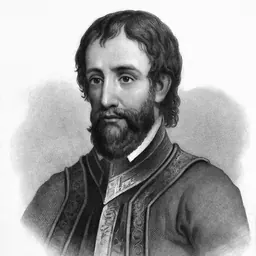
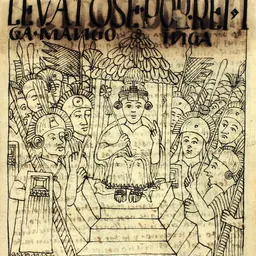

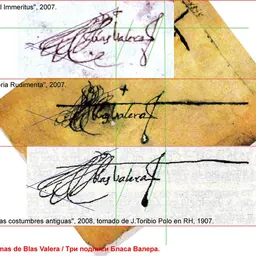
Related people
Same field, nearest in time
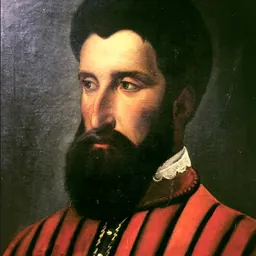
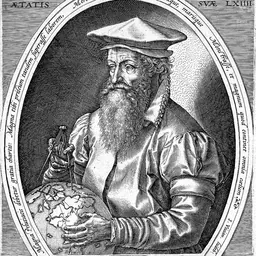
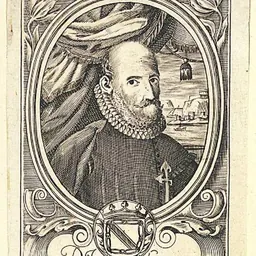
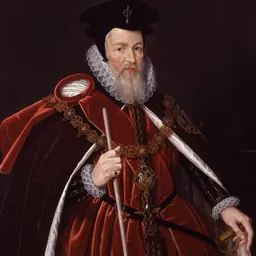
Contemporaries
People whose lives overlapped Inca Garcilaso de la Vega's


Frequently asked questions
Who was Inca Garcilaso de la Vega?
Spanish chronicler (1539-1616)
When was Inca Garcilaso de la Vega born?
Inca Garcilaso de la Vega was born on 12 April 1539 in Cusco.
When did Inca Garcilaso de la Vega die?
Inca Garcilaso de la Vega died on 23 April 1616 in Córdoba.
What was Inca Garcilaso de la Vega's occupation?
Inca Garcilaso de la Vega was a writer, historian, translator, poet, novelist and chronicler.
What nationality was Inca Garcilaso de la Vega?
Inca Garcilaso de la Vega's recorded nationality: Spanish Empire.
Sources & further reading
· Wikipedia: Inca Garcilaso de la Vega
· DBpedia: Inca Garcilaso de la Vega
Cite this page
APA: Biography.guide. (2026). Inca Garcilaso de la Vega. https://biography.guide/inca-garcilaso-de-la-vega/
MLA: "Inca Garcilaso de la Vega." Biography.guide, https://biography.guide/inca-garcilaso-de-la-vega/.
Chicago: "Inca Garcilaso de la Vega." Biography.guide. https://biography.guide/inca-garcilaso-de-la-vega/.
Data last updated: 2026-09-20 · Spot an error? Report a correction.
Page generated 2026-09-27 05:34 UTC