
Ilm-ud-din
Religious fanatic and murderer
About Ilm-ud-din
Lived 1908 – 1929 (aged 20–21). Ilm-ud-din was an Indian carpenter.
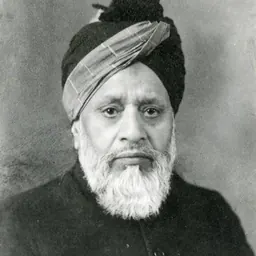
Ilm Deen, also written as Alimuddin (4 December 1908 – 31 October 1929), was an Indian Muslim carpenter who assassinated a book publisher named Mahashe Rajpal Malhotra for publishing the book Rangila Rasul, which was deemed derogatory towards the Islamic prophet Muhammad by Muslims. He was executed for this crime.
In Pakistan, a full-length feature film has been produced on the life of Alimuddin and screened on television worldwide.
Background Mahashe Rajpal published an anonymous pamphlet in 1923 titled Rangila Rasul, which contained a discourteous interpretation of the hadiths of Sahih al-Bukhari, among other sources, along with a salacious commentary. The book was considered highly controversial due to its satire of the marital life of Muhammad.
Various sections of the Indian Muslim community started a movement demanding that the book be banned. In 1927, the administration of the British Raj enacted a law prohibiting insults aimed at founders and leaders of religious communities.
Murder Ilm Deen decided to kill the publisher. On April 6, 1929, he set out for the bazaar and purchased a dagger for one rupee. He hid the dagger in his pants and waited for Rajpal at some distance from Rajpal's shop. Rajpal had not arrived yet. Ilm Deen did not know what Rajpal looked like. He tried to find out where Rajpal was through people that were around. Rajpal entered the shop and Ilm Deen did not notice him but soon someone alerted him that Rajpal was inside. The young man entered the shop, lunged forward and attacked him. He stabbed his dagger into the chest of Rajpal. He fell to the ground and died instantly. The police arrested Ilm Deen and took him to Lahori Gate Police Station. Later Ilm Deen was shifted to Central Jail Mianwali. The murder caused considerable religious tension in Punjab and beyond.
Trial and execution The trial lawyer for Ilm Deen was Farrukh Hussain.
Two witnesses from the prosecution side claimed that he was guilty. Muhammad Ali Jinnah, then a prominent Indian lawyer, and later the founder of Pakistan, was then sought out to appear in the appeal hearing at the Lahore High Court. Jinnah appealed on the grounds of extenuating circumstances, saying that Ilm Deen was only 19 or 20. He asked for the death sentence to be commuted to imprisonment for life. This contention was rejected by the court. Ilm Deen was convicted and given the death penalty according to the Indian Penal Code, and subsequently executed. In popular culture Ilm Deen enjoys popularity among some of Pakistan's Islamists, who perceive him as a defender of the faith who has unjustly been executed and thus became a martyr, leading to many apologetic books and movies being made as a way to commemorate him.
Books
Films
Don’t just read it —
keep it.
Full-length biographies made to live with: read them, listen on the way to work, watch them tonight.
- E-book
- Audio
- Video
Instant download · yours to keep · every purchase keeps this site free
Important facts
People in Ilm-ud-din's life
Named in this biography and alive at the same time
Related people
Same field, nearest in time





Contemporaries
People whose lives overlapped Ilm-ud-din's




Frequently asked questions
Who was Ilm-ud-din?
Religious fanatic and murderer (1908-1929)
When was Ilm-ud-din born?
Ilm-ud-din was born in 1908 in Lahore.
When did Ilm-ud-din die?
Ilm-ud-din died in 1929 in Central Jail Mianwali.
What was Ilm-ud-din's occupation?
Ilm-ud-din was a carpenter.
What nationality was Ilm-ud-din?
Ilm-ud-din was Indian.
Sources & further reading
Cite this page
APA: Biography.guide. (2026). Ilm-ud-din. https://biography.guide/ilm-ud-din/
MLA: "Ilm-ud-din." Biography.guide, https://biography.guide/ilm-ud-din/.
Chicago: "Ilm-ud-din." Biography.guide. https://biography.guide/ilm-ud-din/.
Data last updated: 2026-09-20 · Spot an error? Report a correction.
Page generated 2026-09-27 05:11 UTC